MEENAKSHI NIHALANI
I am Archiving for Us

<div class="swiper-slide"><imgsrc="<?php echo $root; ?>images/gallery/discover05/01/01.jpg" alt=""></div><div class="swiper-slide"><img
$viewFile = '/home/u770714322/domains/praf.srlabs.in/public_html/src/Template/Discovers/view.ctp'
$dataForView = [
'discovers' => object(App\Model\Entity\Discover) {
'id' => (int) 1,
'type' => 'discover',
'discover_no' => 'Discover 05',
'artist_name' => 'MEENAKSHI NIHALANI',
'artist_title' => 'I am Archiving for Us ',
'date_time' => object(Cake\I18n\FrozenTime) {},
'start_date' => object(Cake\I18n\FrozenTime) {},
'end_date' => object(Cake\I18n\FrozenTime) {},
'short_discription' => 'Meenakshi Nihalani is a visual artist based in Mumbai, India. She received her bachelor’s degree in Sculpture from the Sir J.J. School of Fine Arts, Mumbai. Her artistic research presents the social, psychological and geological impact of British Colonialism on farmers highlighting the absurd play of politics and power on their destinies. She has received a Scholarship Residency from Fundaziun Nairs in Switzerland (2019), a scholarship exhibition from Honorary Indian Consulate in Stuttgart in 2018, and also artist residencies in Berlin, Netherlands, Zurich, Belgium,and India. She also received the 2017 Lord Mayo Memorial Award for her sculpture during the Annual exhibition at Sir J.J School of Art.',
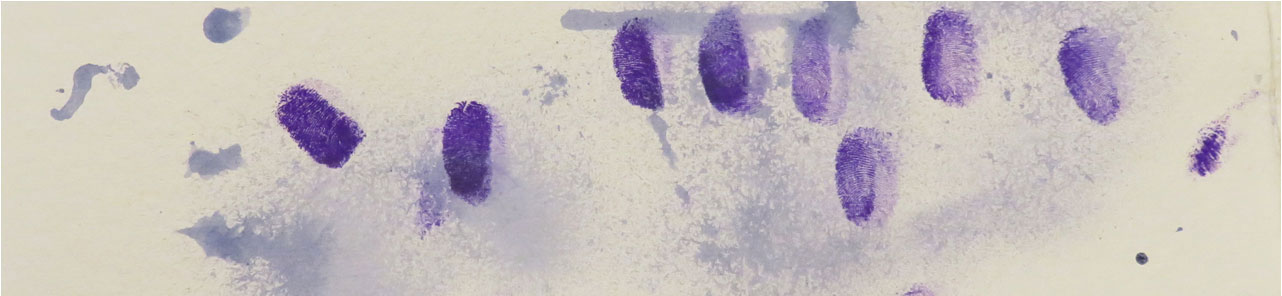
'description' => '<p>Meenakshi Nihalani’s practice and research traces the roots of ongoing agrarian discontent to the 1700s, to reveal the extent to which unfair policies, taxation and fraudulent deals colluded during the colonial era to diminish the relevance of agriculture to the footnotes of history, in a context that has historically relied on farming. She draws inspiration from the Indigo Revolution, which laid the foundation for the Champaran Satyagraha, the first of Gandhi’s peaceful demonstrations in resistance to colonial rule. The Indigo Revolt was one of the earliest movements to shed light on agrarian discontent and colonial oppression by raising voices against the stark economic divide between European indigo factory owners and Indian farmers who were forced to cultivate indigo on lands leased from local zamindars, with their support and that of local kings. The struggle for Independence in India can only be written in indigo for the mobilizing of popular sentiment in a country where 60 percent of the population relied on agriculture and depended on the support of farmers. Indigo cultivation requires large quantities of water, which was heavily taxed, and left the soil extremely infertile, making it unable to grow food crops such as rice and pulses, especially as famines raged episodically causing the loss of millions of lives. Until the arrival of synthetic dyes, the once lucrative indigo dye amassed fortunes for several Asian and European traders and companies, besides financing the first World War. Working with indigo dye and jute textile that is common in the indigo growing areas of Bengal and Bihar, the artist in this series of works captures altered topographies, erasure of cultural identities and transparently exploitative policies for the sake of indigo cultivation under colonial rule, providing a blueprint for the continued marginalization of farming communities in subsequent decades, and a counter-narrative to capital driven economies and industrial development.</p>
',
'featured_image' => 'featured_image1591899299.jpg',
'image' => 'image1471651289.jpg',
'show_praogramm' => 'yes',
'showon_home' => 'no',
'meta_title' => 'PRAF',
'meta_keyword' => '[{"value":"PRAF"}]',
'meta_description' => 'PRAF',
'post_date' => object(Cake\I18n\FrozenTime) {},
'status' => 'Published',
'created' => object(Cake\I18n\FrozenTime) {},
'modified' => object(Cake\I18n\FrozenTime) {},
'viewving_rooms' => [
[maximum depth reached]
],
'[new]' => false,
'[accessible]' => [
[maximum depth reached]
],
'[dirty]' => [[maximum depth reached]],
'[original]' => [[maximum depth reached]],
'[virtual]' => [[maximum depth reached]],
'[hasErrors]' => false,
'[errors]' => [[maximum depth reached]],
'[invalid]' => [[maximum depth reached]],
'[repository]' => 'Discovers'
},
'meta_keyword' => '[{"value":"PRAF"}]',
'meta_title' => 'PRAF',
'meta_description' => 'PRAF',
'workshops' => object(App\Model\Entity\Discover) {
'id' => (int) 1,
'type' => 'discover',
'discover_no' => 'Discover 05',
'artist_name' => 'MEENAKSHI NIHALANI',
'artist_title' => 'I am Archiving for Us ',
'date_time' => object(Cake\I18n\FrozenTime) {},
'start_date' => object(Cake\I18n\FrozenTime) {},
'end_date' => object(Cake\I18n\FrozenTime) {},
'short_discription' => 'Meenakshi Nihalani is a visual artist based in Mumbai, India. She received her bachelor’s degree in Sculpture from the Sir J.J. School of Fine Arts, Mumbai. Her artistic research presents the social, psychological and geological impact of British Colonialism on farmers highlighting the absurd play of politics and power on their destinies. She has received a Scholarship Residency from Fundaziun Nairs in Switzerland (2019), a scholarship exhibition from Honorary Indian Consulate in Stuttgart in 2018, and also artist residencies in Berlin, Netherlands, Zurich, Belgium,and India. She also received the 2017 Lord Mayo Memorial Award for her sculpture during the Annual exhibition at Sir J.J School of Art.',
'description' => '<p>Meenakshi Nihalani’s practice and research traces the roots of ongoing agrarian discontent to the 1700s, to reveal the extent to which unfair policies, taxation and fraudulent deals colluded during the colonial era to diminish the relevance of agriculture to the footnotes of history, in a context that has historically relied on farming. She draws inspiration from the Indigo Revolution, which laid the foundation for the Champaran Satyagraha, the first of Gandhi’s peaceful demonstrations in resistance to colonial rule. The Indigo Revolt was one of the earliest movements to shed light on agrarian discontent and colonial oppression by raising voices against the stark economic divide between European indigo factory owners and Indian farmers who were forced to cultivate indigo on lands leased from local zamindars, with their support and that of local kings. The struggle for Independence in India can only be written in indigo for the mobilizing of popular sentiment in a country where 60 percent of the population relied on agriculture and depended on the support of farmers. Indigo cultivation requires large quantities of water, which was heavily taxed, and left the soil extremely infertile, making it unable to grow food crops such as rice and pulses, especially as famines raged episodically causing the loss of millions of lives. Until the arrival of synthetic dyes, the once lucrative indigo dye amassed fortunes for several Asian and European traders and companies, besides financing the first World War. Working with indigo dye and jute textile that is common in the indigo growing areas of Bengal and Bihar, the artist in this series of works captures altered topographies, erasure of cultural identities and transparently exploitative policies for the sake of indigo cultivation under colonial rule, providing a blueprint for the continued marginalization of farming communities in subsequent decades, and a counter-narrative to capital driven economies and industrial development.</p>
',
'featured_image' => 'featured_image1591899299.jpg',
'image' => 'image1471651289.jpg',
'show_praogramm' => 'yes',
'showon_home' => 'no',
'meta_title' => 'PRAF',
'meta_keyword' => '[{"value":"PRAF"}]',
'meta_description' => 'PRAF',
'post_date' => object(Cake\I18n\FrozenTime) {},
'status' => 'Published',
'created' => object(Cake\I18n\FrozenTime) {},
'modified' => object(Cake\I18n\FrozenTime) {},
'discover_workshops' => [[maximum depth reached]],
'[new]' => false,
'[accessible]' => [
[maximum depth reached]
],
'[dirty]' => [[maximum depth reached]],
'[original]' => [[maximum depth reached]],
'[virtual]' => [[maximum depth reached]],
'[hasErrors]' => false,
'[errors]' => [[maximum depth reached]],
'[invalid]' => [[maximum depth reached]],
'[repository]' => 'Discovers'
}
]
$bufferLevel = (int) 1
$discovers = object(App\Model\Entity\Discover) {
'id' => (int) 1,
'type' => 'discover',
'discover_no' => 'Discover 05',
'artist_name' => 'MEENAKSHI NIHALANI',
'artist_title' => 'I am Archiving for Us ',
'date_time' => object(Cake\I18n\FrozenTime) {},
'start_date' => object(Cake\I18n\FrozenTime) {},
'end_date' => object(Cake\I18n\FrozenTime) {},
'short_discription' => 'Meenakshi Nihalani is a visual artist based in Mumbai, India. She received her bachelor’s degree in Sculpture from the Sir J.J. School of Fine Arts, Mumbai. Her artistic research presents the social, psychological and geological impact of British Colonialism on farmers highlighting the absurd play of politics and power on their destinies. She has received a Scholarship Residency from Fundaziun Nairs in Switzerland (2019), a scholarship exhibition from Honorary Indian Consulate in Stuttgart in 2018, and also artist residencies in Berlin, Netherlands, Zurich, Belgium,and India. She also received the 2017 Lord Mayo Memorial Award for her sculpture during the Annual exhibition at Sir J.J School of Art.',
'description' => '<p>Meenakshi Nihalani’s practice and research traces the roots of ongoing agrarian discontent to the 1700s, to reveal the extent to which unfair policies, taxation and fraudulent deals colluded during the colonial era to diminish the relevance of agriculture to the footnotes of history, in a context that has historically relied on farming. She draws inspiration from the Indigo Revolution, which laid the foundation for the Champaran Satyagraha, the first of Gandhi’s peaceful demonstrations in resistance to colonial rule. The Indigo Revolt was one of the earliest movements to shed light on agrarian discontent and colonial oppression by raising voices against the stark economic divide between European indigo factory owners and Indian farmers who were forced to cultivate indigo on lands leased from local zamindars, with their support and that of local kings. The struggle for Independence in India can only be written in indigo for the mobilizing of popular sentiment in a country where 60 percent of the population relied on agriculture and depended on the support of farmers. Indigo cultivation requires large quantities of water, which was heavily taxed, and left the soil extremely infertile, making it unable to grow food crops such as rice and pulses, especially as famines raged episodically causing the loss of millions of lives. Until the arrival of synthetic dyes, the once lucrative indigo dye amassed fortunes for several Asian and European traders and companies, besides financing the first World War. Working with indigo dye and jute textile that is common in the indigo growing areas of Bengal and Bihar, the artist in this series of works captures altered topographies, erasure of cultural identities and transparently exploitative policies for the sake of indigo cultivation under colonial rule, providing a blueprint for the continued marginalization of farming communities in subsequent decades, and a counter-narrative to capital driven economies and industrial development.</p>
',
'featured_image' => 'featured_image1591899299.jpg',
'image' => 'image1471651289.jpg',
'show_praogramm' => 'yes',
'showon_home' => 'no',
'meta_title' => 'PRAF',
'meta_keyword' => '[{"value":"PRAF"}]',
'meta_description' => 'PRAF',
'post_date' => object(Cake\I18n\FrozenTime) {},
'status' => 'Published',
'created' => object(Cake\I18n\FrozenTime) {},
'modified' => object(Cake\I18n\FrozenTime) {},
'viewving_rooms' => [
(int) 0 => object(App\Model\Entity\ViewvingRoom) {},
(int) 1 => object(App\Model\Entity\ViewvingRoom) {},
(int) 2 => object(App\Model\Entity\ViewvingRoom) {},
(int) 3 => object(App\Model\Entity\ViewvingRoom) {},
(int) 4 => object(App\Model\Entity\ViewvingRoom) {},
(int) 5 => object(App\Model\Entity\ViewvingRoom) {},
(int) 6 => object(App\Model\Entity\ViewvingRoom) {},
(int) 7 => object(App\Model\Entity\ViewvingRoom) {}
],
'[new]' => false,
'[accessible]' => [
'type' => true,
'discover_no' => true,
'artist_name' => true,
'artist_title' => true,
'date_time' => true,
'start_date' => true,
'end_date' => true,
'short_discription' => true,
'description' => true,
'featured_image' => true,
'image' => true,
'show_praogramm' => true,
'meta_title' => true,
'meta_keyword' => true,
'meta_description' => true,
'post_date' => true,
'status' => true,
'created' => true,
'modified' => true,
'viewving_rooms' => true
],
'[dirty]' => [],
'[original]' => [],
'[virtual]' => [],
'[hasErrors]' => false,
'[errors]' => [],
'[invalid]' => [],
'[repository]' => 'Discovers'
}
$meta_keyword = '[{"value":"PRAF"}]'
$meta_title = 'PRAF'
$meta_description = 'PRAF'
$workshops = object(App\Model\Entity\Discover) {
'id' => (int) 1,
'type' => 'discover',
'discover_no' => 'Discover 05',
'artist_name' => 'MEENAKSHI NIHALANI',
'artist_title' => 'I am Archiving for Us ',
'date_time' => object(Cake\I18n\FrozenTime) {},
'start_date' => object(Cake\I18n\FrozenTime) {},
'end_date' => object(Cake\I18n\FrozenTime) {},
'short_discription' => 'Meenakshi Nihalani is a visual artist based in Mumbai, India. She received her bachelor’s degree in Sculpture from the Sir J.J. School of Fine Arts, Mumbai. Her artistic research presents the social, psychological and geological impact of British Colonialism on farmers highlighting the absurd play of politics and power on their destinies. She has received a Scholarship Residency from Fundaziun Nairs in Switzerland (2019), a scholarship exhibition from Honorary Indian Consulate in Stuttgart in 2018, and also artist residencies in Berlin, Netherlands, Zurich, Belgium,and India. She also received the 2017 Lord Mayo Memorial Award for her sculpture during the Annual exhibition at Sir J.J School of Art.',
'description' => '<p>Meenakshi Nihalani’s practice and research traces the roots of ongoing agrarian discontent to the 1700s, to reveal the extent to which unfair policies, taxation and fraudulent deals colluded during the colonial era to diminish the relevance of agriculture to the footnotes of history, in a context that has historically relied on farming. She draws inspiration from the Indigo Revolution, which laid the foundation for the Champaran Satyagraha, the first of Gandhi’s peaceful demonstrations in resistance to colonial rule. The Indigo Revolt was one of the earliest movements to shed light on agrarian discontent and colonial oppression by raising voices against the stark economic divide between European indigo factory owners and Indian farmers who were forced to cultivate indigo on lands leased from local zamindars, with their support and that of local kings. The struggle for Independence in India can only be written in indigo for the mobilizing of popular sentiment in a country where 60 percent of the population relied on agriculture and depended on the support of farmers. Indigo cultivation requires large quantities of water, which was heavily taxed, and left the soil extremely infertile, making it unable to grow food crops such as rice and pulses, especially as famines raged episodically causing the loss of millions of lives. Until the arrival of synthetic dyes, the once lucrative indigo dye amassed fortunes for several Asian and European traders and companies, besides financing the first World War. Working with indigo dye and jute textile that is common in the indigo growing areas of Bengal and Bihar, the artist in this series of works captures altered topographies, erasure of cultural identities and transparently exploitative policies for the sake of indigo cultivation under colonial rule, providing a blueprint for the continued marginalization of farming communities in subsequent decades, and a counter-narrative to capital driven economies and industrial development.</p>
',
'featured_image' => 'featured_image1591899299.jpg',
'image' => 'image1471651289.jpg',
'show_praogramm' => 'yes',
'showon_home' => 'no',
'meta_title' => 'PRAF',
'meta_keyword' => '[{"value":"PRAF"}]',
'meta_description' => 'PRAF',
'post_date' => object(Cake\I18n\FrozenTime) {},
'status' => 'Published',
'created' => object(Cake\I18n\FrozenTime) {},
'modified' => object(Cake\I18n\FrozenTime) {},
'discover_workshops' => [],
'[new]' => false,
'[accessible]' => [
'type' => true,
'discover_no' => true,
'artist_name' => true,
'artist_title' => true,
'date_time' => true,
'start_date' => true,
'end_date' => true,
'short_discription' => true,
'description' => true,
'featured_image' => true,
'image' => true,
'show_praogramm' => true,
'meta_title' => true,
'meta_keyword' => true,
'meta_description' => true,
'post_date' => true,
'status' => true,
'created' => true,
'modified' => true,
'viewving_rooms' => true
],
'[dirty]' => [],
'[original]' => [],
'[virtual]' => [],
'[hasErrors]' => false,
'[errors]' => [],
'[invalid]' => [],
'[repository]' => 'Discovers'
}
$header = [
'art scribes' => (int) 1,
'pair' => (int) 2,
'praf publish' => (int) 3
]
$ct = (int) 1include - APP/Template/Discovers/view.ctp, line 202 Cake\View\View::_evaluate() - CORE/src/View/View.php, line 1435 Cake\View\View::_render() - CORE/src/View/View.php, line 1393 Cake\View\View::render() - CORE/src/View/View.php, line 892 Cake\Controller\Controller::render() - CORE/src/Controller/Controller.php, line 791 Cake\Http\ActionDispatcher::_invoke() - CORE/src/Http/ActionDispatcher.php, line 126 Cake\Http\ActionDispatcher::dispatch() - CORE/src/Http/ActionDispatcher.php, line 94 Cake\Http\BaseApplication::__invoke() - CORE/src/Http/BaseApplication.php, line 256 Cake\Http\Runner::__invoke() - CORE/src/Http/Runner.php, line 65 Cake\Routing\Middleware\RoutingMiddleware::__invoke() - CORE/src/Routing/Middleware/RoutingMiddleware.php, line 164 Cake\Http\Runner::__invoke() - CORE/src/Http/Runner.php, line 65 Cake\Routing\Middleware\AssetMiddleware::__invoke() - CORE/src/Routing/Middleware/AssetMiddleware.php, line 88 Cake\Http\Runner::__invoke() - CORE/src/Http/Runner.php, line 65 Cake\Error\Middleware\ErrorHandlerMiddleware::__invoke() - CORE/src/Error/Middleware/ErrorHandlerMiddleware.php, line 100 Cake\Http\Runner::__invoke() - CORE/src/Http/Runner.php, line 65 Cake\Http\Runner::run() - CORE/src/Http/Runner.php, line 51 Cake\Http\Server::run() - CORE/src/Http/Server.php, line 97
<div class="swiper-slide"><imgsrc="<?php echo $root; ?>images/gallery/discover05/01/02.jpg" alt=""></div></div>
$viewFile = '/home/u770714322/domains/praf.srlabs.in/public_html/src/Template/Discovers/view.ctp'
$dataForView = [
'discovers' => object(App\Model\Entity\Discover) {
'id' => (int) 1,
'type' => 'discover',
'discover_no' => 'Discover 05',
'artist_name' => 'MEENAKSHI NIHALANI',
'artist_title' => 'I am Archiving for Us ',
'date_time' => object(Cake\I18n\FrozenTime) {},
'start_date' => object(Cake\I18n\FrozenTime) {},
'end_date' => object(Cake\I18n\FrozenTime) {},
'short_discription' => 'Meenakshi Nihalani is a visual artist based in Mumbai, India. She received her bachelor’s degree in Sculpture from the Sir J.J. School of Fine Arts, Mumbai. Her artistic research presents the social, psychological and geological impact of British Colonialism on farmers highlighting the absurd play of politics and power on their destinies. She has received a Scholarship Residency from Fundaziun Nairs in Switzerland (2019), a scholarship exhibition from Honorary Indian Consulate in Stuttgart in 2018, and also artist residencies in Berlin, Netherlands, Zurich, Belgium,and India. She also received the 2017 Lord Mayo Memorial Award for her sculpture during the Annual exhibition at Sir J.J School of Art.',
'description' => '<p>Meenakshi Nihalani’s practice and research traces the roots of ongoing agrarian discontent to the 1700s, to reveal the extent to which unfair policies, taxation and fraudulent deals colluded during the colonial era to diminish the relevance of agriculture to the footnotes of history, in a context that has historically relied on farming. She draws inspiration from the Indigo Revolution, which laid the foundation for the Champaran Satyagraha, the first of Gandhi’s peaceful demonstrations in resistance to colonial rule. The Indigo Revolt was one of the earliest movements to shed light on agrarian discontent and colonial oppression by raising voices against the stark economic divide between European indigo factory owners and Indian farmers who were forced to cultivate indigo on lands leased from local zamindars, with their support and that of local kings. The struggle for Independence in India can only be written in indigo for the mobilizing of popular sentiment in a country where 60 percent of the population relied on agriculture and depended on the support of farmers. Indigo cultivation requires large quantities of water, which was heavily taxed, and left the soil extremely infertile, making it unable to grow food crops such as rice and pulses, especially as famines raged episodically causing the loss of millions of lives. Until the arrival of synthetic dyes, the once lucrative indigo dye amassed fortunes for several Asian and European traders and companies, besides financing the first World War. Working with indigo dye and jute textile that is common in the indigo growing areas of Bengal and Bihar, the artist in this series of works captures altered topographies, erasure of cultural identities and transparently exploitative policies for the sake of indigo cultivation under colonial rule, providing a blueprint for the continued marginalization of farming communities in subsequent decades, and a counter-narrative to capital driven economies and industrial development.</p>
',
'featured_image' => 'featured_image1591899299.jpg',
'image' => 'image1471651289.jpg',
'show_praogramm' => 'yes',
'showon_home' => 'no',
'meta_title' => 'PRAF',
'meta_keyword' => '[{"value":"PRAF"}]',
'meta_description' => 'PRAF',
'post_date' => object(Cake\I18n\FrozenTime) {},
'status' => 'Published',
'created' => object(Cake\I18n\FrozenTime) {},
'modified' => object(Cake\I18n\FrozenTime) {},
'viewving_rooms' => [
[maximum depth reached]
],
'[new]' => false,
'[accessible]' => [
[maximum depth reached]
],
'[dirty]' => [[maximum depth reached]],
'[original]' => [[maximum depth reached]],
'[virtual]' => [[maximum depth reached]],
'[hasErrors]' => false,
'[errors]' => [[maximum depth reached]],
'[invalid]' => [[maximum depth reached]],
'[repository]' => 'Discovers'
},
'meta_keyword' => '[{"value":"PRAF"}]',
'meta_title' => 'PRAF',
'meta_description' => 'PRAF',
'workshops' => object(App\Model\Entity\Discover) {
'id' => (int) 1,
'type' => 'discover',
'discover_no' => 'Discover 05',
'artist_name' => 'MEENAKSHI NIHALANI',
'artist_title' => 'I am Archiving for Us ',
'date_time' => object(Cake\I18n\FrozenTime) {},
'start_date' => object(Cake\I18n\FrozenTime) {},
'end_date' => object(Cake\I18n\FrozenTime) {},
'short_discription' => 'Meenakshi Nihalani is a visual artist based in Mumbai, India. She received her bachelor’s degree in Sculpture from the Sir J.J. School of Fine Arts, Mumbai. Her artistic research presents the social, psychological and geological impact of British Colonialism on farmers highlighting the absurd play of politics and power on their destinies. She has received a Scholarship Residency from Fundaziun Nairs in Switzerland (2019), a scholarship exhibition from Honorary Indian Consulate in Stuttgart in 2018, and also artist residencies in Berlin, Netherlands, Zurich, Belgium,and India. She also received the 2017 Lord Mayo Memorial Award for her sculpture during the Annual exhibition at Sir J.J School of Art.',
'description' => '<p>Meenakshi Nihalani’s practice and research traces the roots of ongoing agrarian discontent to the 1700s, to reveal the extent to which unfair policies, taxation and fraudulent deals colluded during the colonial era to diminish the relevance of agriculture to the footnotes of history, in a context that has historically relied on farming. She draws inspiration from the Indigo Revolution, which laid the foundation for the Champaran Satyagraha, the first of Gandhi’s peaceful demonstrations in resistance to colonial rule. The Indigo Revolt was one of the earliest movements to shed light on agrarian discontent and colonial oppression by raising voices against the stark economic divide between European indigo factory owners and Indian farmers who were forced to cultivate indigo on lands leased from local zamindars, with their support and that of local kings. The struggle for Independence in India can only be written in indigo for the mobilizing of popular sentiment in a country where 60 percent of the population relied on agriculture and depended on the support of farmers. Indigo cultivation requires large quantities of water, which was heavily taxed, and left the soil extremely infertile, making it unable to grow food crops such as rice and pulses, especially as famines raged episodically causing the loss of millions of lives. Until the arrival of synthetic dyes, the once lucrative indigo dye amassed fortunes for several Asian and European traders and companies, besides financing the first World War. Working with indigo dye and jute textile that is common in the indigo growing areas of Bengal and Bihar, the artist in this series of works captures altered topographies, erasure of cultural identities and transparently exploitative policies for the sake of indigo cultivation under colonial rule, providing a blueprint for the continued marginalization of farming communities in subsequent decades, and a counter-narrative to capital driven economies and industrial development.</p>
',
'featured_image' => 'featured_image1591899299.jpg',
'image' => 'image1471651289.jpg',
'show_praogramm' => 'yes',
'showon_home' => 'no',
'meta_title' => 'PRAF',
'meta_keyword' => '[{"value":"PRAF"}]',
'meta_description' => 'PRAF',
'post_date' => object(Cake\I18n\FrozenTime) {},
'status' => 'Published',
'created' => object(Cake\I18n\FrozenTime) {},
'modified' => object(Cake\I18n\FrozenTime) {},
'discover_workshops' => [[maximum depth reached]],
'[new]' => false,
'[accessible]' => [
[maximum depth reached]
],
'[dirty]' => [[maximum depth reached]],
'[original]' => [[maximum depth reached]],
'[virtual]' => [[maximum depth reached]],
'[hasErrors]' => false,
'[errors]' => [[maximum depth reached]],
'[invalid]' => [[maximum depth reached]],
'[repository]' => 'Discovers'
}
]
$bufferLevel = (int) 1
$discovers = object(App\Model\Entity\Discover) {
'id' => (int) 1,
'type' => 'discover',
'discover_no' => 'Discover 05',
'artist_name' => 'MEENAKSHI NIHALANI',
'artist_title' => 'I am Archiving for Us ',
'date_time' => object(Cake\I18n\FrozenTime) {},
'start_date' => object(Cake\I18n\FrozenTime) {},
'end_date' => object(Cake\I18n\FrozenTime) {},
'short_discription' => 'Meenakshi Nihalani is a visual artist based in Mumbai, India. She received her bachelor’s degree in Sculpture from the Sir J.J. School of Fine Arts, Mumbai. Her artistic research presents the social, psychological and geological impact of British Colonialism on farmers highlighting the absurd play of politics and power on their destinies. She has received a Scholarship Residency from Fundaziun Nairs in Switzerland (2019), a scholarship exhibition from Honorary Indian Consulate in Stuttgart in 2018, and also artist residencies in Berlin, Netherlands, Zurich, Belgium,and India. She also received the 2017 Lord Mayo Memorial Award for her sculpture during the Annual exhibition at Sir J.J School of Art.',
'description' => '<p>Meenakshi Nihalani’s practice and research traces the roots of ongoing agrarian discontent to the 1700s, to reveal the extent to which unfair policies, taxation and fraudulent deals colluded during the colonial era to diminish the relevance of agriculture to the footnotes of history, in a context that has historically relied on farming. She draws inspiration from the Indigo Revolution, which laid the foundation for the Champaran Satyagraha, the first of Gandhi’s peaceful demonstrations in resistance to colonial rule. The Indigo Revolt was one of the earliest movements to shed light on agrarian discontent and colonial oppression by raising voices against the stark economic divide between European indigo factory owners and Indian farmers who were forced to cultivate indigo on lands leased from local zamindars, with their support and that of local kings. The struggle for Independence in India can only be written in indigo for the mobilizing of popular sentiment in a country where 60 percent of the population relied on agriculture and depended on the support of farmers. Indigo cultivation requires large quantities of water, which was heavily taxed, and left the soil extremely infertile, making it unable to grow food crops such as rice and pulses, especially as famines raged episodically causing the loss of millions of lives. Until the arrival of synthetic dyes, the once lucrative indigo dye amassed fortunes for several Asian and European traders and companies, besides financing the first World War. Working with indigo dye and jute textile that is common in the indigo growing areas of Bengal and Bihar, the artist in this series of works captures altered topographies, erasure of cultural identities and transparently exploitative policies for the sake of indigo cultivation under colonial rule, providing a blueprint for the continued marginalization of farming communities in subsequent decades, and a counter-narrative to capital driven economies and industrial development.</p>
',
'featured_image' => 'featured_image1591899299.jpg',
'image' => 'image1471651289.jpg',
'show_praogramm' => 'yes',
'showon_home' => 'no',
'meta_title' => 'PRAF',
'meta_keyword' => '[{"value":"PRAF"}]',
'meta_description' => 'PRAF',
'post_date' => object(Cake\I18n\FrozenTime) {},
'status' => 'Published',
'created' => object(Cake\I18n\FrozenTime) {},
'modified' => object(Cake\I18n\FrozenTime) {},
'viewving_rooms' => [
(int) 0 => object(App\Model\Entity\ViewvingRoom) {},
(int) 1 => object(App\Model\Entity\ViewvingRoom) {},
(int) 2 => object(App\Model\Entity\ViewvingRoom) {},
(int) 3 => object(App\Model\Entity\ViewvingRoom) {},
(int) 4 => object(App\Model\Entity\ViewvingRoom) {},
(int) 5 => object(App\Model\Entity\ViewvingRoom) {},
(int) 6 => object(App\Model\Entity\ViewvingRoom) {},
(int) 7 => object(App\Model\Entity\ViewvingRoom) {}
],
'[new]' => false,
'[accessible]' => [
'type' => true,
'discover_no' => true,
'artist_name' => true,
'artist_title' => true,
'date_time' => true,
'start_date' => true,
'end_date' => true,
'short_discription' => true,
'description' => true,
'featured_image' => true,
'image' => true,
'show_praogramm' => true,
'meta_title' => true,
'meta_keyword' => true,
'meta_description' => true,
'post_date' => true,
'status' => true,
'created' => true,
'modified' => true,
'viewving_rooms' => true
],
'[dirty]' => [],
'[original]' => [],
'[virtual]' => [],
'[hasErrors]' => false,
'[errors]' => [],
'[invalid]' => [],
'[repository]' => 'Discovers'
}
$meta_keyword = '[{"value":"PRAF"}]'
$meta_title = 'PRAF'
$meta_description = 'PRAF'
$workshops = object(App\Model\Entity\Discover) {
'id' => (int) 1,
'type' => 'discover',
'discover_no' => 'Discover 05',
'artist_name' => 'MEENAKSHI NIHALANI',
'artist_title' => 'I am Archiving for Us ',
'date_time' => object(Cake\I18n\FrozenTime) {},
'start_date' => object(Cake\I18n\FrozenTime) {},
'end_date' => object(Cake\I18n\FrozenTime) {},
'short_discription' => 'Meenakshi Nihalani is a visual artist based in Mumbai, India. She received her bachelor’s degree in Sculpture from the Sir J.J. School of Fine Arts, Mumbai. Her artistic research presents the social, psychological and geological impact of British Colonialism on farmers highlighting the absurd play of politics and power on their destinies. She has received a Scholarship Residency from Fundaziun Nairs in Switzerland (2019), a scholarship exhibition from Honorary Indian Consulate in Stuttgart in 2018, and also artist residencies in Berlin, Netherlands, Zurich, Belgium,and India. She also received the 2017 Lord Mayo Memorial Award for her sculpture during the Annual exhibition at Sir J.J School of Art.',
'description' => '<p>Meenakshi Nihalani’s practice and research traces the roots of ongoing agrarian discontent to the 1700s, to reveal the extent to which unfair policies, taxation and fraudulent deals colluded during the colonial era to diminish the relevance of agriculture to the footnotes of history, in a context that has historically relied on farming. She draws inspiration from the Indigo Revolution, which laid the foundation for the Champaran Satyagraha, the first of Gandhi’s peaceful demonstrations in resistance to colonial rule. The Indigo Revolt was one of the earliest movements to shed light on agrarian discontent and colonial oppression by raising voices against the stark economic divide between European indigo factory owners and Indian farmers who were forced to cultivate indigo on lands leased from local zamindars, with their support and that of local kings. The struggle for Independence in India can only be written in indigo for the mobilizing of popular sentiment in a country where 60 percent of the population relied on agriculture and depended on the support of farmers. Indigo cultivation requires large quantities of water, which was heavily taxed, and left the soil extremely infertile, making it unable to grow food crops such as rice and pulses, especially as famines raged episodically causing the loss of millions of lives. Until the arrival of synthetic dyes, the once lucrative indigo dye amassed fortunes for several Asian and European traders and companies, besides financing the first World War. Working with indigo dye and jute textile that is common in the indigo growing areas of Bengal and Bihar, the artist in this series of works captures altered topographies, erasure of cultural identities and transparently exploitative policies for the sake of indigo cultivation under colonial rule, providing a blueprint for the continued marginalization of farming communities in subsequent decades, and a counter-narrative to capital driven economies and industrial development.</p>
',
'featured_image' => 'featured_image1591899299.jpg',
'image' => 'image1471651289.jpg',
'show_praogramm' => 'yes',
'showon_home' => 'no',
'meta_title' => 'PRAF',
'meta_keyword' => '[{"value":"PRAF"}]',
'meta_description' => 'PRAF',
'post_date' => object(Cake\I18n\FrozenTime) {},
'status' => 'Published',
'created' => object(Cake\I18n\FrozenTime) {},
'modified' => object(Cake\I18n\FrozenTime) {},
'discover_workshops' => [],
'[new]' => false,
'[accessible]' => [
'type' => true,
'discover_no' => true,
'artist_name' => true,
'artist_title' => true,
'date_time' => true,
'start_date' => true,
'end_date' => true,
'short_discription' => true,
'description' => true,
'featured_image' => true,
'image' => true,
'show_praogramm' => true,
'meta_title' => true,
'meta_keyword' => true,
'meta_description' => true,
'post_date' => true,
'status' => true,
'created' => true,
'modified' => true,
'viewving_rooms' => true
],
'[dirty]' => [],
'[original]' => [],
'[virtual]' => [],
'[hasErrors]' => false,
'[errors]' => [],
'[invalid]' => [],
'[repository]' => 'Discovers'
}
$header = [
'art scribes' => (int) 1,
'pair' => (int) 2,
'praf publish' => (int) 3
]
$ct = (int) 1include - APP/Template/Discovers/view.ctp, line 204 Cake\View\View::_evaluate() - CORE/src/View/View.php, line 1435 Cake\View\View::_render() - CORE/src/View/View.php, line 1393 Cake\View\View::render() - CORE/src/View/View.php, line 892 Cake\Controller\Controller::render() - CORE/src/Controller/Controller.php, line 791 Cake\Http\ActionDispatcher::_invoke() - CORE/src/Http/ActionDispatcher.php, line 126 Cake\Http\ActionDispatcher::dispatch() - CORE/src/Http/ActionDispatcher.php, line 94 Cake\Http\BaseApplication::__invoke() - CORE/src/Http/BaseApplication.php, line 256 Cake\Http\Runner::__invoke() - CORE/src/Http/Runner.php, line 65 Cake\Routing\Middleware\RoutingMiddleware::__invoke() - CORE/src/Routing/Middleware/RoutingMiddleware.php, line 164 Cake\Http\Runner::__invoke() - CORE/src/Http/Runner.php, line 65 Cake\Routing\Middleware\AssetMiddleware::__invoke() - CORE/src/Routing/Middleware/AssetMiddleware.php, line 88 Cake\Http\Runner::__invoke() - CORE/src/Http/Runner.php, line 65 Cake\Error\Middleware\ErrorHandlerMiddleware::__invoke() - CORE/src/Error/Middleware/ErrorHandlerMiddleware.php, line 100 Cake\Http\Runner::__invoke() - CORE/src/Http/Runner.php, line 65 Cake\Http\Runner::run() - CORE/src/Http/Runner.php, line 51 Cake\Http\Server::run() - CORE/src/Http/Server.php, line 97
<div class="swiper-slide"><imgsrc="<?php echo $root; ?>images/gallery/discover05/01/01.jpg" alt=""></div><div class="swiper-slide"><img
$viewFile = '/home/u770714322/domains/praf.srlabs.in/public_html/src/Template/Discovers/view.ctp'
$dataForView = [
'discovers' => object(App\Model\Entity\Discover) {
'id' => (int) 1,
'type' => 'discover',
'discover_no' => 'Discover 05',
'artist_name' => 'MEENAKSHI NIHALANI',
'artist_title' => 'I am Archiving for Us ',
'date_time' => object(Cake\I18n\FrozenTime) {},
'start_date' => object(Cake\I18n\FrozenTime) {},
'end_date' => object(Cake\I18n\FrozenTime) {},
'short_discription' => 'Meenakshi Nihalani is a visual artist based in Mumbai, India. She received her bachelor’s degree in Sculpture from the Sir J.J. School of Fine Arts, Mumbai. Her artistic research presents the social, psychological and geological impact of British Colonialism on farmers highlighting the absurd play of politics and power on their destinies. She has received a Scholarship Residency from Fundaziun Nairs in Switzerland (2019), a scholarship exhibition from Honorary Indian Consulate in Stuttgart in 2018, and also artist residencies in Berlin, Netherlands, Zurich, Belgium,and India. She also received the 2017 Lord Mayo Memorial Award for her sculpture during the Annual exhibition at Sir J.J School of Art.',
'description' => '<p>Meenakshi Nihalani’s practice and research traces the roots of ongoing agrarian discontent to the 1700s, to reveal the extent to which unfair policies, taxation and fraudulent deals colluded during the colonial era to diminish the relevance of agriculture to the footnotes of history, in a context that has historically relied on farming. She draws inspiration from the Indigo Revolution, which laid the foundation for the Champaran Satyagraha, the first of Gandhi’s peaceful demonstrations in resistance to colonial rule. The Indigo Revolt was one of the earliest movements to shed light on agrarian discontent and colonial oppression by raising voices against the stark economic divide between European indigo factory owners and Indian farmers who were forced to cultivate indigo on lands leased from local zamindars, with their support and that of local kings. The struggle for Independence in India can only be written in indigo for the mobilizing of popular sentiment in a country where 60 percent of the population relied on agriculture and depended on the support of farmers. Indigo cultivation requires large quantities of water, which was heavily taxed, and left the soil extremely infertile, making it unable to grow food crops such as rice and pulses, especially as famines raged episodically causing the loss of millions of lives. Until the arrival of synthetic dyes, the once lucrative indigo dye amassed fortunes for several Asian and European traders and companies, besides financing the first World War. Working with indigo dye and jute textile that is common in the indigo growing areas of Bengal and Bihar, the artist in this series of works captures altered topographies, erasure of cultural identities and transparently exploitative policies for the sake of indigo cultivation under colonial rule, providing a blueprint for the continued marginalization of farming communities in subsequent decades, and a counter-narrative to capital driven economies and industrial development.</p>
',
'featured_image' => 'featured_image1591899299.jpg',
'image' => 'image1471651289.jpg',
'show_praogramm' => 'yes',
'showon_home' => 'no',
'meta_title' => 'PRAF',
'meta_keyword' => '[{"value":"PRAF"}]',
'meta_description' => 'PRAF',
'post_date' => object(Cake\I18n\FrozenTime) {},
'status' => 'Published',
'created' => object(Cake\I18n\FrozenTime) {},
'modified' => object(Cake\I18n\FrozenTime) {},
'viewving_rooms' => [
[maximum depth reached]
],
'[new]' => false,
'[accessible]' => [
[maximum depth reached]
],
'[dirty]' => [[maximum depth reached]],
'[original]' => [[maximum depth reached]],
'[virtual]' => [[maximum depth reached]],
'[hasErrors]' => false,
'[errors]' => [[maximum depth reached]],
'[invalid]' => [[maximum depth reached]],
'[repository]' => 'Discovers'
},
'meta_keyword' => '[{"value":"PRAF"}]',
'meta_title' => 'PRAF',
'meta_description' => 'PRAF',
'workshops' => object(App\Model\Entity\Discover) {
'id' => (int) 1,
'type' => 'discover',
'discover_no' => 'Discover 05',
'artist_name' => 'MEENAKSHI NIHALANI',
'artist_title' => 'I am Archiving for Us ',
'date_time' => object(Cake\I18n\FrozenTime) {},
'start_date' => object(Cake\I18n\FrozenTime) {},
'end_date' => object(Cake\I18n\FrozenTime) {},
'short_discription' => 'Meenakshi Nihalani is a visual artist based in Mumbai, India. She received her bachelor’s degree in Sculpture from the Sir J.J. School of Fine Arts, Mumbai. Her artistic research presents the social, psychological and geological impact of British Colonialism on farmers highlighting the absurd play of politics and power on their destinies. She has received a Scholarship Residency from Fundaziun Nairs in Switzerland (2019), a scholarship exhibition from Honorary Indian Consulate in Stuttgart in 2018, and also artist residencies in Berlin, Netherlands, Zurich, Belgium,and India. She also received the 2017 Lord Mayo Memorial Award for her sculpture during the Annual exhibition at Sir J.J School of Art.',
'description' => '<p>Meenakshi Nihalani’s practice and research traces the roots of ongoing agrarian discontent to the 1700s, to reveal the extent to which unfair policies, taxation and fraudulent deals colluded during the colonial era to diminish the relevance of agriculture to the footnotes of history, in a context that has historically relied on farming. She draws inspiration from the Indigo Revolution, which laid the foundation for the Champaran Satyagraha, the first of Gandhi’s peaceful demonstrations in resistance to colonial rule. The Indigo Revolt was one of the earliest movements to shed light on agrarian discontent and colonial oppression by raising voices against the stark economic divide between European indigo factory owners and Indian farmers who were forced to cultivate indigo on lands leased from local zamindars, with their support and that of local kings. The struggle for Independence in India can only be written in indigo for the mobilizing of popular sentiment in a country where 60 percent of the population relied on agriculture and depended on the support of farmers. Indigo cultivation requires large quantities of water, which was heavily taxed, and left the soil extremely infertile, making it unable to grow food crops such as rice and pulses, especially as famines raged episodically causing the loss of millions of lives. Until the arrival of synthetic dyes, the once lucrative indigo dye amassed fortunes for several Asian and European traders and companies, besides financing the first World War. Working with indigo dye and jute textile that is common in the indigo growing areas of Bengal and Bihar, the artist in this series of works captures altered topographies, erasure of cultural identities and transparently exploitative policies for the sake of indigo cultivation under colonial rule, providing a blueprint for the continued marginalization of farming communities in subsequent decades, and a counter-narrative to capital driven economies and industrial development.</p>
',
'featured_image' => 'featured_image1591899299.jpg',
'image' => 'image1471651289.jpg',
'show_praogramm' => 'yes',
'showon_home' => 'no',
'meta_title' => 'PRAF',
'meta_keyword' => '[{"value":"PRAF"}]',
'meta_description' => 'PRAF',
'post_date' => object(Cake\I18n\FrozenTime) {},
'status' => 'Published',
'created' => object(Cake\I18n\FrozenTime) {},
'modified' => object(Cake\I18n\FrozenTime) {},
'discover_workshops' => [[maximum depth reached]],
'[new]' => false,
'[accessible]' => [
[maximum depth reached]
],
'[dirty]' => [[maximum depth reached]],
'[original]' => [[maximum depth reached]],
'[virtual]' => [[maximum depth reached]],
'[hasErrors]' => false,
'[errors]' => [[maximum depth reached]],
'[invalid]' => [[maximum depth reached]],
'[repository]' => 'Discovers'
}
]
$bufferLevel = (int) 1
$discovers = object(App\Model\Entity\Discover) {
'id' => (int) 1,
'type' => 'discover',
'discover_no' => 'Discover 05',
'artist_name' => 'MEENAKSHI NIHALANI',
'artist_title' => 'I am Archiving for Us ',
'date_time' => object(Cake\I18n\FrozenTime) {},
'start_date' => object(Cake\I18n\FrozenTime) {},
'end_date' => object(Cake\I18n\FrozenTime) {},
'short_discription' => 'Meenakshi Nihalani is a visual artist based in Mumbai, India. She received her bachelor’s degree in Sculpture from the Sir J.J. School of Fine Arts, Mumbai. Her artistic research presents the social, psychological and geological impact of British Colonialism on farmers highlighting the absurd play of politics and power on their destinies. She has received a Scholarship Residency from Fundaziun Nairs in Switzerland (2019), a scholarship exhibition from Honorary Indian Consulate in Stuttgart in 2018, and also artist residencies in Berlin, Netherlands, Zurich, Belgium,and India. She also received the 2017 Lord Mayo Memorial Award for her sculpture during the Annual exhibition at Sir J.J School of Art.',
'description' => '<p>Meenakshi Nihalani’s practice and research traces the roots of ongoing agrarian discontent to the 1700s, to reveal the extent to which unfair policies, taxation and fraudulent deals colluded during the colonial era to diminish the relevance of agriculture to the footnotes of history, in a context that has historically relied on farming. She draws inspiration from the Indigo Revolution, which laid the foundation for the Champaran Satyagraha, the first of Gandhi’s peaceful demonstrations in resistance to colonial rule. The Indigo Revolt was one of the earliest movements to shed light on agrarian discontent and colonial oppression by raising voices against the stark economic divide between European indigo factory owners and Indian farmers who were forced to cultivate indigo on lands leased from local zamindars, with their support and that of local kings. The struggle for Independence in India can only be written in indigo for the mobilizing of popular sentiment in a country where 60 percent of the population relied on agriculture and depended on the support of farmers. Indigo cultivation requires large quantities of water, which was heavily taxed, and left the soil extremely infertile, making it unable to grow food crops such as rice and pulses, especially as famines raged episodically causing the loss of millions of lives. Until the arrival of synthetic dyes, the once lucrative indigo dye amassed fortunes for several Asian and European traders and companies, besides financing the first World War. Working with indigo dye and jute textile that is common in the indigo growing areas of Bengal and Bihar, the artist in this series of works captures altered topographies, erasure of cultural identities and transparently exploitative policies for the sake of indigo cultivation under colonial rule, providing a blueprint for the continued marginalization of farming communities in subsequent decades, and a counter-narrative to capital driven economies and industrial development.</p>
',
'featured_image' => 'featured_image1591899299.jpg',
'image' => 'image1471651289.jpg',
'show_praogramm' => 'yes',
'showon_home' => 'no',
'meta_title' => 'PRAF',
'meta_keyword' => '[{"value":"PRAF"}]',
'meta_description' => 'PRAF',
'post_date' => object(Cake\I18n\FrozenTime) {},
'status' => 'Published',
'created' => object(Cake\I18n\FrozenTime) {},
'modified' => object(Cake\I18n\FrozenTime) {},
'viewving_rooms' => [
(int) 0 => object(App\Model\Entity\ViewvingRoom) {},
(int) 1 => object(App\Model\Entity\ViewvingRoom) {},
(int) 2 => object(App\Model\Entity\ViewvingRoom) {},
(int) 3 => object(App\Model\Entity\ViewvingRoom) {},
(int) 4 => object(App\Model\Entity\ViewvingRoom) {},
(int) 5 => object(App\Model\Entity\ViewvingRoom) {},
(int) 6 => object(App\Model\Entity\ViewvingRoom) {},
(int) 7 => object(App\Model\Entity\ViewvingRoom) {}
],
'[new]' => false,
'[accessible]' => [
'type' => true,
'discover_no' => true,
'artist_name' => true,
'artist_title' => true,
'date_time' => true,
'start_date' => true,
'end_date' => true,
'short_discription' => true,
'description' => true,
'featured_image' => true,
'image' => true,
'show_praogramm' => true,
'meta_title' => true,
'meta_keyword' => true,
'meta_description' => true,
'post_date' => true,
'status' => true,
'created' => true,
'modified' => true,
'viewving_rooms' => true
],
'[dirty]' => [],
'[original]' => [],
'[virtual]' => [],
'[hasErrors]' => false,
'[errors]' => [],
'[invalid]' => [],
'[repository]' => 'Discovers'
}
$meta_keyword = '[{"value":"PRAF"}]'
$meta_title = 'PRAF'
$meta_description = 'PRAF'
$workshops = object(App\Model\Entity\Discover) {
'id' => (int) 1,
'type' => 'discover',
'discover_no' => 'Discover 05',
'artist_name' => 'MEENAKSHI NIHALANI',
'artist_title' => 'I am Archiving for Us ',
'date_time' => object(Cake\I18n\FrozenTime) {},
'start_date' => object(Cake\I18n\FrozenTime) {},
'end_date' => object(Cake\I18n\FrozenTime) {},
'short_discription' => 'Meenakshi Nihalani is a visual artist based in Mumbai, India. She received her bachelor’s degree in Sculpture from the Sir J.J. School of Fine Arts, Mumbai. Her artistic research presents the social, psychological and geological impact of British Colonialism on farmers highlighting the absurd play of politics and power on their destinies. She has received a Scholarship Residency from Fundaziun Nairs in Switzerland (2019), a scholarship exhibition from Honorary Indian Consulate in Stuttgart in 2018, and also artist residencies in Berlin, Netherlands, Zurich, Belgium,and India. She also received the 2017 Lord Mayo Memorial Award for her sculpture during the Annual exhibition at Sir J.J School of Art.',
'description' => '<p>Meenakshi Nihalani’s practice and research traces the roots of ongoing agrarian discontent to the 1700s, to reveal the extent to which unfair policies, taxation and fraudulent deals colluded during the colonial era to diminish the relevance of agriculture to the footnotes of history, in a context that has historically relied on farming. She draws inspiration from the Indigo Revolution, which laid the foundation for the Champaran Satyagraha, the first of Gandhi’s peaceful demonstrations in resistance to colonial rule. The Indigo Revolt was one of the earliest movements to shed light on agrarian discontent and colonial oppression by raising voices against the stark economic divide between European indigo factory owners and Indian farmers who were forced to cultivate indigo on lands leased from local zamindars, with their support and that of local kings. The struggle for Independence in India can only be written in indigo for the mobilizing of popular sentiment in a country where 60 percent of the population relied on agriculture and depended on the support of farmers. Indigo cultivation requires large quantities of water, which was heavily taxed, and left the soil extremely infertile, making it unable to grow food crops such as rice and pulses, especially as famines raged episodically causing the loss of millions of lives. Until the arrival of synthetic dyes, the once lucrative indigo dye amassed fortunes for several Asian and European traders and companies, besides financing the first World War. Working with indigo dye and jute textile that is common in the indigo growing areas of Bengal and Bihar, the artist in this series of works captures altered topographies, erasure of cultural identities and transparently exploitative policies for the sake of indigo cultivation under colonial rule, providing a blueprint for the continued marginalization of farming communities in subsequent decades, and a counter-narrative to capital driven economies and industrial development.</p>
',
'featured_image' => 'featured_image1591899299.jpg',
'image' => 'image1471651289.jpg',
'show_praogramm' => 'yes',
'showon_home' => 'no',
'meta_title' => 'PRAF',
'meta_keyword' => '[{"value":"PRAF"}]',
'meta_description' => 'PRAF',
'post_date' => object(Cake\I18n\FrozenTime) {},
'status' => 'Published',
'created' => object(Cake\I18n\FrozenTime) {},
'modified' => object(Cake\I18n\FrozenTime) {},
'discover_workshops' => [],
'[new]' => false,
'[accessible]' => [
'type' => true,
'discover_no' => true,
'artist_name' => true,
'artist_title' => true,
'date_time' => true,
'start_date' => true,
'end_date' => true,
'short_discription' => true,
'description' => true,
'featured_image' => true,
'image' => true,
'show_praogramm' => true,
'meta_title' => true,
'meta_keyword' => true,
'meta_description' => true,
'post_date' => true,
'status' => true,
'created' => true,
'modified' => true,
'viewving_rooms' => true
],
'[dirty]' => [],
'[original]' => [],
'[virtual]' => [],
'[hasErrors]' => false,
'[errors]' => [],
'[invalid]' => [],
'[repository]' => 'Discovers'
}
$header = [
'art scribes' => (int) 1,
'pair' => (int) 2,
'praf publish' => (int) 3
]
$ct = (int) 1include - APP/Template/Discovers/view.ctp, line 215 Cake\View\View::_evaluate() - CORE/src/View/View.php, line 1435 Cake\View\View::_render() - CORE/src/View/View.php, line 1393 Cake\View\View::render() - CORE/src/View/View.php, line 892 Cake\Controller\Controller::render() - CORE/src/Controller/Controller.php, line 791 Cake\Http\ActionDispatcher::_invoke() - CORE/src/Http/ActionDispatcher.php, line 126 Cake\Http\ActionDispatcher::dispatch() - CORE/src/Http/ActionDispatcher.php, line 94 Cake\Http\BaseApplication::__invoke() - CORE/src/Http/BaseApplication.php, line 256 Cake\Http\Runner::__invoke() - CORE/src/Http/Runner.php, line 65 Cake\Routing\Middleware\RoutingMiddleware::__invoke() - CORE/src/Routing/Middleware/RoutingMiddleware.php, line 164 Cake\Http\Runner::__invoke() - CORE/src/Http/Runner.php, line 65 Cake\Routing\Middleware\AssetMiddleware::__invoke() - CORE/src/Routing/Middleware/AssetMiddleware.php, line 88 Cake\Http\Runner::__invoke() - CORE/src/Http/Runner.php, line 65 Cake\Error\Middleware\ErrorHandlerMiddleware::__invoke() - CORE/src/Error/Middleware/ErrorHandlerMiddleware.php, line 100 Cake\Http\Runner::__invoke() - CORE/src/Http/Runner.php, line 65 Cake\Http\Runner::run() - CORE/src/Http/Runner.php, line 51 Cake\Http\Server::run() - CORE/src/Http/Server.php, line 97
<div class="swiper-slide"><imgsrc="<?php echo $root; ?>images/gallery/discover05/01/02.jpg" alt=""></div></div>
$viewFile = '/home/u770714322/domains/praf.srlabs.in/public_html/src/Template/Discovers/view.ctp'
$dataForView = [
'discovers' => object(App\Model\Entity\Discover) {
'id' => (int) 1,
'type' => 'discover',
'discover_no' => 'Discover 05',
'artist_name' => 'MEENAKSHI NIHALANI',
'artist_title' => 'I am Archiving for Us ',
'date_time' => object(Cake\I18n\FrozenTime) {},
'start_date' => object(Cake\I18n\FrozenTime) {},
'end_date' => object(Cake\I18n\FrozenTime) {},
'short_discription' => 'Meenakshi Nihalani is a visual artist based in Mumbai, India. She received her bachelor’s degree in Sculpture from the Sir J.J. School of Fine Arts, Mumbai. Her artistic research presents the social, psychological and geological impact of British Colonialism on farmers highlighting the absurd play of politics and power on their destinies. She has received a Scholarship Residency from Fundaziun Nairs in Switzerland (2019), a scholarship exhibition from Honorary Indian Consulate in Stuttgart in 2018, and also artist residencies in Berlin, Netherlands, Zurich, Belgium,and India. She also received the 2017 Lord Mayo Memorial Award for her sculpture during the Annual exhibition at Sir J.J School of Art.',
'description' => '<p>Meenakshi Nihalani’s practice and research traces the roots of ongoing agrarian discontent to the 1700s, to reveal the extent to which unfair policies, taxation and fraudulent deals colluded during the colonial era to diminish the relevance of agriculture to the footnotes of history, in a context that has historically relied on farming. She draws inspiration from the Indigo Revolution, which laid the foundation for the Champaran Satyagraha, the first of Gandhi’s peaceful demonstrations in resistance to colonial rule. The Indigo Revolt was one of the earliest movements to shed light on agrarian discontent and colonial oppression by raising voices against the stark economic divide between European indigo factory owners and Indian farmers who were forced to cultivate indigo on lands leased from local zamindars, with their support and that of local kings. The struggle for Independence in India can only be written in indigo for the mobilizing of popular sentiment in a country where 60 percent of the population relied on agriculture and depended on the support of farmers. Indigo cultivation requires large quantities of water, which was heavily taxed, and left the soil extremely infertile, making it unable to grow food crops such as rice and pulses, especially as famines raged episodically causing the loss of millions of lives. Until the arrival of synthetic dyes, the once lucrative indigo dye amassed fortunes for several Asian and European traders and companies, besides financing the first World War. Working with indigo dye and jute textile that is common in the indigo growing areas of Bengal and Bihar, the artist in this series of works captures altered topographies, erasure of cultural identities and transparently exploitative policies for the sake of indigo cultivation under colonial rule, providing a blueprint for the continued marginalization of farming communities in subsequent decades, and a counter-narrative to capital driven economies and industrial development.</p>
',
'featured_image' => 'featured_image1591899299.jpg',
'image' => 'image1471651289.jpg',
'show_praogramm' => 'yes',
'showon_home' => 'no',
'meta_title' => 'PRAF',
'meta_keyword' => '[{"value":"PRAF"}]',
'meta_description' => 'PRAF',
'post_date' => object(Cake\I18n\FrozenTime) {},
'status' => 'Published',
'created' => object(Cake\I18n\FrozenTime) {},
'modified' => object(Cake\I18n\FrozenTime) {},
'viewving_rooms' => [
[maximum depth reached]
],
'[new]' => false,
'[accessible]' => [
[maximum depth reached]
],
'[dirty]' => [[maximum depth reached]],
'[original]' => [[maximum depth reached]],
'[virtual]' => [[maximum depth reached]],
'[hasErrors]' => false,
'[errors]' => [[maximum depth reached]],
'[invalid]' => [[maximum depth reached]],
'[repository]' => 'Discovers'
},
'meta_keyword' => '[{"value":"PRAF"}]',
'meta_title' => 'PRAF',
'meta_description' => 'PRAF',
'workshops' => object(App\Model\Entity\Discover) {
'id' => (int) 1,
'type' => 'discover',
'discover_no' => 'Discover 05',
'artist_name' => 'MEENAKSHI NIHALANI',
'artist_title' => 'I am Archiving for Us ',
'date_time' => object(Cake\I18n\FrozenTime) {},
'start_date' => object(Cake\I18n\FrozenTime) {},
'end_date' => object(Cake\I18n\FrozenTime) {},
'short_discription' => 'Meenakshi Nihalani is a visual artist based in Mumbai, India. She received her bachelor’s degree in Sculpture from the Sir J.J. School of Fine Arts, Mumbai. Her artistic research presents the social, psychological and geological impact of British Colonialism on farmers highlighting the absurd play of politics and power on their destinies. She has received a Scholarship Residency from Fundaziun Nairs in Switzerland (2019), a scholarship exhibition from Honorary Indian Consulate in Stuttgart in 2018, and also artist residencies in Berlin, Netherlands, Zurich, Belgium,and India. She also received the 2017 Lord Mayo Memorial Award for her sculpture during the Annual exhibition at Sir J.J School of Art.',
'description' => '<p>Meenakshi Nihalani’s practice and research traces the roots of ongoing agrarian discontent to the 1700s, to reveal the extent to which unfair policies, taxation and fraudulent deals colluded during the colonial era to diminish the relevance of agriculture to the footnotes of history, in a context that has historically relied on farming. She draws inspiration from the Indigo Revolution, which laid the foundation for the Champaran Satyagraha, the first of Gandhi’s peaceful demonstrations in resistance to colonial rule. The Indigo Revolt was one of the earliest movements to shed light on agrarian discontent and colonial oppression by raising voices against the stark economic divide between European indigo factory owners and Indian farmers who were forced to cultivate indigo on lands leased from local zamindars, with their support and that of local kings. The struggle for Independence in India can only be written in indigo for the mobilizing of popular sentiment in a country where 60 percent of the population relied on agriculture and depended on the support of farmers. Indigo cultivation requires large quantities of water, which was heavily taxed, and left the soil extremely infertile, making it unable to grow food crops such as rice and pulses, especially as famines raged episodically causing the loss of millions of lives. Until the arrival of synthetic dyes, the once lucrative indigo dye amassed fortunes for several Asian and European traders and companies, besides financing the first World War. Working with indigo dye and jute textile that is common in the indigo growing areas of Bengal and Bihar, the artist in this series of works captures altered topographies, erasure of cultural identities and transparently exploitative policies for the sake of indigo cultivation under colonial rule, providing a blueprint for the continued marginalization of farming communities in subsequent decades, and a counter-narrative to capital driven economies and industrial development.</p>
',
'featured_image' => 'featured_image1591899299.jpg',
'image' => 'image1471651289.jpg',
'show_praogramm' => 'yes',
'showon_home' => 'no',
'meta_title' => 'PRAF',
'meta_keyword' => '[{"value":"PRAF"}]',
'meta_description' => 'PRAF',
'post_date' => object(Cake\I18n\FrozenTime) {},
'status' => 'Published',
'created' => object(Cake\I18n\FrozenTime) {},
'modified' => object(Cake\I18n\FrozenTime) {},
'discover_workshops' => [[maximum depth reached]],
'[new]' => false,
'[accessible]' => [
[maximum depth reached]
],
'[dirty]' => [[maximum depth reached]],
'[original]' => [[maximum depth reached]],
'[virtual]' => [[maximum depth reached]],
'[hasErrors]' => false,
'[errors]' => [[maximum depth reached]],
'[invalid]' => [[maximum depth reached]],
'[repository]' => 'Discovers'
}
]
$bufferLevel = (int) 1
$discovers = object(App\Model\Entity\Discover) {
'id' => (int) 1,
'type' => 'discover',
'discover_no' => 'Discover 05',
'artist_name' => 'MEENAKSHI NIHALANI',
'artist_title' => 'I am Archiving for Us ',
'date_time' => object(Cake\I18n\FrozenTime) {},
'start_date' => object(Cake\I18n\FrozenTime) {},
'end_date' => object(Cake\I18n\FrozenTime) {},
'short_discription' => 'Meenakshi Nihalani is a visual artist based in Mumbai, India. She received her bachelor’s degree in Sculpture from the Sir J.J. School of Fine Arts, Mumbai. Her artistic research presents the social, psychological and geological impact of British Colonialism on farmers highlighting the absurd play of politics and power on their destinies. She has received a Scholarship Residency from Fundaziun Nairs in Switzerland (2019), a scholarship exhibition from Honorary Indian Consulate in Stuttgart in 2018, and also artist residencies in Berlin, Netherlands, Zurich, Belgium,and India. She also received the 2017 Lord Mayo Memorial Award for her sculpture during the Annual exhibition at Sir J.J School of Art.',
'description' => '<p>Meenakshi Nihalani’s practice and research traces the roots of ongoing agrarian discontent to the 1700s, to reveal the extent to which unfair policies, taxation and fraudulent deals colluded during the colonial era to diminish the relevance of agriculture to the footnotes of history, in a context that has historically relied on farming. She draws inspiration from the Indigo Revolution, which laid the foundation for the Champaran Satyagraha, the first of Gandhi’s peaceful demonstrations in resistance to colonial rule. The Indigo Revolt was one of the earliest movements to shed light on agrarian discontent and colonial oppression by raising voices against the stark economic divide between European indigo factory owners and Indian farmers who were forced to cultivate indigo on lands leased from local zamindars, with their support and that of local kings. The struggle for Independence in India can only be written in indigo for the mobilizing of popular sentiment in a country where 60 percent of the population relied on agriculture and depended on the support of farmers. Indigo cultivation requires large quantities of water, which was heavily taxed, and left the soil extremely infertile, making it unable to grow food crops such as rice and pulses, especially as famines raged episodically causing the loss of millions of lives. Until the arrival of synthetic dyes, the once lucrative indigo dye amassed fortunes for several Asian and European traders and companies, besides financing the first World War. Working with indigo dye and jute textile that is common in the indigo growing areas of Bengal and Bihar, the artist in this series of works captures altered topographies, erasure of cultural identities and transparently exploitative policies for the sake of indigo cultivation under colonial rule, providing a blueprint for the continued marginalization of farming communities in subsequent decades, and a counter-narrative to capital driven economies and industrial development.</p>
',
'featured_image' => 'featured_image1591899299.jpg',
'image' => 'image1471651289.jpg',
'show_praogramm' => 'yes',
'showon_home' => 'no',
'meta_title' => 'PRAF',
'meta_keyword' => '[{"value":"PRAF"}]',
'meta_description' => 'PRAF',
'post_date' => object(Cake\I18n\FrozenTime) {},
'status' => 'Published',
'created' => object(Cake\I18n\FrozenTime) {},
'modified' => object(Cake\I18n\FrozenTime) {},
'viewving_rooms' => [
(int) 0 => object(App\Model\Entity\ViewvingRoom) {},
(int) 1 => object(App\Model\Entity\ViewvingRoom) {},
(int) 2 => object(App\Model\Entity\ViewvingRoom) {},
(int) 3 => object(App\Model\Entity\ViewvingRoom) {},
(int) 4 => object(App\Model\Entity\ViewvingRoom) {},
(int) 5 => object(App\Model\Entity\ViewvingRoom) {},
(int) 6 => object(App\Model\Entity\ViewvingRoom) {},
(int) 7 => object(App\Model\Entity\ViewvingRoom) {}
],
'[new]' => false,
'[accessible]' => [
'type' => true,
'discover_no' => true,
'artist_name' => true,
'artist_title' => true,
'date_time' => true,
'start_date' => true,
'end_date' => true,
'short_discription' => true,
'description' => true,
'featured_image' => true,
'image' => true,
'show_praogramm' => true,
'meta_title' => true,
'meta_keyword' => true,
'meta_description' => true,
'post_date' => true,
'status' => true,
'created' => true,
'modified' => true,
'viewving_rooms' => true
],
'[dirty]' => [],
'[original]' => [],
'[virtual]' => [],
'[hasErrors]' => false,
'[errors]' => [],
'[invalid]' => [],
'[repository]' => 'Discovers'
}
$meta_keyword = '[{"value":"PRAF"}]'
$meta_title = 'PRAF'
$meta_description = 'PRAF'
$workshops = object(App\Model\Entity\Discover) {
'id' => (int) 1,
'type' => 'discover',
'discover_no' => 'Discover 05',
'artist_name' => 'MEENAKSHI NIHALANI',
'artist_title' => 'I am Archiving for Us ',
'date_time' => object(Cake\I18n\FrozenTime) {},
'start_date' => object(Cake\I18n\FrozenTime) {},
'end_date' => object(Cake\I18n\FrozenTime) {},
'short_discription' => 'Meenakshi Nihalani is a visual artist based in Mumbai, India. She received her bachelor’s degree in Sculpture from the Sir J.J. School of Fine Arts, Mumbai. Her artistic research presents the social, psychological and geological impact of British Colonialism on farmers highlighting the absurd play of politics and power on their destinies. She has received a Scholarship Residency from Fundaziun Nairs in Switzerland (2019), a scholarship exhibition from Honorary Indian Consulate in Stuttgart in 2018, and also artist residencies in Berlin, Netherlands, Zurich, Belgium,and India. She also received the 2017 Lord Mayo Memorial Award for her sculpture during the Annual exhibition at Sir J.J School of Art.',
'description' => '<p>Meenakshi Nihalani’s practice and research traces the roots of ongoing agrarian discontent to the 1700s, to reveal the extent to which unfair policies, taxation and fraudulent deals colluded during the colonial era to diminish the relevance of agriculture to the footnotes of history, in a context that has historically relied on farming. She draws inspiration from the Indigo Revolution, which laid the foundation for the Champaran Satyagraha, the first of Gandhi’s peaceful demonstrations in resistance to colonial rule. The Indigo Revolt was one of the earliest movements to shed light on agrarian discontent and colonial oppression by raising voices against the stark economic divide between European indigo factory owners and Indian farmers who were forced to cultivate indigo on lands leased from local zamindars, with their support and that of local kings. The struggle for Independence in India can only be written in indigo for the mobilizing of popular sentiment in a country where 60 percent of the population relied on agriculture and depended on the support of farmers. Indigo cultivation requires large quantities of water, which was heavily taxed, and left the soil extremely infertile, making it unable to grow food crops such as rice and pulses, especially as famines raged episodically causing the loss of millions of lives. Until the arrival of synthetic dyes, the once lucrative indigo dye amassed fortunes for several Asian and European traders and companies, besides financing the first World War. Working with indigo dye and jute textile that is common in the indigo growing areas of Bengal and Bihar, the artist in this series of works captures altered topographies, erasure of cultural identities and transparently exploitative policies for the sake of indigo cultivation under colonial rule, providing a blueprint for the continued marginalization of farming communities in subsequent decades, and a counter-narrative to capital driven economies and industrial development.</p>
',
'featured_image' => 'featured_image1591899299.jpg',
'image' => 'image1471651289.jpg',
'show_praogramm' => 'yes',
'showon_home' => 'no',
'meta_title' => 'PRAF',
'meta_keyword' => '[{"value":"PRAF"}]',
'meta_description' => 'PRAF',
'post_date' => object(Cake\I18n\FrozenTime) {},
'status' => 'Published',
'created' => object(Cake\I18n\FrozenTime) {},
'modified' => object(Cake\I18n\FrozenTime) {},
'discover_workshops' => [],
'[new]' => false,
'[accessible]' => [
'type' => true,
'discover_no' => true,
'artist_name' => true,
'artist_title' => true,
'date_time' => true,
'start_date' => true,
'end_date' => true,
'short_discription' => true,
'description' => true,
'featured_image' => true,
'image' => true,
'show_praogramm' => true,
'meta_title' => true,
'meta_keyword' => true,
'meta_description' => true,
'post_date' => true,
'status' => true,
'created' => true,
'modified' => true,
'viewving_rooms' => true
],
'[dirty]' => [],
'[original]' => [],
'[virtual]' => [],
'[hasErrors]' => false,
'[errors]' => [],
'[invalid]' => [],
'[repository]' => 'Discovers'
}
$header = [
'art scribes' => (int) 1,
'pair' => (int) 2,
'praf publish' => (int) 3
]
$ct = (int) 1include - APP/Template/Discovers/view.ctp, line 217 Cake\View\View::_evaluate() - CORE/src/View/View.php, line 1435 Cake\View\View::_render() - CORE/src/View/View.php, line 1393 Cake\View\View::render() - CORE/src/View/View.php, line 892 Cake\Controller\Controller::render() - CORE/src/Controller/Controller.php, line 791 Cake\Http\ActionDispatcher::_invoke() - CORE/src/Http/ActionDispatcher.php, line 126 Cake\Http\ActionDispatcher::dispatch() - CORE/src/Http/ActionDispatcher.php, line 94 Cake\Http\BaseApplication::__invoke() - CORE/src/Http/BaseApplication.php, line 256 Cake\Http\Runner::__invoke() - CORE/src/Http/Runner.php, line 65 Cake\Routing\Middleware\RoutingMiddleware::__invoke() - CORE/src/Routing/Middleware/RoutingMiddleware.php, line 164 Cake\Http\Runner::__invoke() - CORE/src/Http/Runner.php, line 65 Cake\Routing\Middleware\AssetMiddleware::__invoke() - CORE/src/Routing/Middleware/AssetMiddleware.php, line 88 Cake\Http\Runner::__invoke() - CORE/src/Http/Runner.php, line 65 Cake\Error\Middleware\ErrorHandlerMiddleware::__invoke() - CORE/src/Error/Middleware/ErrorHandlerMiddleware.php, line 100 Cake\Http\Runner::__invoke() - CORE/src/Http/Runner.php, line 65 Cake\Http\Runner::run() - CORE/src/Http/Runner.php, line 51 Cake\Http\Server::run() - CORE/src/Http/Server.php, line 97
<div class="swiper-slide"><imgsrc="<?php echo $root; ?>images/gallery/discover05/02/01.jpg" alt=""></div><div class="swiper-slide"><img
$viewFile = '/home/u770714322/domains/praf.srlabs.in/public_html/src/Template/Discovers/view.ctp'
$dataForView = [
'discovers' => object(App\Model\Entity\Discover) {
'id' => (int) 1,
'type' => 'discover',
'discover_no' => 'Discover 05',
'artist_name' => 'MEENAKSHI NIHALANI',
'artist_title' => 'I am Archiving for Us ',
'date_time' => object(Cake\I18n\FrozenTime) {},
'start_date' => object(Cake\I18n\FrozenTime) {},
'end_date' => object(Cake\I18n\FrozenTime) {},
'short_discription' => 'Meenakshi Nihalani is a visual artist based in Mumbai, India. She received her bachelor’s degree in Sculpture from the Sir J.J. School of Fine Arts, Mumbai. Her artistic research presents the social, psychological and geological impact of British Colonialism on farmers highlighting the absurd play of politics and power on their destinies. She has received a Scholarship Residency from Fundaziun Nairs in Switzerland (2019), a scholarship exhibition from Honorary Indian Consulate in Stuttgart in 2018, and also artist residencies in Berlin, Netherlands, Zurich, Belgium,and India. She also received the 2017 Lord Mayo Memorial Award for her sculpture during the Annual exhibition at Sir J.J School of Art.',
'description' => '<p>Meenakshi Nihalani’s practice and research traces the roots of ongoing agrarian discontent to the 1700s, to reveal the extent to which unfair policies, taxation and fraudulent deals colluded during the colonial era to diminish the relevance of agriculture to the footnotes of history, in a context that has historically relied on farming. She draws inspiration from the Indigo Revolution, which laid the foundation for the Champaran Satyagraha, the first of Gandhi’s peaceful demonstrations in resistance to colonial rule. The Indigo Revolt was one of the earliest movements to shed light on agrarian discontent and colonial oppression by raising voices against the stark economic divide between European indigo factory owners and Indian farmers who were forced to cultivate indigo on lands leased from local zamindars, with their support and that of local kings. The struggle for Independence in India can only be written in indigo for the mobilizing of popular sentiment in a country where 60 percent of the population relied on agriculture and depended on the support of farmers. Indigo cultivation requires large quantities of water, which was heavily taxed, and left the soil extremely infertile, making it unable to grow food crops such as rice and pulses, especially as famines raged episodically causing the loss of millions of lives. Until the arrival of synthetic dyes, the once lucrative indigo dye amassed fortunes for several Asian and European traders and companies, besides financing the first World War. Working with indigo dye and jute textile that is common in the indigo growing areas of Bengal and Bihar, the artist in this series of works captures altered topographies, erasure of cultural identities and transparently exploitative policies for the sake of indigo cultivation under colonial rule, providing a blueprint for the continued marginalization of farming communities in subsequent decades, and a counter-narrative to capital driven economies and industrial development.</p>
',
'featured_image' => 'featured_image1591899299.jpg',
'image' => 'image1471651289.jpg',
'show_praogramm' => 'yes',
'showon_home' => 'no',
'meta_title' => 'PRAF',
'meta_keyword' => '[{"value":"PRAF"}]',
'meta_description' => 'PRAF',
'post_date' => object(Cake\I18n\FrozenTime) {},
'status' => 'Published',
'created' => object(Cake\I18n\FrozenTime) {},
'modified' => object(Cake\I18n\FrozenTime) {},
'viewving_rooms' => [
[maximum depth reached]
],
'[new]' => false,
'[accessible]' => [
[maximum depth reached]
],
'[dirty]' => [[maximum depth reached]],
'[original]' => [[maximum depth reached]],
'[virtual]' => [[maximum depth reached]],
'[hasErrors]' => false,
'[errors]' => [[maximum depth reached]],
'[invalid]' => [[maximum depth reached]],
'[repository]' => 'Discovers'
},
'meta_keyword' => '[{"value":"PRAF"}]',
'meta_title' => 'PRAF',
'meta_description' => 'PRAF',
'workshops' => object(App\Model\Entity\Discover) {
'id' => (int) 1,
'type' => 'discover',
'discover_no' => 'Discover 05',
'artist_name' => 'MEENAKSHI NIHALANI',
'artist_title' => 'I am Archiving for Us ',
'date_time' => object(Cake\I18n\FrozenTime) {},
'start_date' => object(Cake\I18n\FrozenTime) {},
'end_date' => object(Cake\I18n\FrozenTime) {},
'short_discription' => 'Meenakshi Nihalani is a visual artist based in Mumbai, India. She received her bachelor’s degree in Sculpture from the Sir J.J. School of Fine Arts, Mumbai. Her artistic research presents the social, psychological and geological impact of British Colonialism on farmers highlighting the absurd play of politics and power on their destinies. She has received a Scholarship Residency from Fundaziun Nairs in Switzerland (2019), a scholarship exhibition from Honorary Indian Consulate in Stuttgart in 2018, and also artist residencies in Berlin, Netherlands, Zurich, Belgium,and India. She also received the 2017 Lord Mayo Memorial Award for her sculpture during the Annual exhibition at Sir J.J School of Art.',
'description' => '<p>Meenakshi Nihalani’s practice and research traces the roots of ongoing agrarian discontent to the 1700s, to reveal the extent to which unfair policies, taxation and fraudulent deals colluded during the colonial era to diminish the relevance of agriculture to the footnotes of history, in a context that has historically relied on farming. She draws inspiration from the Indigo Revolution, which laid the foundation for the Champaran Satyagraha, the first of Gandhi’s peaceful demonstrations in resistance to colonial rule. The Indigo Revolt was one of the earliest movements to shed light on agrarian discontent and colonial oppression by raising voices against the stark economic divide between European indigo factory owners and Indian farmers who were forced to cultivate indigo on lands leased from local zamindars, with their support and that of local kings. The struggle for Independence in India can only be written in indigo for the mobilizing of popular sentiment in a country where 60 percent of the population relied on agriculture and depended on the support of farmers. Indigo cultivation requires large quantities of water, which was heavily taxed, and left the soil extremely infertile, making it unable to grow food crops such as rice and pulses, especially as famines raged episodically causing the loss of millions of lives. Until the arrival of synthetic dyes, the once lucrative indigo dye amassed fortunes for several Asian and European traders and companies, besides financing the first World War. Working with indigo dye and jute textile that is common in the indigo growing areas of Bengal and Bihar, the artist in this series of works captures altered topographies, erasure of cultural identities and transparently exploitative policies for the sake of indigo cultivation under colonial rule, providing a blueprint for the continued marginalization of farming communities in subsequent decades, and a counter-narrative to capital driven economies and industrial development.</p>
',
'featured_image' => 'featured_image1591899299.jpg',
'image' => 'image1471651289.jpg',
'show_praogramm' => 'yes',
'showon_home' => 'no',
'meta_title' => 'PRAF',
'meta_keyword' => '[{"value":"PRAF"}]',
'meta_description' => 'PRAF',
'post_date' => object(Cake\I18n\FrozenTime) {},
'status' => 'Published',
'created' => object(Cake\I18n\FrozenTime) {},
'modified' => object(Cake\I18n\FrozenTime) {},
'discover_workshops' => [[maximum depth reached]],
'[new]' => false,
'[accessible]' => [
[maximum depth reached]
],
'[dirty]' => [[maximum depth reached]],
'[original]' => [[maximum depth reached]],
'[virtual]' => [[maximum depth reached]],
'[hasErrors]' => false,
'[errors]' => [[maximum depth reached]],
'[invalid]' => [[maximum depth reached]],
'[repository]' => 'Discovers'
}
]
$bufferLevel = (int) 1
$discovers = object(App\Model\Entity\Discover) {
'id' => (int) 1,
'type' => 'discover',
'discover_no' => 'Discover 05',
'artist_name' => 'MEENAKSHI NIHALANI',
'artist_title' => 'I am Archiving for Us ',
'date_time' => object(Cake\I18n\FrozenTime) {},
'start_date' => object(Cake\I18n\FrozenTime) {},
'end_date' => object(Cake\I18n\FrozenTime) {},
'short_discription' => 'Meenakshi Nihalani is a visual artist based in Mumbai, India. She received her bachelor’s degree in Sculpture from the Sir J.J. School of Fine Arts, Mumbai. Her artistic research presents the social, psychological and geological impact of British Colonialism on farmers highlighting the absurd play of politics and power on their destinies. She has received a Scholarship Residency from Fundaziun Nairs in Switzerland (2019), a scholarship exhibition from Honorary Indian Consulate in Stuttgart in 2018, and also artist residencies in Berlin, Netherlands, Zurich, Belgium,and India. She also received the 2017 Lord Mayo Memorial Award for her sculpture during the Annual exhibition at Sir J.J School of Art.',
'description' => '<p>Meenakshi Nihalani’s practice and research traces the roots of ongoing agrarian discontent to the 1700s, to reveal the extent to which unfair policies, taxation and fraudulent deals colluded during the colonial era to diminish the relevance of agriculture to the footnotes of history, in a context that has historically relied on farming. She draws inspiration from the Indigo Revolution, which laid the foundation for the Champaran Satyagraha, the first of Gandhi’s peaceful demonstrations in resistance to colonial rule. The Indigo Revolt was one of the earliest movements to shed light on agrarian discontent and colonial oppression by raising voices against the stark economic divide between European indigo factory owners and Indian farmers who were forced to cultivate indigo on lands leased from local zamindars, with their support and that of local kings. The struggle for Independence in India can only be written in indigo for the mobilizing of popular sentiment in a country where 60 percent of the population relied on agriculture and depended on the support of farmers. Indigo cultivation requires large quantities of water, which was heavily taxed, and left the soil extremely infertile, making it unable to grow food crops such as rice and pulses, especially as famines raged episodically causing the loss of millions of lives. Until the arrival of synthetic dyes, the once lucrative indigo dye amassed fortunes for several Asian and European traders and companies, besides financing the first World War. Working with indigo dye and jute textile that is common in the indigo growing areas of Bengal and Bihar, the artist in this series of works captures altered topographies, erasure of cultural identities and transparently exploitative policies for the sake of indigo cultivation under colonial rule, providing a blueprint for the continued marginalization of farming communities in subsequent decades, and a counter-narrative to capital driven economies and industrial development.</p>
',
'featured_image' => 'featured_image1591899299.jpg',
'image' => 'image1471651289.jpg',
'show_praogramm' => 'yes',
'showon_home' => 'no',
'meta_title' => 'PRAF',
'meta_keyword' => '[{"value":"PRAF"}]',
'meta_description' => 'PRAF',
'post_date' => object(Cake\I18n\FrozenTime) {},
'status' => 'Published',
'created' => object(Cake\I18n\FrozenTime) {},
'modified' => object(Cake\I18n\FrozenTime) {},
'viewving_rooms' => [
(int) 0 => object(App\Model\Entity\ViewvingRoom) {},
(int) 1 => object(App\Model\Entity\ViewvingRoom) {},
(int) 2 => object(App\Model\Entity\ViewvingRoom) {},
(int) 3 => object(App\Model\Entity\ViewvingRoom) {},
(int) 4 => object(App\Model\Entity\ViewvingRoom) {},
(int) 5 => object(App\Model\Entity\ViewvingRoom) {},
(int) 6 => object(App\Model\Entity\ViewvingRoom) {},
(int) 7 => object(App\Model\Entity\ViewvingRoom) {}
],
'[new]' => false,
'[accessible]' => [
'type' => true,
'discover_no' => true,
'artist_name' => true,
'artist_title' => true,
'date_time' => true,
'start_date' => true,
'end_date' => true,
'short_discription' => true,
'description' => true,
'featured_image' => true,
'image' => true,
'show_praogramm' => true,
'meta_title' => true,
'meta_keyword' => true,
'meta_description' => true,
'post_date' => true,
'status' => true,
'created' => true,
'modified' => true,
'viewving_rooms' => true
],
'[dirty]' => [],
'[original]' => [],
'[virtual]' => [],
'[hasErrors]' => false,
'[errors]' => [],
'[invalid]' => [],
'[repository]' => 'Discovers'
}
$meta_keyword = '[{"value":"PRAF"}]'
$meta_title = 'PRAF'
$meta_description = 'PRAF'
$workshops = object(App\Model\Entity\Discover) {
'id' => (int) 1,
'type' => 'discover',
'discover_no' => 'Discover 05',
'artist_name' => 'MEENAKSHI NIHALANI',
'artist_title' => 'I am Archiving for Us ',
'date_time' => object(Cake\I18n\FrozenTime) {},
'start_date' => object(Cake\I18n\FrozenTime) {},
'end_date' => object(Cake\I18n\FrozenTime) {},
'short_discription' => 'Meenakshi Nihalani is a visual artist based in Mumbai, India. She received her bachelor’s degree in Sculpture from the Sir J.J. School of Fine Arts, Mumbai. Her artistic research presents the social, psychological and geological impact of British Colonialism on farmers highlighting the absurd play of politics and power on their destinies. She has received a Scholarship Residency from Fundaziun Nairs in Switzerland (2019), a scholarship exhibition from Honorary Indian Consulate in Stuttgart in 2018, and also artist residencies in Berlin, Netherlands, Zurich, Belgium,and India. She also received the 2017 Lord Mayo Memorial Award for her sculpture during the Annual exhibition at Sir J.J School of Art.',
'description' => '<p>Meenakshi Nihalani’s practice and research traces the roots of ongoing agrarian discontent to the 1700s, to reveal the extent to which unfair policies, taxation and fraudulent deals colluded during the colonial era to diminish the relevance of agriculture to the footnotes of history, in a context that has historically relied on farming. She draws inspiration from the Indigo Revolution, which laid the foundation for the Champaran Satyagraha, the first of Gandhi’s peaceful demonstrations in resistance to colonial rule. The Indigo Revolt was one of the earliest movements to shed light on agrarian discontent and colonial oppression by raising voices against the stark economic divide between European indigo factory owners and Indian farmers who were forced to cultivate indigo on lands leased from local zamindars, with their support and that of local kings. The struggle for Independence in India can only be written in indigo for the mobilizing of popular sentiment in a country where 60 percent of the population relied on agriculture and depended on the support of farmers. Indigo cultivation requires large quantities of water, which was heavily taxed, and left the soil extremely infertile, making it unable to grow food crops such as rice and pulses, especially as famines raged episodically causing the loss of millions of lives. Until the arrival of synthetic dyes, the once lucrative indigo dye amassed fortunes for several Asian and European traders and companies, besides financing the first World War. Working with indigo dye and jute textile that is common in the indigo growing areas of Bengal and Bihar, the artist in this series of works captures altered topographies, erasure of cultural identities and transparently exploitative policies for the sake of indigo cultivation under colonial rule, providing a blueprint for the continued marginalization of farming communities in subsequent decades, and a counter-narrative to capital driven economies and industrial development.</p>
',
'featured_image' => 'featured_image1591899299.jpg',
'image' => 'image1471651289.jpg',
'show_praogramm' => 'yes',
'showon_home' => 'no',
'meta_title' => 'PRAF',
'meta_keyword' => '[{"value":"PRAF"}]',
'meta_description' => 'PRAF',
'post_date' => object(Cake\I18n\FrozenTime) {},
'status' => 'Published',
'created' => object(Cake\I18n\FrozenTime) {},
'modified' => object(Cake\I18n\FrozenTime) {},
'discover_workshops' => [],
'[new]' => false,
'[accessible]' => [
'type' => true,
'discover_no' => true,
'artist_name' => true,
'artist_title' => true,
'date_time' => true,
'start_date' => true,
'end_date' => true,
'short_discription' => true,
'description' => true,
'featured_image' => true,
'image' => true,
'show_praogramm' => true,
'meta_title' => true,
'meta_keyword' => true,
'meta_description' => true,
'post_date' => true,
'status' => true,
'created' => true,
'modified' => true,
'viewving_rooms' => true
],
'[dirty]' => [],
'[original]' => [],
'[virtual]' => [],
'[hasErrors]' => false,
'[errors]' => [],
'[invalid]' => [],
'[repository]' => 'Discovers'
}
$header = [
'art scribes' => (int) 1,
'pair' => (int) 2,
'praf publish' => (int) 3
]
$ct = (int) 1include - APP/Template/Discovers/view.ctp, line 238 Cake\View\View::_evaluate() - CORE/src/View/View.php, line 1435 Cake\View\View::_render() - CORE/src/View/View.php, line 1393 Cake\View\View::render() - CORE/src/View/View.php, line 892 Cake\Controller\Controller::render() - CORE/src/Controller/Controller.php, line 791 Cake\Http\ActionDispatcher::_invoke() - CORE/src/Http/ActionDispatcher.php, line 126 Cake\Http\ActionDispatcher::dispatch() - CORE/src/Http/ActionDispatcher.php, line 94 Cake\Http\BaseApplication::__invoke() - CORE/src/Http/BaseApplication.php, line 256 Cake\Http\Runner::__invoke() - CORE/src/Http/Runner.php, line 65 Cake\Routing\Middleware\RoutingMiddleware::__invoke() - CORE/src/Routing/Middleware/RoutingMiddleware.php, line 164 Cake\Http\Runner::__invoke() - CORE/src/Http/Runner.php, line 65 Cake\Routing\Middleware\AssetMiddleware::__invoke() - CORE/src/Routing/Middleware/AssetMiddleware.php, line 88 Cake\Http\Runner::__invoke() - CORE/src/Http/Runner.php, line 65 Cake\Error\Middleware\ErrorHandlerMiddleware::__invoke() - CORE/src/Error/Middleware/ErrorHandlerMiddleware.php, line 100 Cake\Http\Runner::__invoke() - CORE/src/Http/Runner.php, line 65 Cake\Http\Runner::run() - CORE/src/Http/Runner.php, line 51 Cake\Http\Server::run() - CORE/src/Http/Server.php, line 97
<div class="swiper-slide"><imgsrc="<?php echo $root; ?>images/gallery/discover05/02/02.jpg" alt=""></div><div class="swiper-slide"><img
$viewFile = '/home/u770714322/domains/praf.srlabs.in/public_html/src/Template/Discovers/view.ctp'
$dataForView = [
'discovers' => object(App\Model\Entity\Discover) {
'id' => (int) 1,
'type' => 'discover',
'discover_no' => 'Discover 05',
'artist_name' => 'MEENAKSHI NIHALANI',
'artist_title' => 'I am Archiving for Us ',
'date_time' => object(Cake\I18n\FrozenTime) {},
'start_date' => object(Cake\I18n\FrozenTime) {},
'end_date' => object(Cake\I18n\FrozenTime) {},
'short_discription' => 'Meenakshi Nihalani is a visual artist based in Mumbai, India. She received her bachelor’s degree in Sculpture from the Sir J.J. School of Fine Arts, Mumbai. Her artistic research presents the social, psychological and geological impact of British Colonialism on farmers highlighting the absurd play of politics and power on their destinies. She has received a Scholarship Residency from Fundaziun Nairs in Switzerland (2019), a scholarship exhibition from Honorary Indian Consulate in Stuttgart in 2018, and also artist residencies in Berlin, Netherlands, Zurich, Belgium,and India. She also received the 2017 Lord Mayo Memorial Award for her sculpture during the Annual exhibition at Sir J.J School of Art.',
'description' => '<p>Meenakshi Nihalani’s practice and research traces the roots of ongoing agrarian discontent to the 1700s, to reveal the extent to which unfair policies, taxation and fraudulent deals colluded during the colonial era to diminish the relevance of agriculture to the footnotes of history, in a context that has historically relied on farming. She draws inspiration from the Indigo Revolution, which laid the foundation for the Champaran Satyagraha, the first of Gandhi’s peaceful demonstrations in resistance to colonial rule. The Indigo Revolt was one of the earliest movements to shed light on agrarian discontent and colonial oppression by raising voices against the stark economic divide between European indigo factory owners and Indian farmers who were forced to cultivate indigo on lands leased from local zamindars, with their support and that of local kings. The struggle for Independence in India can only be written in indigo for the mobilizing of popular sentiment in a country where 60 percent of the population relied on agriculture and depended on the support of farmers. Indigo cultivation requires large quantities of water, which was heavily taxed, and left the soil extremely infertile, making it unable to grow food crops such as rice and pulses, especially as famines raged episodically causing the loss of millions of lives. Until the arrival of synthetic dyes, the once lucrative indigo dye amassed fortunes for several Asian and European traders and companies, besides financing the first World War. Working with indigo dye and jute textile that is common in the indigo growing areas of Bengal and Bihar, the artist in this series of works captures altered topographies, erasure of cultural identities and transparently exploitative policies for the sake of indigo cultivation under colonial rule, providing a blueprint for the continued marginalization of farming communities in subsequent decades, and a counter-narrative to capital driven economies and industrial development.</p>
',
'featured_image' => 'featured_image1591899299.jpg',
'image' => 'image1471651289.jpg',
'show_praogramm' => 'yes',
'showon_home' => 'no',
'meta_title' => 'PRAF',
'meta_keyword' => '[{"value":"PRAF"}]',
'meta_description' => 'PRAF',
'post_date' => object(Cake\I18n\FrozenTime) {},
'status' => 'Published',
'created' => object(Cake\I18n\FrozenTime) {},
'modified' => object(Cake\I18n\FrozenTime) {},
'viewving_rooms' => [
[maximum depth reached]
],
'[new]' => false,
'[accessible]' => [
[maximum depth reached]
],
'[dirty]' => [[maximum depth reached]],
'[original]' => [[maximum depth reached]],
'[virtual]' => [[maximum depth reached]],
'[hasErrors]' => false,
'[errors]' => [[maximum depth reached]],
'[invalid]' => [[maximum depth reached]],
'[repository]' => 'Discovers'
},
'meta_keyword' => '[{"value":"PRAF"}]',
'meta_title' => 'PRAF',
'meta_description' => 'PRAF',
'workshops' => object(App\Model\Entity\Discover) {
'id' => (int) 1,
'type' => 'discover',
'discover_no' => 'Discover 05',
'artist_name' => 'MEENAKSHI NIHALANI',
'artist_title' => 'I am Archiving for Us ',
'date_time' => object(Cake\I18n\FrozenTime) {},
'start_date' => object(Cake\I18n\FrozenTime) {},
'end_date' => object(Cake\I18n\FrozenTime) {},
'short_discription' => 'Meenakshi Nihalani is a visual artist based in Mumbai, India. She received her bachelor’s degree in Sculpture from the Sir J.J. School of Fine Arts, Mumbai. Her artistic research presents the social, psychological and geological impact of British Colonialism on farmers highlighting the absurd play of politics and power on their destinies. She has received a Scholarship Residency from Fundaziun Nairs in Switzerland (2019), a scholarship exhibition from Honorary Indian Consulate in Stuttgart in 2018, and also artist residencies in Berlin, Netherlands, Zurich, Belgium,and India. She also received the 2017 Lord Mayo Memorial Award for her sculpture during the Annual exhibition at Sir J.J School of Art.',
'description' => '<p>Meenakshi Nihalani’s practice and research traces the roots of ongoing agrarian discontent to the 1700s, to reveal the extent to which unfair policies, taxation and fraudulent deals colluded during the colonial era to diminish the relevance of agriculture to the footnotes of history, in a context that has historically relied on farming. She draws inspiration from the Indigo Revolution, which laid the foundation for the Champaran Satyagraha, the first of Gandhi’s peaceful demonstrations in resistance to colonial rule. The Indigo Revolt was one of the earliest movements to shed light on agrarian discontent and colonial oppression by raising voices against the stark economic divide between European indigo factory owners and Indian farmers who were forced to cultivate indigo on lands leased from local zamindars, with their support and that of local kings. The struggle for Independence in India can only be written in indigo for the mobilizing of popular sentiment in a country where 60 percent of the population relied on agriculture and depended on the support of farmers. Indigo cultivation requires large quantities of water, which was heavily taxed, and left the soil extremely infertile, making it unable to grow food crops such as rice and pulses, especially as famines raged episodically causing the loss of millions of lives. Until the arrival of synthetic dyes, the once lucrative indigo dye amassed fortunes for several Asian and European traders and companies, besides financing the first World War. Working with indigo dye and jute textile that is common in the indigo growing areas of Bengal and Bihar, the artist in this series of works captures altered topographies, erasure of cultural identities and transparently exploitative policies for the sake of indigo cultivation under colonial rule, providing a blueprint for the continued marginalization of farming communities in subsequent decades, and a counter-narrative to capital driven economies and industrial development.</p>
',
'featured_image' => 'featured_image1591899299.jpg',
'image' => 'image1471651289.jpg',
'show_praogramm' => 'yes',
'showon_home' => 'no',
'meta_title' => 'PRAF',
'meta_keyword' => '[{"value":"PRAF"}]',
'meta_description' => 'PRAF',
'post_date' => object(Cake\I18n\FrozenTime) {},
'status' => 'Published',
'created' => object(Cake\I18n\FrozenTime) {},
'modified' => object(Cake\I18n\FrozenTime) {},
'discover_workshops' => [[maximum depth reached]],
'[new]' => false,
'[accessible]' => [
[maximum depth reached]
],
'[dirty]' => [[maximum depth reached]],
'[original]' => [[maximum depth reached]],
'[virtual]' => [[maximum depth reached]],
'[hasErrors]' => false,
'[errors]' => [[maximum depth reached]],
'[invalid]' => [[maximum depth reached]],
'[repository]' => 'Discovers'
}
]
$bufferLevel = (int) 1
$discovers = object(App\Model\Entity\Discover) {
'id' => (int) 1,
'type' => 'discover',
'discover_no' => 'Discover 05',
'artist_name' => 'MEENAKSHI NIHALANI',
'artist_title' => 'I am Archiving for Us ',
'date_time' => object(Cake\I18n\FrozenTime) {},
'start_date' => object(Cake\I18n\FrozenTime) {},
'end_date' => object(Cake\I18n\FrozenTime) {},
'short_discription' => 'Meenakshi Nihalani is a visual artist based in Mumbai, India. She received her bachelor’s degree in Sculpture from the Sir J.J. School of Fine Arts, Mumbai. Her artistic research presents the social, psychological and geological impact of British Colonialism on farmers highlighting the absurd play of politics and power on their destinies. She has received a Scholarship Residency from Fundaziun Nairs in Switzerland (2019), a scholarship exhibition from Honorary Indian Consulate in Stuttgart in 2018, and also artist residencies in Berlin, Netherlands, Zurich, Belgium,and India. She also received the 2017 Lord Mayo Memorial Award for her sculpture during the Annual exhibition at Sir J.J School of Art.',
'description' => '<p>Meenakshi Nihalani’s practice and research traces the roots of ongoing agrarian discontent to the 1700s, to reveal the extent to which unfair policies, taxation and fraudulent deals colluded during the colonial era to diminish the relevance of agriculture to the footnotes of history, in a context that has historically relied on farming. She draws inspiration from the Indigo Revolution, which laid the foundation for the Champaran Satyagraha, the first of Gandhi’s peaceful demonstrations in resistance to colonial rule. The Indigo Revolt was one of the earliest movements to shed light on agrarian discontent and colonial oppression by raising voices against the stark economic divide between European indigo factory owners and Indian farmers who were forced to cultivate indigo on lands leased from local zamindars, with their support and that of local kings. The struggle for Independence in India can only be written in indigo for the mobilizing of popular sentiment in a country where 60 percent of the population relied on agriculture and depended on the support of farmers. Indigo cultivation requires large quantities of water, which was heavily taxed, and left the soil extremely infertile, making it unable to grow food crops such as rice and pulses, especially as famines raged episodically causing the loss of millions of lives. Until the arrival of synthetic dyes, the once lucrative indigo dye amassed fortunes for several Asian and European traders and companies, besides financing the first World War. Working with indigo dye and jute textile that is common in the indigo growing areas of Bengal and Bihar, the artist in this series of works captures altered topographies, erasure of cultural identities and transparently exploitative policies for the sake of indigo cultivation under colonial rule, providing a blueprint for the continued marginalization of farming communities in subsequent decades, and a counter-narrative to capital driven economies and industrial development.</p>
',
'featured_image' => 'featured_image1591899299.jpg',
'image' => 'image1471651289.jpg',
'show_praogramm' => 'yes',
'showon_home' => 'no',
'meta_title' => 'PRAF',
'meta_keyword' => '[{"value":"PRAF"}]',
'meta_description' => 'PRAF',
'post_date' => object(Cake\I18n\FrozenTime) {},
'status' => 'Published',
'created' => object(Cake\I18n\FrozenTime) {},
'modified' => object(Cake\I18n\FrozenTime) {},
'viewving_rooms' => [
(int) 0 => object(App\Model\Entity\ViewvingRoom) {},
(int) 1 => object(App\Model\Entity\ViewvingRoom) {},
(int) 2 => object(App\Model\Entity\ViewvingRoom) {},
(int) 3 => object(App\Model\Entity\ViewvingRoom) {},
(int) 4 => object(App\Model\Entity\ViewvingRoom) {},
(int) 5 => object(App\Model\Entity\ViewvingRoom) {},
(int) 6 => object(App\Model\Entity\ViewvingRoom) {},
(int) 7 => object(App\Model\Entity\ViewvingRoom) {}
],
'[new]' => false,
'[accessible]' => [
'type' => true,
'discover_no' => true,
'artist_name' => true,
'artist_title' => true,
'date_time' => true,
'start_date' => true,
'end_date' => true,
'short_discription' => true,
'description' => true,
'featured_image' => true,
'image' => true,
'show_praogramm' => true,
'meta_title' => true,
'meta_keyword' => true,
'meta_description' => true,
'post_date' => true,
'status' => true,
'created' => true,
'modified' => true,
'viewving_rooms' => true
],
'[dirty]' => [],
'[original]' => [],
'[virtual]' => [],
'[hasErrors]' => false,
'[errors]' => [],
'[invalid]' => [],
'[repository]' => 'Discovers'
}
$meta_keyword = '[{"value":"PRAF"}]'
$meta_title = 'PRAF'
$meta_description = 'PRAF'
$workshops = object(App\Model\Entity\Discover) {
'id' => (int) 1,
'type' => 'discover',
'discover_no' => 'Discover 05',
'artist_name' => 'MEENAKSHI NIHALANI',
'artist_title' => 'I am Archiving for Us ',
'date_time' => object(Cake\I18n\FrozenTime) {},
'start_date' => object(Cake\I18n\FrozenTime) {},
'end_date' => object(Cake\I18n\FrozenTime) {},
'short_discription' => 'Meenakshi Nihalani is a visual artist based in Mumbai, India. She received her bachelor’s degree in Sculpture from the Sir J.J. School of Fine Arts, Mumbai. Her artistic research presents the social, psychological and geological impact of British Colonialism on farmers highlighting the absurd play of politics and power on their destinies. She has received a Scholarship Residency from Fundaziun Nairs in Switzerland (2019), a scholarship exhibition from Honorary Indian Consulate in Stuttgart in 2018, and also artist residencies in Berlin, Netherlands, Zurich, Belgium,and India. She also received the 2017 Lord Mayo Memorial Award for her sculpture during the Annual exhibition at Sir J.J School of Art.',
'description' => '<p>Meenakshi Nihalani’s practice and research traces the roots of ongoing agrarian discontent to the 1700s, to reveal the extent to which unfair policies, taxation and fraudulent deals colluded during the colonial era to diminish the relevance of agriculture to the footnotes of history, in a context that has historically relied on farming. She draws inspiration from the Indigo Revolution, which laid the foundation for the Champaran Satyagraha, the first of Gandhi’s peaceful demonstrations in resistance to colonial rule. The Indigo Revolt was one of the earliest movements to shed light on agrarian discontent and colonial oppression by raising voices against the stark economic divide between European indigo factory owners and Indian farmers who were forced to cultivate indigo on lands leased from local zamindars, with their support and that of local kings. The struggle for Independence in India can only be written in indigo for the mobilizing of popular sentiment in a country where 60 percent of the population relied on agriculture and depended on the support of farmers. Indigo cultivation requires large quantities of water, which was heavily taxed, and left the soil extremely infertile, making it unable to grow food crops such as rice and pulses, especially as famines raged episodically causing the loss of millions of lives. Until the arrival of synthetic dyes, the once lucrative indigo dye amassed fortunes for several Asian and European traders and companies, besides financing the first World War. Working with indigo dye and jute textile that is common in the indigo growing areas of Bengal and Bihar, the artist in this series of works captures altered topographies, erasure of cultural identities and transparently exploitative policies for the sake of indigo cultivation under colonial rule, providing a blueprint for the continued marginalization of farming communities in subsequent decades, and a counter-narrative to capital driven economies and industrial development.</p>
',
'featured_image' => 'featured_image1591899299.jpg',
'image' => 'image1471651289.jpg',
'show_praogramm' => 'yes',
'showon_home' => 'no',
'meta_title' => 'PRAF',
'meta_keyword' => '[{"value":"PRAF"}]',
'meta_description' => 'PRAF',
'post_date' => object(Cake\I18n\FrozenTime) {},
'status' => 'Published',
'created' => object(Cake\I18n\FrozenTime) {},
'modified' => object(Cake\I18n\FrozenTime) {},
'discover_workshops' => [],
'[new]' => false,
'[accessible]' => [
'type' => true,
'discover_no' => true,
'artist_name' => true,
'artist_title' => true,
'date_time' => true,
'start_date' => true,
'end_date' => true,
'short_discription' => true,
'description' => true,
'featured_image' => true,
'image' => true,
'show_praogramm' => true,
'meta_title' => true,
'meta_keyword' => true,
'meta_description' => true,
'post_date' => true,
'status' => true,
'created' => true,
'modified' => true,
'viewving_rooms' => true
],
'[dirty]' => [],
'[original]' => [],
'[virtual]' => [],
'[hasErrors]' => false,
'[errors]' => [],
'[invalid]' => [],
'[repository]' => 'Discovers'
}
$header = [
'art scribes' => (int) 1,
'pair' => (int) 2,
'praf publish' => (int) 3
]
$ct = (int) 1include - APP/Template/Discovers/view.ctp, line 240 Cake\View\View::_evaluate() - CORE/src/View/View.php, line 1435 Cake\View\View::_render() - CORE/src/View/View.php, line 1393 Cake\View\View::render() - CORE/src/View/View.php, line 892 Cake\Controller\Controller::render() - CORE/src/Controller/Controller.php, line 791 Cake\Http\ActionDispatcher::_invoke() - CORE/src/Http/ActionDispatcher.php, line 126 Cake\Http\ActionDispatcher::dispatch() - CORE/src/Http/ActionDispatcher.php, line 94 Cake\Http\BaseApplication::__invoke() - CORE/src/Http/BaseApplication.php, line 256 Cake\Http\Runner::__invoke() - CORE/src/Http/Runner.php, line 65 Cake\Routing\Middleware\RoutingMiddleware::__invoke() - CORE/src/Routing/Middleware/RoutingMiddleware.php, line 164 Cake\Http\Runner::__invoke() - CORE/src/Http/Runner.php, line 65 Cake\Routing\Middleware\AssetMiddleware::__invoke() - CORE/src/Routing/Middleware/AssetMiddleware.php, line 88 Cake\Http\Runner::__invoke() - CORE/src/Http/Runner.php, line 65 Cake\Error\Middleware\ErrorHandlerMiddleware::__invoke() - CORE/src/Error/Middleware/ErrorHandlerMiddleware.php, line 100 Cake\Http\Runner::__invoke() - CORE/src/Http/Runner.php, line 65 Cake\Http\Runner::run() - CORE/src/Http/Runner.php, line 51 Cake\Http\Server::run() - CORE/src/Http/Server.php, line 97
<div class="swiper-slide"><imgsrc="<?php echo $root; ?>images/gallery/discover05/02/03.jpg" alt=""></div></div>
$viewFile = '/home/u770714322/domains/praf.srlabs.in/public_html/src/Template/Discovers/view.ctp'
$dataForView = [
'discovers' => object(App\Model\Entity\Discover) {
'id' => (int) 1,
'type' => 'discover',
'discover_no' => 'Discover 05',
'artist_name' => 'MEENAKSHI NIHALANI',
'artist_title' => 'I am Archiving for Us ',
'date_time' => object(Cake\I18n\FrozenTime) {},
'start_date' => object(Cake\I18n\FrozenTime) {},
'end_date' => object(Cake\I18n\FrozenTime) {},
'short_discription' => 'Meenakshi Nihalani is a visual artist based in Mumbai, India. She received her bachelor’s degree in Sculpture from the Sir J.J. School of Fine Arts, Mumbai. Her artistic research presents the social, psychological and geological impact of British Colonialism on farmers highlighting the absurd play of politics and power on their destinies. She has received a Scholarship Residency from Fundaziun Nairs in Switzerland (2019), a scholarship exhibition from Honorary Indian Consulate in Stuttgart in 2018, and also artist residencies in Berlin, Netherlands, Zurich, Belgium,and India. She also received the 2017 Lord Mayo Memorial Award for her sculpture during the Annual exhibition at Sir J.J School of Art.',
'description' => '<p>Meenakshi Nihalani’s practice and research traces the roots of ongoing agrarian discontent to the 1700s, to reveal the extent to which unfair policies, taxation and fraudulent deals colluded during the colonial era to diminish the relevance of agriculture to the footnotes of history, in a context that has historically relied on farming. She draws inspiration from the Indigo Revolution, which laid the foundation for the Champaran Satyagraha, the first of Gandhi’s peaceful demonstrations in resistance to colonial rule. The Indigo Revolt was one of the earliest movements to shed light on agrarian discontent and colonial oppression by raising voices against the stark economic divide between European indigo factory owners and Indian farmers who were forced to cultivate indigo on lands leased from local zamindars, with their support and that of local kings. The struggle for Independence in India can only be written in indigo for the mobilizing of popular sentiment in a country where 60 percent of the population relied on agriculture and depended on the support of farmers. Indigo cultivation requires large quantities of water, which was heavily taxed, and left the soil extremely infertile, making it unable to grow food crops such as rice and pulses, especially as famines raged episodically causing the loss of millions of lives. Until the arrival of synthetic dyes, the once lucrative indigo dye amassed fortunes for several Asian and European traders and companies, besides financing the first World War. Working with indigo dye and jute textile that is common in the indigo growing areas of Bengal and Bihar, the artist in this series of works captures altered topographies, erasure of cultural identities and transparently exploitative policies for the sake of indigo cultivation under colonial rule, providing a blueprint for the continued marginalization of farming communities in subsequent decades, and a counter-narrative to capital driven economies and industrial development.</p>
',
'featured_image' => 'featured_image1591899299.jpg',
'image' => 'image1471651289.jpg',
'show_praogramm' => 'yes',
'showon_home' => 'no',
'meta_title' => 'PRAF',
'meta_keyword' => '[{"value":"PRAF"}]',
'meta_description' => 'PRAF',
'post_date' => object(Cake\I18n\FrozenTime) {},
'status' => 'Published',
'created' => object(Cake\I18n\FrozenTime) {},
'modified' => object(Cake\I18n\FrozenTime) {},
'viewving_rooms' => [
[maximum depth reached]
],
'[new]' => false,
'[accessible]' => [
[maximum depth reached]
],
'[dirty]' => [[maximum depth reached]],
'[original]' => [[maximum depth reached]],
'[virtual]' => [[maximum depth reached]],
'[hasErrors]' => false,
'[errors]' => [[maximum depth reached]],
'[invalid]' => [[maximum depth reached]],
'[repository]' => 'Discovers'
},
'meta_keyword' => '[{"value":"PRAF"}]',
'meta_title' => 'PRAF',
'meta_description' => 'PRAF',
'workshops' => object(App\Model\Entity\Discover) {
'id' => (int) 1,
'type' => 'discover',
'discover_no' => 'Discover 05',
'artist_name' => 'MEENAKSHI NIHALANI',
'artist_title' => 'I am Archiving for Us ',
'date_time' => object(Cake\I18n\FrozenTime) {},
'start_date' => object(Cake\I18n\FrozenTime) {},
'end_date' => object(Cake\I18n\FrozenTime) {},
'short_discription' => 'Meenakshi Nihalani is a visual artist based in Mumbai, India. She received her bachelor’s degree in Sculpture from the Sir J.J. School of Fine Arts, Mumbai. Her artistic research presents the social, psychological and geological impact of British Colonialism on farmers highlighting the absurd play of politics and power on their destinies. She has received a Scholarship Residency from Fundaziun Nairs in Switzerland (2019), a scholarship exhibition from Honorary Indian Consulate in Stuttgart in 2018, and also artist residencies in Berlin, Netherlands, Zurich, Belgium,and India. She also received the 2017 Lord Mayo Memorial Award for her sculpture during the Annual exhibition at Sir J.J School of Art.',
'description' => '<p>Meenakshi Nihalani’s practice and research traces the roots of ongoing agrarian discontent to the 1700s, to reveal the extent to which unfair policies, taxation and fraudulent deals colluded during the colonial era to diminish the relevance of agriculture to the footnotes of history, in a context that has historically relied on farming. She draws inspiration from the Indigo Revolution, which laid the foundation for the Champaran Satyagraha, the first of Gandhi’s peaceful demonstrations in resistance to colonial rule. The Indigo Revolt was one of the earliest movements to shed light on agrarian discontent and colonial oppression by raising voices against the stark economic divide between European indigo factory owners and Indian farmers who were forced to cultivate indigo on lands leased from local zamindars, with their support and that of local kings. The struggle for Independence in India can only be written in indigo for the mobilizing of popular sentiment in a country where 60 percent of the population relied on agriculture and depended on the support of farmers. Indigo cultivation requires large quantities of water, which was heavily taxed, and left the soil extremely infertile, making it unable to grow food crops such as rice and pulses, especially as famines raged episodically causing the loss of millions of lives. Until the arrival of synthetic dyes, the once lucrative indigo dye amassed fortunes for several Asian and European traders and companies, besides financing the first World War. Working with indigo dye and jute textile that is common in the indigo growing areas of Bengal and Bihar, the artist in this series of works captures altered topographies, erasure of cultural identities and transparently exploitative policies for the sake of indigo cultivation under colonial rule, providing a blueprint for the continued marginalization of farming communities in subsequent decades, and a counter-narrative to capital driven economies and industrial development.</p>
',
'featured_image' => 'featured_image1591899299.jpg',
'image' => 'image1471651289.jpg',
'show_praogramm' => 'yes',
'showon_home' => 'no',
'meta_title' => 'PRAF',
'meta_keyword' => '[{"value":"PRAF"}]',
'meta_description' => 'PRAF',
'post_date' => object(Cake\I18n\FrozenTime) {},
'status' => 'Published',
'created' => object(Cake\I18n\FrozenTime) {},
'modified' => object(Cake\I18n\FrozenTime) {},
'discover_workshops' => [[maximum depth reached]],
'[new]' => false,
'[accessible]' => [
[maximum depth reached]
],
'[dirty]' => [[maximum depth reached]],
'[original]' => [[maximum depth reached]],
'[virtual]' => [[maximum depth reached]],
'[hasErrors]' => false,
'[errors]' => [[maximum depth reached]],
'[invalid]' => [[maximum depth reached]],
'[repository]' => 'Discovers'
}
]
$bufferLevel = (int) 1
$discovers = object(App\Model\Entity\Discover) {
'id' => (int) 1,
'type' => 'discover',
'discover_no' => 'Discover 05',
'artist_name' => 'MEENAKSHI NIHALANI',
'artist_title' => 'I am Archiving for Us ',
'date_time' => object(Cake\I18n\FrozenTime) {},
'start_date' => object(Cake\I18n\FrozenTime) {},
'end_date' => object(Cake\I18n\FrozenTime) {},
'short_discription' => 'Meenakshi Nihalani is a visual artist based in Mumbai, India. She received her bachelor’s degree in Sculpture from the Sir J.J. School of Fine Arts, Mumbai. Her artistic research presents the social, psychological and geological impact of British Colonialism on farmers highlighting the absurd play of politics and power on their destinies. She has received a Scholarship Residency from Fundaziun Nairs in Switzerland (2019), a scholarship exhibition from Honorary Indian Consulate in Stuttgart in 2018, and also artist residencies in Berlin, Netherlands, Zurich, Belgium,and India. She also received the 2017 Lord Mayo Memorial Award for her sculpture during the Annual exhibition at Sir J.J School of Art.',
'description' => '<p>Meenakshi Nihalani’s practice and research traces the roots of ongoing agrarian discontent to the 1700s, to reveal the extent to which unfair policies, taxation and fraudulent deals colluded during the colonial era to diminish the relevance of agriculture to the footnotes of history, in a context that has historically relied on farming. She draws inspiration from the Indigo Revolution, which laid the foundation for the Champaran Satyagraha, the first of Gandhi’s peaceful demonstrations in resistance to colonial rule. The Indigo Revolt was one of the earliest movements to shed light on agrarian discontent and colonial oppression by raising voices against the stark economic divide between European indigo factory owners and Indian farmers who were forced to cultivate indigo on lands leased from local zamindars, with their support and that of local kings. The struggle for Independence in India can only be written in indigo for the mobilizing of popular sentiment in a country where 60 percent of the population relied on agriculture and depended on the support of farmers. Indigo cultivation requires large quantities of water, which was heavily taxed, and left the soil extremely infertile, making it unable to grow food crops such as rice and pulses, especially as famines raged episodically causing the loss of millions of lives. Until the arrival of synthetic dyes, the once lucrative indigo dye amassed fortunes for several Asian and European traders and companies, besides financing the first World War. Working with indigo dye and jute textile that is common in the indigo growing areas of Bengal and Bihar, the artist in this series of works captures altered topographies, erasure of cultural identities and transparently exploitative policies for the sake of indigo cultivation under colonial rule, providing a blueprint for the continued marginalization of farming communities in subsequent decades, and a counter-narrative to capital driven economies and industrial development.</p>
',
'featured_image' => 'featured_image1591899299.jpg',
'image' => 'image1471651289.jpg',
'show_praogramm' => 'yes',
'showon_home' => 'no',
'meta_title' => 'PRAF',
'meta_keyword' => '[{"value":"PRAF"}]',
'meta_description' => 'PRAF',
'post_date' => object(Cake\I18n\FrozenTime) {},
'status' => 'Published',
'created' => object(Cake\I18n\FrozenTime) {},
'modified' => object(Cake\I18n\FrozenTime) {},
'viewving_rooms' => [
(int) 0 => object(App\Model\Entity\ViewvingRoom) {},
(int) 1 => object(App\Model\Entity\ViewvingRoom) {},
(int) 2 => object(App\Model\Entity\ViewvingRoom) {},
(int) 3 => object(App\Model\Entity\ViewvingRoom) {},
(int) 4 => object(App\Model\Entity\ViewvingRoom) {},
(int) 5 => object(App\Model\Entity\ViewvingRoom) {},
(int) 6 => object(App\Model\Entity\ViewvingRoom) {},
(int) 7 => object(App\Model\Entity\ViewvingRoom) {}
],
'[new]' => false,
'[accessible]' => [
'type' => true,
'discover_no' => true,
'artist_name' => true,
'artist_title' => true,
'date_time' => true,
'start_date' => true,
'end_date' => true,
'short_discription' => true,
'description' => true,
'featured_image' => true,
'image' => true,
'show_praogramm' => true,
'meta_title' => true,
'meta_keyword' => true,
'meta_description' => true,
'post_date' => true,
'status' => true,
'created' => true,
'modified' => true,
'viewving_rooms' => true
],
'[dirty]' => [],
'[original]' => [],
'[virtual]' => [],
'[hasErrors]' => false,
'[errors]' => [],
'[invalid]' => [],
'[repository]' => 'Discovers'
}
$meta_keyword = '[{"value":"PRAF"}]'
$meta_title = 'PRAF'
$meta_description = 'PRAF'
$workshops = object(App\Model\Entity\Discover) {
'id' => (int) 1,
'type' => 'discover',
'discover_no' => 'Discover 05',
'artist_name' => 'MEENAKSHI NIHALANI',
'artist_title' => 'I am Archiving for Us ',
'date_time' => object(Cake\I18n\FrozenTime) {},
'start_date' => object(Cake\I18n\FrozenTime) {},
'end_date' => object(Cake\I18n\FrozenTime) {},
'short_discription' => 'Meenakshi Nihalani is a visual artist based in Mumbai, India. She received her bachelor’s degree in Sculpture from the Sir J.J. School of Fine Arts, Mumbai. Her artistic research presents the social, psychological and geological impact of British Colonialism on farmers highlighting the absurd play of politics and power on their destinies. She has received a Scholarship Residency from Fundaziun Nairs in Switzerland (2019), a scholarship exhibition from Honorary Indian Consulate in Stuttgart in 2018, and also artist residencies in Berlin, Netherlands, Zurich, Belgium,and India. She also received the 2017 Lord Mayo Memorial Award for her sculpture during the Annual exhibition at Sir J.J School of Art.',
'description' => '<p>Meenakshi Nihalani’s practice and research traces the roots of ongoing agrarian discontent to the 1700s, to reveal the extent to which unfair policies, taxation and fraudulent deals colluded during the colonial era to diminish the relevance of agriculture to the footnotes of history, in a context that has historically relied on farming. She draws inspiration from the Indigo Revolution, which laid the foundation for the Champaran Satyagraha, the first of Gandhi’s peaceful demonstrations in resistance to colonial rule. The Indigo Revolt was one of the earliest movements to shed light on agrarian discontent and colonial oppression by raising voices against the stark economic divide between European indigo factory owners and Indian farmers who were forced to cultivate indigo on lands leased from local zamindars, with their support and that of local kings. The struggle for Independence in India can only be written in indigo for the mobilizing of popular sentiment in a country where 60 percent of the population relied on agriculture and depended on the support of farmers. Indigo cultivation requires large quantities of water, which was heavily taxed, and left the soil extremely infertile, making it unable to grow food crops such as rice and pulses, especially as famines raged episodically causing the loss of millions of lives. Until the arrival of synthetic dyes, the once lucrative indigo dye amassed fortunes for several Asian and European traders and companies, besides financing the first World War. Working with indigo dye and jute textile that is common in the indigo growing areas of Bengal and Bihar, the artist in this series of works captures altered topographies, erasure of cultural identities and transparently exploitative policies for the sake of indigo cultivation under colonial rule, providing a blueprint for the continued marginalization of farming communities in subsequent decades, and a counter-narrative to capital driven economies and industrial development.</p>
',
'featured_image' => 'featured_image1591899299.jpg',
'image' => 'image1471651289.jpg',
'show_praogramm' => 'yes',
'showon_home' => 'no',
'meta_title' => 'PRAF',
'meta_keyword' => '[{"value":"PRAF"}]',
'meta_description' => 'PRAF',
'post_date' => object(Cake\I18n\FrozenTime) {},
'status' => 'Published',
'created' => object(Cake\I18n\FrozenTime) {},
'modified' => object(Cake\I18n\FrozenTime) {},
'discover_workshops' => [],
'[new]' => false,
'[accessible]' => [
'type' => true,
'discover_no' => true,
'artist_name' => true,
'artist_title' => true,
'date_time' => true,
'start_date' => true,
'end_date' => true,
'short_discription' => true,
'description' => true,
'featured_image' => true,
'image' => true,
'show_praogramm' => true,
'meta_title' => true,
'meta_keyword' => true,
'meta_description' => true,
'post_date' => true,
'status' => true,
'created' => true,
'modified' => true,
'viewving_rooms' => true
],
'[dirty]' => [],
'[original]' => [],
'[virtual]' => [],
'[hasErrors]' => false,
'[errors]' => [],
'[invalid]' => [],
'[repository]' => 'Discovers'
}
$header = [
'art scribes' => (int) 1,
'pair' => (int) 2,
'praf publish' => (int) 3
]
$ct = (int) 1include - APP/Template/Discovers/view.ctp, line 242 Cake\View\View::_evaluate() - CORE/src/View/View.php, line 1435 Cake\View\View::_render() - CORE/src/View/View.php, line 1393 Cake\View\View::render() - CORE/src/View/View.php, line 892 Cake\Controller\Controller::render() - CORE/src/Controller/Controller.php, line 791 Cake\Http\ActionDispatcher::_invoke() - CORE/src/Http/ActionDispatcher.php, line 126 Cake\Http\ActionDispatcher::dispatch() - CORE/src/Http/ActionDispatcher.php, line 94 Cake\Http\BaseApplication::__invoke() - CORE/src/Http/BaseApplication.php, line 256 Cake\Http\Runner::__invoke() - CORE/src/Http/Runner.php, line 65 Cake\Routing\Middleware\RoutingMiddleware::__invoke() - CORE/src/Routing/Middleware/RoutingMiddleware.php, line 164 Cake\Http\Runner::__invoke() - CORE/src/Http/Runner.php, line 65 Cake\Routing\Middleware\AssetMiddleware::__invoke() - CORE/src/Routing/Middleware/AssetMiddleware.php, line 88 Cake\Http\Runner::__invoke() - CORE/src/Http/Runner.php, line 65 Cake\Error\Middleware\ErrorHandlerMiddleware::__invoke() - CORE/src/Error/Middleware/ErrorHandlerMiddleware.php, line 100 Cake\Http\Runner::__invoke() - CORE/src/Http/Runner.php, line 65 Cake\Http\Runner::run() - CORE/src/Http/Runner.php, line 51 Cake\Http\Server::run() - CORE/src/Http/Server.php, line 97
<div class="swiper-slide"><imgsrc="<?php echo $root; ?>images/gallery/discover05/02/01.jpg" alt=""></div><div class="swiper-slide"><img
$viewFile = '/home/u770714322/domains/praf.srlabs.in/public_html/src/Template/Discovers/view.ctp'
$dataForView = [
'discovers' => object(App\Model\Entity\Discover) {
'id' => (int) 1,
'type' => 'discover',
'discover_no' => 'Discover 05',
'artist_name' => 'MEENAKSHI NIHALANI',
'artist_title' => 'I am Archiving for Us ',
'date_time' => object(Cake\I18n\FrozenTime) {},
'start_date' => object(Cake\I18n\FrozenTime) {},
'end_date' => object(Cake\I18n\FrozenTime) {},
'short_discription' => 'Meenakshi Nihalani is a visual artist based in Mumbai, India. She received her bachelor’s degree in Sculpture from the Sir J.J. School of Fine Arts, Mumbai. Her artistic research presents the social, psychological and geological impact of British Colonialism on farmers highlighting the absurd play of politics and power on their destinies. She has received a Scholarship Residency from Fundaziun Nairs in Switzerland (2019), a scholarship exhibition from Honorary Indian Consulate in Stuttgart in 2018, and also artist residencies in Berlin, Netherlands, Zurich, Belgium,and India. She also received the 2017 Lord Mayo Memorial Award for her sculpture during the Annual exhibition at Sir J.J School of Art.',
'description' => '<p>Meenakshi Nihalani’s practice and research traces the roots of ongoing agrarian discontent to the 1700s, to reveal the extent to which unfair policies, taxation and fraudulent deals colluded during the colonial era to diminish the relevance of agriculture to the footnotes of history, in a context that has historically relied on farming. She draws inspiration from the Indigo Revolution, which laid the foundation for the Champaran Satyagraha, the first of Gandhi’s peaceful demonstrations in resistance to colonial rule. The Indigo Revolt was one of the earliest movements to shed light on agrarian discontent and colonial oppression by raising voices against the stark economic divide between European indigo factory owners and Indian farmers who were forced to cultivate indigo on lands leased from local zamindars, with their support and that of local kings. The struggle for Independence in India can only be written in indigo for the mobilizing of popular sentiment in a country where 60 percent of the population relied on agriculture and depended on the support of farmers. Indigo cultivation requires large quantities of water, which was heavily taxed, and left the soil extremely infertile, making it unable to grow food crops such as rice and pulses, especially as famines raged episodically causing the loss of millions of lives. Until the arrival of synthetic dyes, the once lucrative indigo dye amassed fortunes for several Asian and European traders and companies, besides financing the first World War. Working with indigo dye and jute textile that is common in the indigo growing areas of Bengal and Bihar, the artist in this series of works captures altered topographies, erasure of cultural identities and transparently exploitative policies for the sake of indigo cultivation under colonial rule, providing a blueprint for the continued marginalization of farming communities in subsequent decades, and a counter-narrative to capital driven economies and industrial development.</p>
',
'featured_image' => 'featured_image1591899299.jpg',
'image' => 'image1471651289.jpg',
'show_praogramm' => 'yes',
'showon_home' => 'no',
'meta_title' => 'PRAF',
'meta_keyword' => '[{"value":"PRAF"}]',
'meta_description' => 'PRAF',
'post_date' => object(Cake\I18n\FrozenTime) {},
'status' => 'Published',
'created' => object(Cake\I18n\FrozenTime) {},
'modified' => object(Cake\I18n\FrozenTime) {},
'viewving_rooms' => [
[maximum depth reached]
],
'[new]' => false,
'[accessible]' => [
[maximum depth reached]
],
'[dirty]' => [[maximum depth reached]],
'[original]' => [[maximum depth reached]],
'[virtual]' => [[maximum depth reached]],
'[hasErrors]' => false,
'[errors]' => [[maximum depth reached]],
'[invalid]' => [[maximum depth reached]],
'[repository]' => 'Discovers'
},
'meta_keyword' => '[{"value":"PRAF"}]',
'meta_title' => 'PRAF',
'meta_description' => 'PRAF',
'workshops' => object(App\Model\Entity\Discover) {
'id' => (int) 1,
'type' => 'discover',
'discover_no' => 'Discover 05',
'artist_name' => 'MEENAKSHI NIHALANI',
'artist_title' => 'I am Archiving for Us ',
'date_time' => object(Cake\I18n\FrozenTime) {},
'start_date' => object(Cake\I18n\FrozenTime) {},
'end_date' => object(Cake\I18n\FrozenTime) {},
'short_discription' => 'Meenakshi Nihalani is a visual artist based in Mumbai, India. She received her bachelor’s degree in Sculpture from the Sir J.J. School of Fine Arts, Mumbai. Her artistic research presents the social, psychological and geological impact of British Colonialism on farmers highlighting the absurd play of politics and power on their destinies. She has received a Scholarship Residency from Fundaziun Nairs in Switzerland (2019), a scholarship exhibition from Honorary Indian Consulate in Stuttgart in 2018, and also artist residencies in Berlin, Netherlands, Zurich, Belgium,and India. She also received the 2017 Lord Mayo Memorial Award for her sculpture during the Annual exhibition at Sir J.J School of Art.',
'description' => '<p>Meenakshi Nihalani’s practice and research traces the roots of ongoing agrarian discontent to the 1700s, to reveal the extent to which unfair policies, taxation and fraudulent deals colluded during the colonial era to diminish the relevance of agriculture to the footnotes of history, in a context that has historically relied on farming. She draws inspiration from the Indigo Revolution, which laid the foundation for the Champaran Satyagraha, the first of Gandhi’s peaceful demonstrations in resistance to colonial rule. The Indigo Revolt was one of the earliest movements to shed light on agrarian discontent and colonial oppression by raising voices against the stark economic divide between European indigo factory owners and Indian farmers who were forced to cultivate indigo on lands leased from local zamindars, with their support and that of local kings. The struggle for Independence in India can only be written in indigo for the mobilizing of popular sentiment in a country where 60 percent of the population relied on agriculture and depended on the support of farmers. Indigo cultivation requires large quantities of water, which was heavily taxed, and left the soil extremely infertile, making it unable to grow food crops such as rice and pulses, especially as famines raged episodically causing the loss of millions of lives. Until the arrival of synthetic dyes, the once lucrative indigo dye amassed fortunes for several Asian and European traders and companies, besides financing the first World War. Working with indigo dye and jute textile that is common in the indigo growing areas of Bengal and Bihar, the artist in this series of works captures altered topographies, erasure of cultural identities and transparently exploitative policies for the sake of indigo cultivation under colonial rule, providing a blueprint for the continued marginalization of farming communities in subsequent decades, and a counter-narrative to capital driven economies and industrial development.</p>
',
'featured_image' => 'featured_image1591899299.jpg',
'image' => 'image1471651289.jpg',
'show_praogramm' => 'yes',
'showon_home' => 'no',
'meta_title' => 'PRAF',
'meta_keyword' => '[{"value":"PRAF"}]',
'meta_description' => 'PRAF',
'post_date' => object(Cake\I18n\FrozenTime) {},
'status' => 'Published',
'created' => object(Cake\I18n\FrozenTime) {},
'modified' => object(Cake\I18n\FrozenTime) {},
'discover_workshops' => [[maximum depth reached]],
'[new]' => false,
'[accessible]' => [
[maximum depth reached]
],
'[dirty]' => [[maximum depth reached]],
'[original]' => [[maximum depth reached]],
'[virtual]' => [[maximum depth reached]],
'[hasErrors]' => false,
'[errors]' => [[maximum depth reached]],
'[invalid]' => [[maximum depth reached]],
'[repository]' => 'Discovers'
}
]
$bufferLevel = (int) 1
$discovers = object(App\Model\Entity\Discover) {
'id' => (int) 1,
'type' => 'discover',
'discover_no' => 'Discover 05',
'artist_name' => 'MEENAKSHI NIHALANI',
'artist_title' => 'I am Archiving for Us ',
'date_time' => object(Cake\I18n\FrozenTime) {},
'start_date' => object(Cake\I18n\FrozenTime) {},
'end_date' => object(Cake\I18n\FrozenTime) {},
'short_discription' => 'Meenakshi Nihalani is a visual artist based in Mumbai, India. She received her bachelor’s degree in Sculpture from the Sir J.J. School of Fine Arts, Mumbai. Her artistic research presents the social, psychological and geological impact of British Colonialism on farmers highlighting the absurd play of politics and power on their destinies. She has received a Scholarship Residency from Fundaziun Nairs in Switzerland (2019), a scholarship exhibition from Honorary Indian Consulate in Stuttgart in 2018, and also artist residencies in Berlin, Netherlands, Zurich, Belgium,and India. She also received the 2017 Lord Mayo Memorial Award for her sculpture during the Annual exhibition at Sir J.J School of Art.',
'description' => '<p>Meenakshi Nihalani’s practice and research traces the roots of ongoing agrarian discontent to the 1700s, to reveal the extent to which unfair policies, taxation and fraudulent deals colluded during the colonial era to diminish the relevance of agriculture to the footnotes of history, in a context that has historically relied on farming. She draws inspiration from the Indigo Revolution, which laid the foundation for the Champaran Satyagraha, the first of Gandhi’s peaceful demonstrations in resistance to colonial rule. The Indigo Revolt was one of the earliest movements to shed light on agrarian discontent and colonial oppression by raising voices against the stark economic divide between European indigo factory owners and Indian farmers who were forced to cultivate indigo on lands leased from local zamindars, with their support and that of local kings. The struggle for Independence in India can only be written in indigo for the mobilizing of popular sentiment in a country where 60 percent of the population relied on agriculture and depended on the support of farmers. Indigo cultivation requires large quantities of water, which was heavily taxed, and left the soil extremely infertile, making it unable to grow food crops such as rice and pulses, especially as famines raged episodically causing the loss of millions of lives. Until the arrival of synthetic dyes, the once lucrative indigo dye amassed fortunes for several Asian and European traders and companies, besides financing the first World War. Working with indigo dye and jute textile that is common in the indigo growing areas of Bengal and Bihar, the artist in this series of works captures altered topographies, erasure of cultural identities and transparently exploitative policies for the sake of indigo cultivation under colonial rule, providing a blueprint for the continued marginalization of farming communities in subsequent decades, and a counter-narrative to capital driven economies and industrial development.</p>
',
'featured_image' => 'featured_image1591899299.jpg',
'image' => 'image1471651289.jpg',
'show_praogramm' => 'yes',
'showon_home' => 'no',
'meta_title' => 'PRAF',
'meta_keyword' => '[{"value":"PRAF"}]',
'meta_description' => 'PRAF',
'post_date' => object(Cake\I18n\FrozenTime) {},
'status' => 'Published',
'created' => object(Cake\I18n\FrozenTime) {},
'modified' => object(Cake\I18n\FrozenTime) {},
'viewving_rooms' => [
(int) 0 => object(App\Model\Entity\ViewvingRoom) {},
(int) 1 => object(App\Model\Entity\ViewvingRoom) {},
(int) 2 => object(App\Model\Entity\ViewvingRoom) {},
(int) 3 => object(App\Model\Entity\ViewvingRoom) {},
(int) 4 => object(App\Model\Entity\ViewvingRoom) {},
(int) 5 => object(App\Model\Entity\ViewvingRoom) {},
(int) 6 => object(App\Model\Entity\ViewvingRoom) {},
(int) 7 => object(App\Model\Entity\ViewvingRoom) {}
],
'[new]' => false,
'[accessible]' => [
'type' => true,
'discover_no' => true,
'artist_name' => true,
'artist_title' => true,
'date_time' => true,
'start_date' => true,
'end_date' => true,
'short_discription' => true,
'description' => true,
'featured_image' => true,
'image' => true,
'show_praogramm' => true,
'meta_title' => true,
'meta_keyword' => true,
'meta_description' => true,
'post_date' => true,
'status' => true,
'created' => true,
'modified' => true,
'viewving_rooms' => true
],
'[dirty]' => [],
'[original]' => [],
'[virtual]' => [],
'[hasErrors]' => false,
'[errors]' => [],
'[invalid]' => [],
'[repository]' => 'Discovers'
}
$meta_keyword = '[{"value":"PRAF"}]'
$meta_title = 'PRAF'
$meta_description = 'PRAF'
$workshops = object(App\Model\Entity\Discover) {
'id' => (int) 1,
'type' => 'discover',
'discover_no' => 'Discover 05',
'artist_name' => 'MEENAKSHI NIHALANI',
'artist_title' => 'I am Archiving for Us ',
'date_time' => object(Cake\I18n\FrozenTime) {},
'start_date' => object(Cake\I18n\FrozenTime) {},
'end_date' => object(Cake\I18n\FrozenTime) {},
'short_discription' => 'Meenakshi Nihalani is a visual artist based in Mumbai, India. She received her bachelor’s degree in Sculpture from the Sir J.J. School of Fine Arts, Mumbai. Her artistic research presents the social, psychological and geological impact of British Colonialism on farmers highlighting the absurd play of politics and power on their destinies. She has received a Scholarship Residency from Fundaziun Nairs in Switzerland (2019), a scholarship exhibition from Honorary Indian Consulate in Stuttgart in 2018, and also artist residencies in Berlin, Netherlands, Zurich, Belgium,and India. She also received the 2017 Lord Mayo Memorial Award for her sculpture during the Annual exhibition at Sir J.J School of Art.',
'description' => '<p>Meenakshi Nihalani’s practice and research traces the roots of ongoing agrarian discontent to the 1700s, to reveal the extent to which unfair policies, taxation and fraudulent deals colluded during the colonial era to diminish the relevance of agriculture to the footnotes of history, in a context that has historically relied on farming. She draws inspiration from the Indigo Revolution, which laid the foundation for the Champaran Satyagraha, the first of Gandhi’s peaceful demonstrations in resistance to colonial rule. The Indigo Revolt was one of the earliest movements to shed light on agrarian discontent and colonial oppression by raising voices against the stark economic divide between European indigo factory owners and Indian farmers who were forced to cultivate indigo on lands leased from local zamindars, with their support and that of local kings. The struggle for Independence in India can only be written in indigo for the mobilizing of popular sentiment in a country where 60 percent of the population relied on agriculture and depended on the support of farmers. Indigo cultivation requires large quantities of water, which was heavily taxed, and left the soil extremely infertile, making it unable to grow food crops such as rice and pulses, especially as famines raged episodically causing the loss of millions of lives. Until the arrival of synthetic dyes, the once lucrative indigo dye amassed fortunes for several Asian and European traders and companies, besides financing the first World War. Working with indigo dye and jute textile that is common in the indigo growing areas of Bengal and Bihar, the artist in this series of works captures altered topographies, erasure of cultural identities and transparently exploitative policies for the sake of indigo cultivation under colonial rule, providing a blueprint for the continued marginalization of farming communities in subsequent decades, and a counter-narrative to capital driven economies and industrial development.</p>
',
'featured_image' => 'featured_image1591899299.jpg',
'image' => 'image1471651289.jpg',
'show_praogramm' => 'yes',
'showon_home' => 'no',
'meta_title' => 'PRAF',
'meta_keyword' => '[{"value":"PRAF"}]',
'meta_description' => 'PRAF',
'post_date' => object(Cake\I18n\FrozenTime) {},
'status' => 'Published',
'created' => object(Cake\I18n\FrozenTime) {},
'modified' => object(Cake\I18n\FrozenTime) {},
'discover_workshops' => [],
'[new]' => false,
'[accessible]' => [
'type' => true,
'discover_no' => true,
'artist_name' => true,
'artist_title' => true,
'date_time' => true,
'start_date' => true,
'end_date' => true,
'short_discription' => true,
'description' => true,
'featured_image' => true,
'image' => true,
'show_praogramm' => true,
'meta_title' => true,
'meta_keyword' => true,
'meta_description' => true,
'post_date' => true,
'status' => true,
'created' => true,
'modified' => true,
'viewving_rooms' => true
],
'[dirty]' => [],
'[original]' => [],
'[virtual]' => [],
'[hasErrors]' => false,
'[errors]' => [],
'[invalid]' => [],
'[repository]' => 'Discovers'
}
$header = [
'art scribes' => (int) 1,
'pair' => (int) 2,
'praf publish' => (int) 3
]
$ct = (int) 1include - APP/Template/Discovers/view.ctp, line 253 Cake\View\View::_evaluate() - CORE/src/View/View.php, line 1435 Cake\View\View::_render() - CORE/src/View/View.php, line 1393 Cake\View\View::render() - CORE/src/View/View.php, line 892 Cake\Controller\Controller::render() - CORE/src/Controller/Controller.php, line 791 Cake\Http\ActionDispatcher::_invoke() - CORE/src/Http/ActionDispatcher.php, line 126 Cake\Http\ActionDispatcher::dispatch() - CORE/src/Http/ActionDispatcher.php, line 94 Cake\Http\BaseApplication::__invoke() - CORE/src/Http/BaseApplication.php, line 256 Cake\Http\Runner::__invoke() - CORE/src/Http/Runner.php, line 65 Cake\Routing\Middleware\RoutingMiddleware::__invoke() - CORE/src/Routing/Middleware/RoutingMiddleware.php, line 164 Cake\Http\Runner::__invoke() - CORE/src/Http/Runner.php, line 65 Cake\Routing\Middleware\AssetMiddleware::__invoke() - CORE/src/Routing/Middleware/AssetMiddleware.php, line 88 Cake\Http\Runner::__invoke() - CORE/src/Http/Runner.php, line 65 Cake\Error\Middleware\ErrorHandlerMiddleware::__invoke() - CORE/src/Error/Middleware/ErrorHandlerMiddleware.php, line 100 Cake\Http\Runner::__invoke() - CORE/src/Http/Runner.php, line 65 Cake\Http\Runner::run() - CORE/src/Http/Runner.php, line 51 Cake\Http\Server::run() - CORE/src/Http/Server.php, line 97
<div class="swiper-slide"><imgsrc="<?php echo $root; ?>images/gallery/discover05/02/02.jpg" alt=""></div><div class="swiper-slide"><img
$viewFile = '/home/u770714322/domains/praf.srlabs.in/public_html/src/Template/Discovers/view.ctp'
$dataForView = [
'discovers' => object(App\Model\Entity\Discover) {
'id' => (int) 1,
'type' => 'discover',
'discover_no' => 'Discover 05',
'artist_name' => 'MEENAKSHI NIHALANI',
'artist_title' => 'I am Archiving for Us ',
'date_time' => object(Cake\I18n\FrozenTime) {},
'start_date' => object(Cake\I18n\FrozenTime) {},
'end_date' => object(Cake\I18n\FrozenTime) {},
'short_discription' => 'Meenakshi Nihalani is a visual artist based in Mumbai, India. She received her bachelor’s degree in Sculpture from the Sir J.J. School of Fine Arts, Mumbai. Her artistic research presents the social, psychological and geological impact of British Colonialism on farmers highlighting the absurd play of politics and power on their destinies. She has received a Scholarship Residency from Fundaziun Nairs in Switzerland (2019), a scholarship exhibition from Honorary Indian Consulate in Stuttgart in 2018, and also artist residencies in Berlin, Netherlands, Zurich, Belgium,and India. She also received the 2017 Lord Mayo Memorial Award for her sculpture during the Annual exhibition at Sir J.J School of Art.',
'description' => '<p>Meenakshi Nihalani’s practice and research traces the roots of ongoing agrarian discontent to the 1700s, to reveal the extent to which unfair policies, taxation and fraudulent deals colluded during the colonial era to diminish the relevance of agriculture to the footnotes of history, in a context that has historically relied on farming. She draws inspiration from the Indigo Revolution, which laid the foundation for the Champaran Satyagraha, the first of Gandhi’s peaceful demonstrations in resistance to colonial rule. The Indigo Revolt was one of the earliest movements to shed light on agrarian discontent and colonial oppression by raising voices against the stark economic divide between European indigo factory owners and Indian farmers who were forced to cultivate indigo on lands leased from local zamindars, with their support and that of local kings. The struggle for Independence in India can only be written in indigo for the mobilizing of popular sentiment in a country where 60 percent of the population relied on agriculture and depended on the support of farmers. Indigo cultivation requires large quantities of water, which was heavily taxed, and left the soil extremely infertile, making it unable to grow food crops such as rice and pulses, especially as famines raged episodically causing the loss of millions of lives. Until the arrival of synthetic dyes, the once lucrative indigo dye amassed fortunes for several Asian and European traders and companies, besides financing the first World War. Working with indigo dye and jute textile that is common in the indigo growing areas of Bengal and Bihar, the artist in this series of works captures altered topographies, erasure of cultural identities and transparently exploitative policies for the sake of indigo cultivation under colonial rule, providing a blueprint for the continued marginalization of farming communities in subsequent decades, and a counter-narrative to capital driven economies and industrial development.</p>
',
'featured_image' => 'featured_image1591899299.jpg',
'image' => 'image1471651289.jpg',
'show_praogramm' => 'yes',
'showon_home' => 'no',
'meta_title' => 'PRAF',
'meta_keyword' => '[{"value":"PRAF"}]',
'meta_description' => 'PRAF',
'post_date' => object(Cake\I18n\FrozenTime) {},
'status' => 'Published',
'created' => object(Cake\I18n\FrozenTime) {},
'modified' => object(Cake\I18n\FrozenTime) {},
'viewving_rooms' => [
[maximum depth reached]
],
'[new]' => false,
'[accessible]' => [
[maximum depth reached]
],
'[dirty]' => [[maximum depth reached]],
'[original]' => [[maximum depth reached]],
'[virtual]' => [[maximum depth reached]],
'[hasErrors]' => false,
'[errors]' => [[maximum depth reached]],
'[invalid]' => [[maximum depth reached]],
'[repository]' => 'Discovers'
},
'meta_keyword' => '[{"value":"PRAF"}]',
'meta_title' => 'PRAF',
'meta_description' => 'PRAF',
'workshops' => object(App\Model\Entity\Discover) {
'id' => (int) 1,
'type' => 'discover',
'discover_no' => 'Discover 05',
'artist_name' => 'MEENAKSHI NIHALANI',
'artist_title' => 'I am Archiving for Us ',
'date_time' => object(Cake\I18n\FrozenTime) {},
'start_date' => object(Cake\I18n\FrozenTime) {},
'end_date' => object(Cake\I18n\FrozenTime) {},
'short_discription' => 'Meenakshi Nihalani is a visual artist based in Mumbai, India. She received her bachelor’s degree in Sculpture from the Sir J.J. School of Fine Arts, Mumbai. Her artistic research presents the social, psychological and geological impact of British Colonialism on farmers highlighting the absurd play of politics and power on their destinies. She has received a Scholarship Residency from Fundaziun Nairs in Switzerland (2019), a scholarship exhibition from Honorary Indian Consulate in Stuttgart in 2018, and also artist residencies in Berlin, Netherlands, Zurich, Belgium,and India. She also received the 2017 Lord Mayo Memorial Award for her sculpture during the Annual exhibition at Sir J.J School of Art.',
'description' => '<p>Meenakshi Nihalani’s practice and research traces the roots of ongoing agrarian discontent to the 1700s, to reveal the extent to which unfair policies, taxation and fraudulent deals colluded during the colonial era to diminish the relevance of agriculture to the footnotes of history, in a context that has historically relied on farming. She draws inspiration from the Indigo Revolution, which laid the foundation for the Champaran Satyagraha, the first of Gandhi’s peaceful demonstrations in resistance to colonial rule. The Indigo Revolt was one of the earliest movements to shed light on agrarian discontent and colonial oppression by raising voices against the stark economic divide between European indigo factory owners and Indian farmers who were forced to cultivate indigo on lands leased from local zamindars, with their support and that of local kings. The struggle for Independence in India can only be written in indigo for the mobilizing of popular sentiment in a country where 60 percent of the population relied on agriculture and depended on the support of farmers. Indigo cultivation requires large quantities of water, which was heavily taxed, and left the soil extremely infertile, making it unable to grow food crops such as rice and pulses, especially as famines raged episodically causing the loss of millions of lives. Until the arrival of synthetic dyes, the once lucrative indigo dye amassed fortunes for several Asian and European traders and companies, besides financing the first World War. Working with indigo dye and jute textile that is common in the indigo growing areas of Bengal and Bihar, the artist in this series of works captures altered topographies, erasure of cultural identities and transparently exploitative policies for the sake of indigo cultivation under colonial rule, providing a blueprint for the continued marginalization of farming communities in subsequent decades, and a counter-narrative to capital driven economies and industrial development.</p>
',
'featured_image' => 'featured_image1591899299.jpg',
'image' => 'image1471651289.jpg',
'show_praogramm' => 'yes',
'showon_home' => 'no',
'meta_title' => 'PRAF',
'meta_keyword' => '[{"value":"PRAF"}]',
'meta_description' => 'PRAF',
'post_date' => object(Cake\I18n\FrozenTime) {},
'status' => 'Published',
'created' => object(Cake\I18n\FrozenTime) {},
'modified' => object(Cake\I18n\FrozenTime) {},
'discover_workshops' => [[maximum depth reached]],
'[new]' => false,
'[accessible]' => [
[maximum depth reached]
],
'[dirty]' => [[maximum depth reached]],
'[original]' => [[maximum depth reached]],
'[virtual]' => [[maximum depth reached]],
'[hasErrors]' => false,
'[errors]' => [[maximum depth reached]],
'[invalid]' => [[maximum depth reached]],
'[repository]' => 'Discovers'
}
]
$bufferLevel = (int) 1
$discovers = object(App\Model\Entity\Discover) {
'id' => (int) 1,
'type' => 'discover',
'discover_no' => 'Discover 05',
'artist_name' => 'MEENAKSHI NIHALANI',
'artist_title' => 'I am Archiving for Us ',
'date_time' => object(Cake\I18n\FrozenTime) {},
'start_date' => object(Cake\I18n\FrozenTime) {},
'end_date' => object(Cake\I18n\FrozenTime) {},
'short_discription' => 'Meenakshi Nihalani is a visual artist based in Mumbai, India. She received her bachelor’s degree in Sculpture from the Sir J.J. School of Fine Arts, Mumbai. Her artistic research presents the social, psychological and geological impact of British Colonialism on farmers highlighting the absurd play of politics and power on their destinies. She has received a Scholarship Residency from Fundaziun Nairs in Switzerland (2019), a scholarship exhibition from Honorary Indian Consulate in Stuttgart in 2018, and also artist residencies in Berlin, Netherlands, Zurich, Belgium,and India. She also received the 2017 Lord Mayo Memorial Award for her sculpture during the Annual exhibition at Sir J.J School of Art.',
'description' => '<p>Meenakshi Nihalani’s practice and research traces the roots of ongoing agrarian discontent to the 1700s, to reveal the extent to which unfair policies, taxation and fraudulent deals colluded during the colonial era to diminish the relevance of agriculture to the footnotes of history, in a context that has historically relied on farming. She draws inspiration from the Indigo Revolution, which laid the foundation for the Champaran Satyagraha, the first of Gandhi’s peaceful demonstrations in resistance to colonial rule. The Indigo Revolt was one of the earliest movements to shed light on agrarian discontent and colonial oppression by raising voices against the stark economic divide between European indigo factory owners and Indian farmers who were forced to cultivate indigo on lands leased from local zamindars, with their support and that of local kings. The struggle for Independence in India can only be written in indigo for the mobilizing of popular sentiment in a country where 60 percent of the population relied on agriculture and depended on the support of farmers. Indigo cultivation requires large quantities of water, which was heavily taxed, and left the soil extremely infertile, making it unable to grow food crops such as rice and pulses, especially as famines raged episodically causing the loss of millions of lives. Until the arrival of synthetic dyes, the once lucrative indigo dye amassed fortunes for several Asian and European traders and companies, besides financing the first World War. Working with indigo dye and jute textile that is common in the indigo growing areas of Bengal and Bihar, the artist in this series of works captures altered topographies, erasure of cultural identities and transparently exploitative policies for the sake of indigo cultivation under colonial rule, providing a blueprint for the continued marginalization of farming communities in subsequent decades, and a counter-narrative to capital driven economies and industrial development.</p>
',
'featured_image' => 'featured_image1591899299.jpg',
'image' => 'image1471651289.jpg',
'show_praogramm' => 'yes',
'showon_home' => 'no',
'meta_title' => 'PRAF',
'meta_keyword' => '[{"value":"PRAF"}]',
'meta_description' => 'PRAF',
'post_date' => object(Cake\I18n\FrozenTime) {},
'status' => 'Published',
'created' => object(Cake\I18n\FrozenTime) {},
'modified' => object(Cake\I18n\FrozenTime) {},
'viewving_rooms' => [
(int) 0 => object(App\Model\Entity\ViewvingRoom) {},
(int) 1 => object(App\Model\Entity\ViewvingRoom) {},
(int) 2 => object(App\Model\Entity\ViewvingRoom) {},
(int) 3 => object(App\Model\Entity\ViewvingRoom) {},
(int) 4 => object(App\Model\Entity\ViewvingRoom) {},
(int) 5 => object(App\Model\Entity\ViewvingRoom) {},
(int) 6 => object(App\Model\Entity\ViewvingRoom) {},
(int) 7 => object(App\Model\Entity\ViewvingRoom) {}
],
'[new]' => false,
'[accessible]' => [
'type' => true,
'discover_no' => true,
'artist_name' => true,
'artist_title' => true,
'date_time' => true,
'start_date' => true,
'end_date' => true,
'short_discription' => true,
'description' => true,
'featured_image' => true,
'image' => true,
'show_praogramm' => true,
'meta_title' => true,
'meta_keyword' => true,
'meta_description' => true,
'post_date' => true,
'status' => true,
'created' => true,
'modified' => true,
'viewving_rooms' => true
],
'[dirty]' => [],
'[original]' => [],
'[virtual]' => [],
'[hasErrors]' => false,
'[errors]' => [],
'[invalid]' => [],
'[repository]' => 'Discovers'
}
$meta_keyword = '[{"value":"PRAF"}]'
$meta_title = 'PRAF'
$meta_description = 'PRAF'
$workshops = object(App\Model\Entity\Discover) {
'id' => (int) 1,
'type' => 'discover',
'discover_no' => 'Discover 05',
'artist_name' => 'MEENAKSHI NIHALANI',
'artist_title' => 'I am Archiving for Us ',
'date_time' => object(Cake\I18n\FrozenTime) {},
'start_date' => object(Cake\I18n\FrozenTime) {},
'end_date' => object(Cake\I18n\FrozenTime) {},
'short_discription' => 'Meenakshi Nihalani is a visual artist based in Mumbai, India. She received her bachelor’s degree in Sculpture from the Sir J.J. School of Fine Arts, Mumbai. Her artistic research presents the social, psychological and geological impact of British Colonialism on farmers highlighting the absurd play of politics and power on their destinies. She has received a Scholarship Residency from Fundaziun Nairs in Switzerland (2019), a scholarship exhibition from Honorary Indian Consulate in Stuttgart in 2018, and also artist residencies in Berlin, Netherlands, Zurich, Belgium,and India. She also received the 2017 Lord Mayo Memorial Award for her sculpture during the Annual exhibition at Sir J.J School of Art.',
'description' => '<p>Meenakshi Nihalani’s practice and research traces the roots of ongoing agrarian discontent to the 1700s, to reveal the extent to which unfair policies, taxation and fraudulent deals colluded during the colonial era to diminish the relevance of agriculture to the footnotes of history, in a context that has historically relied on farming. She draws inspiration from the Indigo Revolution, which laid the foundation for the Champaran Satyagraha, the first of Gandhi’s peaceful demonstrations in resistance to colonial rule. The Indigo Revolt was one of the earliest movements to shed light on agrarian discontent and colonial oppression by raising voices against the stark economic divide between European indigo factory owners and Indian farmers who were forced to cultivate indigo on lands leased from local zamindars, with their support and that of local kings. The struggle for Independence in India can only be written in indigo for the mobilizing of popular sentiment in a country where 60 percent of the population relied on agriculture and depended on the support of farmers. Indigo cultivation requires large quantities of water, which was heavily taxed, and left the soil extremely infertile, making it unable to grow food crops such as rice and pulses, especially as famines raged episodically causing the loss of millions of lives. Until the arrival of synthetic dyes, the once lucrative indigo dye amassed fortunes for several Asian and European traders and companies, besides financing the first World War. Working with indigo dye and jute textile that is common in the indigo growing areas of Bengal and Bihar, the artist in this series of works captures altered topographies, erasure of cultural identities and transparently exploitative policies for the sake of indigo cultivation under colonial rule, providing a blueprint for the continued marginalization of farming communities in subsequent decades, and a counter-narrative to capital driven economies and industrial development.</p>
',
'featured_image' => 'featured_image1591899299.jpg',
'image' => 'image1471651289.jpg',
'show_praogramm' => 'yes',
'showon_home' => 'no',
'meta_title' => 'PRAF',
'meta_keyword' => '[{"value":"PRAF"}]',
'meta_description' => 'PRAF',
'post_date' => object(Cake\I18n\FrozenTime) {},
'status' => 'Published',
'created' => object(Cake\I18n\FrozenTime) {},
'modified' => object(Cake\I18n\FrozenTime) {},
'discover_workshops' => [],
'[new]' => false,
'[accessible]' => [
'type' => true,
'discover_no' => true,
'artist_name' => true,
'artist_title' => true,
'date_time' => true,
'start_date' => true,
'end_date' => true,
'short_discription' => true,
'description' => true,
'featured_image' => true,
'image' => true,
'show_praogramm' => true,
'meta_title' => true,
'meta_keyword' => true,
'meta_description' => true,
'post_date' => true,
'status' => true,
'created' => true,
'modified' => true,
'viewving_rooms' => true
],
'[dirty]' => [],
'[original]' => [],
'[virtual]' => [],
'[hasErrors]' => false,
'[errors]' => [],
'[invalid]' => [],
'[repository]' => 'Discovers'
}
$header = [
'art scribes' => (int) 1,
'pair' => (int) 2,
'praf publish' => (int) 3
]
$ct = (int) 1include - APP/Template/Discovers/view.ctp, line 255 Cake\View\View::_evaluate() - CORE/src/View/View.php, line 1435 Cake\View\View::_render() - CORE/src/View/View.php, line 1393 Cake\View\View::render() - CORE/src/View/View.php, line 892 Cake\Controller\Controller::render() - CORE/src/Controller/Controller.php, line 791 Cake\Http\ActionDispatcher::_invoke() - CORE/src/Http/ActionDispatcher.php, line 126 Cake\Http\ActionDispatcher::dispatch() - CORE/src/Http/ActionDispatcher.php, line 94 Cake\Http\BaseApplication::__invoke() - CORE/src/Http/BaseApplication.php, line 256 Cake\Http\Runner::__invoke() - CORE/src/Http/Runner.php, line 65 Cake\Routing\Middleware\RoutingMiddleware::__invoke() - CORE/src/Routing/Middleware/RoutingMiddleware.php, line 164 Cake\Http\Runner::__invoke() - CORE/src/Http/Runner.php, line 65 Cake\Routing\Middleware\AssetMiddleware::__invoke() - CORE/src/Routing/Middleware/AssetMiddleware.php, line 88 Cake\Http\Runner::__invoke() - CORE/src/Http/Runner.php, line 65 Cake\Error\Middleware\ErrorHandlerMiddleware::__invoke() - CORE/src/Error/Middleware/ErrorHandlerMiddleware.php, line 100 Cake\Http\Runner::__invoke() - CORE/src/Http/Runner.php, line 65 Cake\Http\Runner::run() - CORE/src/Http/Runner.php, line 51 Cake\Http\Server::run() - CORE/src/Http/Server.php, line 97
<div class="swiper-slide"><imgsrc="<?php echo $root; ?>images/gallery/discover05/02/03.jpg" alt=""></div></div>
$viewFile = '/home/u770714322/domains/praf.srlabs.in/public_html/src/Template/Discovers/view.ctp'
$dataForView = [
'discovers' => object(App\Model\Entity\Discover) {
'id' => (int) 1,
'type' => 'discover',
'discover_no' => 'Discover 05',
'artist_name' => 'MEENAKSHI NIHALANI',
'artist_title' => 'I am Archiving for Us ',
'date_time' => object(Cake\I18n\FrozenTime) {},
'start_date' => object(Cake\I18n\FrozenTime) {},
'end_date' => object(Cake\I18n\FrozenTime) {},
'short_discription' => 'Meenakshi Nihalani is a visual artist based in Mumbai, India. She received her bachelor’s degree in Sculpture from the Sir J.J. School of Fine Arts, Mumbai. Her artistic research presents the social, psychological and geological impact of British Colonialism on farmers highlighting the absurd play of politics and power on their destinies. She has received a Scholarship Residency from Fundaziun Nairs in Switzerland (2019), a scholarship exhibition from Honorary Indian Consulate in Stuttgart in 2018, and also artist residencies in Berlin, Netherlands, Zurich, Belgium,and India. She also received the 2017 Lord Mayo Memorial Award for her sculpture during the Annual exhibition at Sir J.J School of Art.',
'description' => '<p>Meenakshi Nihalani’s practice and research traces the roots of ongoing agrarian discontent to the 1700s, to reveal the extent to which unfair policies, taxation and fraudulent deals colluded during the colonial era to diminish the relevance of agriculture to the footnotes of history, in a context that has historically relied on farming. She draws inspiration from the Indigo Revolution, which laid the foundation for the Champaran Satyagraha, the first of Gandhi’s peaceful demonstrations in resistance to colonial rule. The Indigo Revolt was one of the earliest movements to shed light on agrarian discontent and colonial oppression by raising voices against the stark economic divide between European indigo factory owners and Indian farmers who were forced to cultivate indigo on lands leased from local zamindars, with their support and that of local kings. The struggle for Independence in India can only be written in indigo for the mobilizing of popular sentiment in a country where 60 percent of the population relied on agriculture and depended on the support of farmers. Indigo cultivation requires large quantities of water, which was heavily taxed, and left the soil extremely infertile, making it unable to grow food crops such as rice and pulses, especially as famines raged episodically causing the loss of millions of lives. Until the arrival of synthetic dyes, the once lucrative indigo dye amassed fortunes for several Asian and European traders and companies, besides financing the first World War. Working with indigo dye and jute textile that is common in the indigo growing areas of Bengal and Bihar, the artist in this series of works captures altered topographies, erasure of cultural identities and transparently exploitative policies for the sake of indigo cultivation under colonial rule, providing a blueprint for the continued marginalization of farming communities in subsequent decades, and a counter-narrative to capital driven economies and industrial development.</p>
',
'featured_image' => 'featured_image1591899299.jpg',
'image' => 'image1471651289.jpg',
'show_praogramm' => 'yes',
'showon_home' => 'no',
'meta_title' => 'PRAF',
'meta_keyword' => '[{"value":"PRAF"}]',
'meta_description' => 'PRAF',
'post_date' => object(Cake\I18n\FrozenTime) {},
'status' => 'Published',
'created' => object(Cake\I18n\FrozenTime) {},
'modified' => object(Cake\I18n\FrozenTime) {},
'viewving_rooms' => [
[maximum depth reached]
],
'[new]' => false,
'[accessible]' => [
[maximum depth reached]
],
'[dirty]' => [[maximum depth reached]],
'[original]' => [[maximum depth reached]],
'[virtual]' => [[maximum depth reached]],
'[hasErrors]' => false,
'[errors]' => [[maximum depth reached]],
'[invalid]' => [[maximum depth reached]],
'[repository]' => 'Discovers'
},
'meta_keyword' => '[{"value":"PRAF"}]',
'meta_title' => 'PRAF',
'meta_description' => 'PRAF',
'workshops' => object(App\Model\Entity\Discover) {
'id' => (int) 1,
'type' => 'discover',
'discover_no' => 'Discover 05',
'artist_name' => 'MEENAKSHI NIHALANI',
'artist_title' => 'I am Archiving for Us ',
'date_time' => object(Cake\I18n\FrozenTime) {},
'start_date' => object(Cake\I18n\FrozenTime) {},
'end_date' => object(Cake\I18n\FrozenTime) {},
'short_discription' => 'Meenakshi Nihalani is a visual artist based in Mumbai, India. She received her bachelor’s degree in Sculpture from the Sir J.J. School of Fine Arts, Mumbai. Her artistic research presents the social, psychological and geological impact of British Colonialism on farmers highlighting the absurd play of politics and power on their destinies. She has received a Scholarship Residency from Fundaziun Nairs in Switzerland (2019), a scholarship exhibition from Honorary Indian Consulate in Stuttgart in 2018, and also artist residencies in Berlin, Netherlands, Zurich, Belgium,and India. She also received the 2017 Lord Mayo Memorial Award for her sculpture during the Annual exhibition at Sir J.J School of Art.',
'description' => '<p>Meenakshi Nihalani’s practice and research traces the roots of ongoing agrarian discontent to the 1700s, to reveal the extent to which unfair policies, taxation and fraudulent deals colluded during the colonial era to diminish the relevance of agriculture to the footnotes of history, in a context that has historically relied on farming. She draws inspiration from the Indigo Revolution, which laid the foundation for the Champaran Satyagraha, the first of Gandhi’s peaceful demonstrations in resistance to colonial rule. The Indigo Revolt was one of the earliest movements to shed light on agrarian discontent and colonial oppression by raising voices against the stark economic divide between European indigo factory owners and Indian farmers who were forced to cultivate indigo on lands leased from local zamindars, with their support and that of local kings. The struggle for Independence in India can only be written in indigo for the mobilizing of popular sentiment in a country where 60 percent of the population relied on agriculture and depended on the support of farmers. Indigo cultivation requires large quantities of water, which was heavily taxed, and left the soil extremely infertile, making it unable to grow food crops such as rice and pulses, especially as famines raged episodically causing the loss of millions of lives. Until the arrival of synthetic dyes, the once lucrative indigo dye amassed fortunes for several Asian and European traders and companies, besides financing the first World War. Working with indigo dye and jute textile that is common in the indigo growing areas of Bengal and Bihar, the artist in this series of works captures altered topographies, erasure of cultural identities and transparently exploitative policies for the sake of indigo cultivation under colonial rule, providing a blueprint for the continued marginalization of farming communities in subsequent decades, and a counter-narrative to capital driven economies and industrial development.</p>
',
'featured_image' => 'featured_image1591899299.jpg',
'image' => 'image1471651289.jpg',
'show_praogramm' => 'yes',
'showon_home' => 'no',
'meta_title' => 'PRAF',
'meta_keyword' => '[{"value":"PRAF"}]',
'meta_description' => 'PRAF',
'post_date' => object(Cake\I18n\FrozenTime) {},
'status' => 'Published',
'created' => object(Cake\I18n\FrozenTime) {},
'modified' => object(Cake\I18n\FrozenTime) {},
'discover_workshops' => [[maximum depth reached]],
'[new]' => false,
'[accessible]' => [
[maximum depth reached]
],
'[dirty]' => [[maximum depth reached]],
'[original]' => [[maximum depth reached]],
'[virtual]' => [[maximum depth reached]],
'[hasErrors]' => false,
'[errors]' => [[maximum depth reached]],
'[invalid]' => [[maximum depth reached]],
'[repository]' => 'Discovers'
}
]
$bufferLevel = (int) 1
$discovers = object(App\Model\Entity\Discover) {
'id' => (int) 1,
'type' => 'discover',
'discover_no' => 'Discover 05',
'artist_name' => 'MEENAKSHI NIHALANI',
'artist_title' => 'I am Archiving for Us ',
'date_time' => object(Cake\I18n\FrozenTime) {},
'start_date' => object(Cake\I18n\FrozenTime) {},
'end_date' => object(Cake\I18n\FrozenTime) {},
'short_discription' => 'Meenakshi Nihalani is a visual artist based in Mumbai, India. She received her bachelor’s degree in Sculpture from the Sir J.J. School of Fine Arts, Mumbai. Her artistic research presents the social, psychological and geological impact of British Colonialism on farmers highlighting the absurd play of politics and power on their destinies. She has received a Scholarship Residency from Fundaziun Nairs in Switzerland (2019), a scholarship exhibition from Honorary Indian Consulate in Stuttgart in 2018, and also artist residencies in Berlin, Netherlands, Zurich, Belgium,and India. She also received the 2017 Lord Mayo Memorial Award for her sculpture during the Annual exhibition at Sir J.J School of Art.',
'description' => '<p>Meenakshi Nihalani’s practice and research traces the roots of ongoing agrarian discontent to the 1700s, to reveal the extent to which unfair policies, taxation and fraudulent deals colluded during the colonial era to diminish the relevance of agriculture to the footnotes of history, in a context that has historically relied on farming. She draws inspiration from the Indigo Revolution, which laid the foundation for the Champaran Satyagraha, the first of Gandhi’s peaceful demonstrations in resistance to colonial rule. The Indigo Revolt was one of the earliest movements to shed light on agrarian discontent and colonial oppression by raising voices against the stark economic divide between European indigo factory owners and Indian farmers who were forced to cultivate indigo on lands leased from local zamindars, with their support and that of local kings. The struggle for Independence in India can only be written in indigo for the mobilizing of popular sentiment in a country where 60 percent of the population relied on agriculture and depended on the support of farmers. Indigo cultivation requires large quantities of water, which was heavily taxed, and left the soil extremely infertile, making it unable to grow food crops such as rice and pulses, especially as famines raged episodically causing the loss of millions of lives. Until the arrival of synthetic dyes, the once lucrative indigo dye amassed fortunes for several Asian and European traders and companies, besides financing the first World War. Working with indigo dye and jute textile that is common in the indigo growing areas of Bengal and Bihar, the artist in this series of works captures altered topographies, erasure of cultural identities and transparently exploitative policies for the sake of indigo cultivation under colonial rule, providing a blueprint for the continued marginalization of farming communities in subsequent decades, and a counter-narrative to capital driven economies and industrial development.</p>
',
'featured_image' => 'featured_image1591899299.jpg',
'image' => 'image1471651289.jpg',
'show_praogramm' => 'yes',
'showon_home' => 'no',
'meta_title' => 'PRAF',
'meta_keyword' => '[{"value":"PRAF"}]',
'meta_description' => 'PRAF',
'post_date' => object(Cake\I18n\FrozenTime) {},
'status' => 'Published',
'created' => object(Cake\I18n\FrozenTime) {},
'modified' => object(Cake\I18n\FrozenTime) {},
'viewving_rooms' => [
(int) 0 => object(App\Model\Entity\ViewvingRoom) {},
(int) 1 => object(App\Model\Entity\ViewvingRoom) {},
(int) 2 => object(App\Model\Entity\ViewvingRoom) {},
(int) 3 => object(App\Model\Entity\ViewvingRoom) {},
(int) 4 => object(App\Model\Entity\ViewvingRoom) {},
(int) 5 => object(App\Model\Entity\ViewvingRoom) {},
(int) 6 => object(App\Model\Entity\ViewvingRoom) {},
(int) 7 => object(App\Model\Entity\ViewvingRoom) {}
],
'[new]' => false,
'[accessible]' => [
'type' => true,
'discover_no' => true,
'artist_name' => true,
'artist_title' => true,
'date_time' => true,
'start_date' => true,
'end_date' => true,
'short_discription' => true,
'description' => true,
'featured_image' => true,
'image' => true,
'show_praogramm' => true,
'meta_title' => true,
'meta_keyword' => true,
'meta_description' => true,
'post_date' => true,
'status' => true,
'created' => true,
'modified' => true,
'viewving_rooms' => true
],
'[dirty]' => [],
'[original]' => [],
'[virtual]' => [],
'[hasErrors]' => false,
'[errors]' => [],
'[invalid]' => [],
'[repository]' => 'Discovers'
}
$meta_keyword = '[{"value":"PRAF"}]'
$meta_title = 'PRAF'
$meta_description = 'PRAF'
$workshops = object(App\Model\Entity\Discover) {
'id' => (int) 1,
'type' => 'discover',
'discover_no' => 'Discover 05',
'artist_name' => 'MEENAKSHI NIHALANI',
'artist_title' => 'I am Archiving for Us ',
'date_time' => object(Cake\I18n\FrozenTime) {},
'start_date' => object(Cake\I18n\FrozenTime) {},
'end_date' => object(Cake\I18n\FrozenTime) {},
'short_discription' => 'Meenakshi Nihalani is a visual artist based in Mumbai, India. She received her bachelor’s degree in Sculpture from the Sir J.J. School of Fine Arts, Mumbai. Her artistic research presents the social, psychological and geological impact of British Colonialism on farmers highlighting the absurd play of politics and power on their destinies. She has received a Scholarship Residency from Fundaziun Nairs in Switzerland (2019), a scholarship exhibition from Honorary Indian Consulate in Stuttgart in 2018, and also artist residencies in Berlin, Netherlands, Zurich, Belgium,and India. She also received the 2017 Lord Mayo Memorial Award for her sculpture during the Annual exhibition at Sir J.J School of Art.',
'description' => '<p>Meenakshi Nihalani’s practice and research traces the roots of ongoing agrarian discontent to the 1700s, to reveal the extent to which unfair policies, taxation and fraudulent deals colluded during the colonial era to diminish the relevance of agriculture to the footnotes of history, in a context that has historically relied on farming. She draws inspiration from the Indigo Revolution, which laid the foundation for the Champaran Satyagraha, the first of Gandhi’s peaceful demonstrations in resistance to colonial rule. The Indigo Revolt was one of the earliest movements to shed light on agrarian discontent and colonial oppression by raising voices against the stark economic divide between European indigo factory owners and Indian farmers who were forced to cultivate indigo on lands leased from local zamindars, with their support and that of local kings. The struggle for Independence in India can only be written in indigo for the mobilizing of popular sentiment in a country where 60 percent of the population relied on agriculture and depended on the support of farmers. Indigo cultivation requires large quantities of water, which was heavily taxed, and left the soil extremely infertile, making it unable to grow food crops such as rice and pulses, especially as famines raged episodically causing the loss of millions of lives. Until the arrival of synthetic dyes, the once lucrative indigo dye amassed fortunes for several Asian and European traders and companies, besides financing the first World War. Working with indigo dye and jute textile that is common in the indigo growing areas of Bengal and Bihar, the artist in this series of works captures altered topographies, erasure of cultural identities and transparently exploitative policies for the sake of indigo cultivation under colonial rule, providing a blueprint for the continued marginalization of farming communities in subsequent decades, and a counter-narrative to capital driven economies and industrial development.</p>
',
'featured_image' => 'featured_image1591899299.jpg',
'image' => 'image1471651289.jpg',
'show_praogramm' => 'yes',
'showon_home' => 'no',
'meta_title' => 'PRAF',
'meta_keyword' => '[{"value":"PRAF"}]',
'meta_description' => 'PRAF',
'post_date' => object(Cake\I18n\FrozenTime) {},
'status' => 'Published',
'created' => object(Cake\I18n\FrozenTime) {},
'modified' => object(Cake\I18n\FrozenTime) {},
'discover_workshops' => [],
'[new]' => false,
'[accessible]' => [
'type' => true,
'discover_no' => true,
'artist_name' => true,
'artist_title' => true,
'date_time' => true,
'start_date' => true,
'end_date' => true,
'short_discription' => true,
'description' => true,
'featured_image' => true,
'image' => true,
'show_praogramm' => true,
'meta_title' => true,
'meta_keyword' => true,
'meta_description' => true,
'post_date' => true,
'status' => true,
'created' => true,
'modified' => true,
'viewving_rooms' => true
],
'[dirty]' => [],
'[original]' => [],
'[virtual]' => [],
'[hasErrors]' => false,
'[errors]' => [],
'[invalid]' => [],
'[repository]' => 'Discovers'
}
$header = [
'art scribes' => (int) 1,
'pair' => (int) 2,
'praf publish' => (int) 3
]
$ct = (int) 1include - APP/Template/Discovers/view.ctp, line 257 Cake\View\View::_evaluate() - CORE/src/View/View.php, line 1435 Cake\View\View::_render() - CORE/src/View/View.php, line 1393 Cake\View\View::render() - CORE/src/View/View.php, line 892 Cake\Controller\Controller::render() - CORE/src/Controller/Controller.php, line 791 Cake\Http\ActionDispatcher::_invoke() - CORE/src/Http/ActionDispatcher.php, line 126 Cake\Http\ActionDispatcher::dispatch() - CORE/src/Http/ActionDispatcher.php, line 94 Cake\Http\BaseApplication::__invoke() - CORE/src/Http/BaseApplication.php, line 256 Cake\Http\Runner::__invoke() - CORE/src/Http/Runner.php, line 65 Cake\Routing\Middleware\RoutingMiddleware::__invoke() - CORE/src/Routing/Middleware/RoutingMiddleware.php, line 164 Cake\Http\Runner::__invoke() - CORE/src/Http/Runner.php, line 65 Cake\Routing\Middleware\AssetMiddleware::__invoke() - CORE/src/Routing/Middleware/AssetMiddleware.php, line 88 Cake\Http\Runner::__invoke() - CORE/src/Http/Runner.php, line 65 Cake\Error\Middleware\ErrorHandlerMiddleware::__invoke() - CORE/src/Error/Middleware/ErrorHandlerMiddleware.php, line 100 Cake\Http\Runner::__invoke() - CORE/src/Http/Runner.php, line 65 Cake\Http\Runner::run() - CORE/src/Http/Runner.php, line 51 Cake\Http\Server::run() - CORE/src/Http/Server.php, line 97
<div class="swiper-slide"><imgsrc="<?php echo $root; ?>images/gallery/discover05/03/01.jpg" alt=""></div><div class="swiper-slide"><img
$viewFile = '/home/u770714322/domains/praf.srlabs.in/public_html/src/Template/Discovers/view.ctp'
$dataForView = [
'discovers' => object(App\Model\Entity\Discover) {
'id' => (int) 1,
'type' => 'discover',
'discover_no' => 'Discover 05',
'artist_name' => 'MEENAKSHI NIHALANI',
'artist_title' => 'I am Archiving for Us ',
'date_time' => object(Cake\I18n\FrozenTime) {},
'start_date' => object(Cake\I18n\FrozenTime) {},
'end_date' => object(Cake\I18n\FrozenTime) {},
'short_discription' => 'Meenakshi Nihalani is a visual artist based in Mumbai, India. She received her bachelor’s degree in Sculpture from the Sir J.J. School of Fine Arts, Mumbai. Her artistic research presents the social, psychological and geological impact of British Colonialism on farmers highlighting the absurd play of politics and power on their destinies. She has received a Scholarship Residency from Fundaziun Nairs in Switzerland (2019), a scholarship exhibition from Honorary Indian Consulate in Stuttgart in 2018, and also artist residencies in Berlin, Netherlands, Zurich, Belgium,and India. She also received the 2017 Lord Mayo Memorial Award for her sculpture during the Annual exhibition at Sir J.J School of Art.',
'description' => '<p>Meenakshi Nihalani’s practice and research traces the roots of ongoing agrarian discontent to the 1700s, to reveal the extent to which unfair policies, taxation and fraudulent deals colluded during the colonial era to diminish the relevance of agriculture to the footnotes of history, in a context that has historically relied on farming. She draws inspiration from the Indigo Revolution, which laid the foundation for the Champaran Satyagraha, the first of Gandhi’s peaceful demonstrations in resistance to colonial rule. The Indigo Revolt was one of the earliest movements to shed light on agrarian discontent and colonial oppression by raising voices against the stark economic divide between European indigo factory owners and Indian farmers who were forced to cultivate indigo on lands leased from local zamindars, with their support and that of local kings. The struggle for Independence in India can only be written in indigo for the mobilizing of popular sentiment in a country where 60 percent of the population relied on agriculture and depended on the support of farmers. Indigo cultivation requires large quantities of water, which was heavily taxed, and left the soil extremely infertile, making it unable to grow food crops such as rice and pulses, especially as famines raged episodically causing the loss of millions of lives. Until the arrival of synthetic dyes, the once lucrative indigo dye amassed fortunes for several Asian and European traders and companies, besides financing the first World War. Working with indigo dye and jute textile that is common in the indigo growing areas of Bengal and Bihar, the artist in this series of works captures altered topographies, erasure of cultural identities and transparently exploitative policies for the sake of indigo cultivation under colonial rule, providing a blueprint for the continued marginalization of farming communities in subsequent decades, and a counter-narrative to capital driven economies and industrial development.</p>
',
'featured_image' => 'featured_image1591899299.jpg',
'image' => 'image1471651289.jpg',
'show_praogramm' => 'yes',
'showon_home' => 'no',
'meta_title' => 'PRAF',
'meta_keyword' => '[{"value":"PRAF"}]',
'meta_description' => 'PRAF',
'post_date' => object(Cake\I18n\FrozenTime) {},
'status' => 'Published',
'created' => object(Cake\I18n\FrozenTime) {},
'modified' => object(Cake\I18n\FrozenTime) {},
'viewving_rooms' => [
[maximum depth reached]
],
'[new]' => false,
'[accessible]' => [
[maximum depth reached]
],
'[dirty]' => [[maximum depth reached]],
'[original]' => [[maximum depth reached]],
'[virtual]' => [[maximum depth reached]],
'[hasErrors]' => false,
'[errors]' => [[maximum depth reached]],
'[invalid]' => [[maximum depth reached]],
'[repository]' => 'Discovers'
},
'meta_keyword' => '[{"value":"PRAF"}]',
'meta_title' => 'PRAF',
'meta_description' => 'PRAF',
'workshops' => object(App\Model\Entity\Discover) {
'id' => (int) 1,
'type' => 'discover',
'discover_no' => 'Discover 05',
'artist_name' => 'MEENAKSHI NIHALANI',
'artist_title' => 'I am Archiving for Us ',
'date_time' => object(Cake\I18n\FrozenTime) {},
'start_date' => object(Cake\I18n\FrozenTime) {},
'end_date' => object(Cake\I18n\FrozenTime) {},
'short_discription' => 'Meenakshi Nihalani is a visual artist based in Mumbai, India. She received her bachelor’s degree in Sculpture from the Sir J.J. School of Fine Arts, Mumbai. Her artistic research presents the social, psychological and geological impact of British Colonialism on farmers highlighting the absurd play of politics and power on their destinies. She has received a Scholarship Residency from Fundaziun Nairs in Switzerland (2019), a scholarship exhibition from Honorary Indian Consulate in Stuttgart in 2018, and also artist residencies in Berlin, Netherlands, Zurich, Belgium,and India. She also received the 2017 Lord Mayo Memorial Award for her sculpture during the Annual exhibition at Sir J.J School of Art.',
'description' => '<p>Meenakshi Nihalani’s practice and research traces the roots of ongoing agrarian discontent to the 1700s, to reveal the extent to which unfair policies, taxation and fraudulent deals colluded during the colonial era to diminish the relevance of agriculture to the footnotes of history, in a context that has historically relied on farming. She draws inspiration from the Indigo Revolution, which laid the foundation for the Champaran Satyagraha, the first of Gandhi’s peaceful demonstrations in resistance to colonial rule. The Indigo Revolt was one of the earliest movements to shed light on agrarian discontent and colonial oppression by raising voices against the stark economic divide between European indigo factory owners and Indian farmers who were forced to cultivate indigo on lands leased from local zamindars, with their support and that of local kings. The struggle for Independence in India can only be written in indigo for the mobilizing of popular sentiment in a country where 60 percent of the population relied on agriculture and depended on the support of farmers. Indigo cultivation requires large quantities of water, which was heavily taxed, and left the soil extremely infertile, making it unable to grow food crops such as rice and pulses, especially as famines raged episodically causing the loss of millions of lives. Until the arrival of synthetic dyes, the once lucrative indigo dye amassed fortunes for several Asian and European traders and companies, besides financing the first World War. Working with indigo dye and jute textile that is common in the indigo growing areas of Bengal and Bihar, the artist in this series of works captures altered topographies, erasure of cultural identities and transparently exploitative policies for the sake of indigo cultivation under colonial rule, providing a blueprint for the continued marginalization of farming communities in subsequent decades, and a counter-narrative to capital driven economies and industrial development.</p>
',
'featured_image' => 'featured_image1591899299.jpg',
'image' => 'image1471651289.jpg',
'show_praogramm' => 'yes',
'showon_home' => 'no',
'meta_title' => 'PRAF',
'meta_keyword' => '[{"value":"PRAF"}]',
'meta_description' => 'PRAF',
'post_date' => object(Cake\I18n\FrozenTime) {},
'status' => 'Published',
'created' => object(Cake\I18n\FrozenTime) {},
'modified' => object(Cake\I18n\FrozenTime) {},
'discover_workshops' => [[maximum depth reached]],
'[new]' => false,
'[accessible]' => [
[maximum depth reached]
],
'[dirty]' => [[maximum depth reached]],
'[original]' => [[maximum depth reached]],
'[virtual]' => [[maximum depth reached]],
'[hasErrors]' => false,
'[errors]' => [[maximum depth reached]],
'[invalid]' => [[maximum depth reached]],
'[repository]' => 'Discovers'
}
]
$bufferLevel = (int) 1
$discovers = object(App\Model\Entity\Discover) {
'id' => (int) 1,
'type' => 'discover',
'discover_no' => 'Discover 05',
'artist_name' => 'MEENAKSHI NIHALANI',
'artist_title' => 'I am Archiving for Us ',
'date_time' => object(Cake\I18n\FrozenTime) {},
'start_date' => object(Cake\I18n\FrozenTime) {},
'end_date' => object(Cake\I18n\FrozenTime) {},
'short_discription' => 'Meenakshi Nihalani is a visual artist based in Mumbai, India. She received her bachelor’s degree in Sculpture from the Sir J.J. School of Fine Arts, Mumbai. Her artistic research presents the social, psychological and geological impact of British Colonialism on farmers highlighting the absurd play of politics and power on their destinies. She has received a Scholarship Residency from Fundaziun Nairs in Switzerland (2019), a scholarship exhibition from Honorary Indian Consulate in Stuttgart in 2018, and also artist residencies in Berlin, Netherlands, Zurich, Belgium,and India. She also received the 2017 Lord Mayo Memorial Award for her sculpture during the Annual exhibition at Sir J.J School of Art.',
'description' => '<p>Meenakshi Nihalani’s practice and research traces the roots of ongoing agrarian discontent to the 1700s, to reveal the extent to which unfair policies, taxation and fraudulent deals colluded during the colonial era to diminish the relevance of agriculture to the footnotes of history, in a context that has historically relied on farming. She draws inspiration from the Indigo Revolution, which laid the foundation for the Champaran Satyagraha, the first of Gandhi’s peaceful demonstrations in resistance to colonial rule. The Indigo Revolt was one of the earliest movements to shed light on agrarian discontent and colonial oppression by raising voices against the stark economic divide between European indigo factory owners and Indian farmers who were forced to cultivate indigo on lands leased from local zamindars, with their support and that of local kings. The struggle for Independence in India can only be written in indigo for the mobilizing of popular sentiment in a country where 60 percent of the population relied on agriculture and depended on the support of farmers. Indigo cultivation requires large quantities of water, which was heavily taxed, and left the soil extremely infertile, making it unable to grow food crops such as rice and pulses, especially as famines raged episodically causing the loss of millions of lives. Until the arrival of synthetic dyes, the once lucrative indigo dye amassed fortunes for several Asian and European traders and companies, besides financing the first World War. Working with indigo dye and jute textile that is common in the indigo growing areas of Bengal and Bihar, the artist in this series of works captures altered topographies, erasure of cultural identities and transparently exploitative policies for the sake of indigo cultivation under colonial rule, providing a blueprint for the continued marginalization of farming communities in subsequent decades, and a counter-narrative to capital driven economies and industrial development.</p>
',
'featured_image' => 'featured_image1591899299.jpg',
'image' => 'image1471651289.jpg',
'show_praogramm' => 'yes',
'showon_home' => 'no',
'meta_title' => 'PRAF',
'meta_keyword' => '[{"value":"PRAF"}]',
'meta_description' => 'PRAF',
'post_date' => object(Cake\I18n\FrozenTime) {},
'status' => 'Published',
'created' => object(Cake\I18n\FrozenTime) {},
'modified' => object(Cake\I18n\FrozenTime) {},
'viewving_rooms' => [
(int) 0 => object(App\Model\Entity\ViewvingRoom) {},
(int) 1 => object(App\Model\Entity\ViewvingRoom) {},
(int) 2 => object(App\Model\Entity\ViewvingRoom) {},
(int) 3 => object(App\Model\Entity\ViewvingRoom) {},
(int) 4 => object(App\Model\Entity\ViewvingRoom) {},
(int) 5 => object(App\Model\Entity\ViewvingRoom) {},
(int) 6 => object(App\Model\Entity\ViewvingRoom) {},
(int) 7 => object(App\Model\Entity\ViewvingRoom) {}
],
'[new]' => false,
'[accessible]' => [
'type' => true,
'discover_no' => true,
'artist_name' => true,
'artist_title' => true,
'date_time' => true,
'start_date' => true,
'end_date' => true,
'short_discription' => true,
'description' => true,
'featured_image' => true,
'image' => true,
'show_praogramm' => true,
'meta_title' => true,
'meta_keyword' => true,
'meta_description' => true,
'post_date' => true,
'status' => true,
'created' => true,
'modified' => true,
'viewving_rooms' => true
],
'[dirty]' => [],
'[original]' => [],
'[virtual]' => [],
'[hasErrors]' => false,
'[errors]' => [],
'[invalid]' => [],
'[repository]' => 'Discovers'
}
$meta_keyword = '[{"value":"PRAF"}]'
$meta_title = 'PRAF'
$meta_description = 'PRAF'
$workshops = object(App\Model\Entity\Discover) {
'id' => (int) 1,
'type' => 'discover',
'discover_no' => 'Discover 05',
'artist_name' => 'MEENAKSHI NIHALANI',
'artist_title' => 'I am Archiving for Us ',
'date_time' => object(Cake\I18n\FrozenTime) {},
'start_date' => object(Cake\I18n\FrozenTime) {},
'end_date' => object(Cake\I18n\FrozenTime) {},
'short_discription' => 'Meenakshi Nihalani is a visual artist based in Mumbai, India. She received her bachelor’s degree in Sculpture from the Sir J.J. School of Fine Arts, Mumbai. Her artistic research presents the social, psychological and geological impact of British Colonialism on farmers highlighting the absurd play of politics and power on their destinies. She has received a Scholarship Residency from Fundaziun Nairs in Switzerland (2019), a scholarship exhibition from Honorary Indian Consulate in Stuttgart in 2018, and also artist residencies in Berlin, Netherlands, Zurich, Belgium,and India. She also received the 2017 Lord Mayo Memorial Award for her sculpture during the Annual exhibition at Sir J.J School of Art.',
'description' => '<p>Meenakshi Nihalani’s practice and research traces the roots of ongoing agrarian discontent to the 1700s, to reveal the extent to which unfair policies, taxation and fraudulent deals colluded during the colonial era to diminish the relevance of agriculture to the footnotes of history, in a context that has historically relied on farming. She draws inspiration from the Indigo Revolution, which laid the foundation for the Champaran Satyagraha, the first of Gandhi’s peaceful demonstrations in resistance to colonial rule. The Indigo Revolt was one of the earliest movements to shed light on agrarian discontent and colonial oppression by raising voices against the stark economic divide between European indigo factory owners and Indian farmers who were forced to cultivate indigo on lands leased from local zamindars, with their support and that of local kings. The struggle for Independence in India can only be written in indigo for the mobilizing of popular sentiment in a country where 60 percent of the population relied on agriculture and depended on the support of farmers. Indigo cultivation requires large quantities of water, which was heavily taxed, and left the soil extremely infertile, making it unable to grow food crops such as rice and pulses, especially as famines raged episodically causing the loss of millions of lives. Until the arrival of synthetic dyes, the once lucrative indigo dye amassed fortunes for several Asian and European traders and companies, besides financing the first World War. Working with indigo dye and jute textile that is common in the indigo growing areas of Bengal and Bihar, the artist in this series of works captures altered topographies, erasure of cultural identities and transparently exploitative policies for the sake of indigo cultivation under colonial rule, providing a blueprint for the continued marginalization of farming communities in subsequent decades, and a counter-narrative to capital driven economies and industrial development.</p>
',
'featured_image' => 'featured_image1591899299.jpg',
'image' => 'image1471651289.jpg',
'show_praogramm' => 'yes',
'showon_home' => 'no',
'meta_title' => 'PRAF',
'meta_keyword' => '[{"value":"PRAF"}]',
'meta_description' => 'PRAF',
'post_date' => object(Cake\I18n\FrozenTime) {},
'status' => 'Published',
'created' => object(Cake\I18n\FrozenTime) {},
'modified' => object(Cake\I18n\FrozenTime) {},
'discover_workshops' => [],
'[new]' => false,
'[accessible]' => [
'type' => true,
'discover_no' => true,
'artist_name' => true,
'artist_title' => true,
'date_time' => true,
'start_date' => true,
'end_date' => true,
'short_discription' => true,
'description' => true,
'featured_image' => true,
'image' => true,
'show_praogramm' => true,
'meta_title' => true,
'meta_keyword' => true,
'meta_description' => true,
'post_date' => true,
'status' => true,
'created' => true,
'modified' => true,
'viewving_rooms' => true
],
'[dirty]' => [],
'[original]' => [],
'[virtual]' => [],
'[hasErrors]' => false,
'[errors]' => [],
'[invalid]' => [],
'[repository]' => 'Discovers'
}
$header = [
'art scribes' => (int) 1,
'pair' => (int) 2,
'praf publish' => (int) 3
]
$ct = (int) 1include - APP/Template/Discovers/view.ctp, line 278 Cake\View\View::_evaluate() - CORE/src/View/View.php, line 1435 Cake\View\View::_render() - CORE/src/View/View.php, line 1393 Cake\View\View::render() - CORE/src/View/View.php, line 892 Cake\Controller\Controller::render() - CORE/src/Controller/Controller.php, line 791 Cake\Http\ActionDispatcher::_invoke() - CORE/src/Http/ActionDispatcher.php, line 126 Cake\Http\ActionDispatcher::dispatch() - CORE/src/Http/ActionDispatcher.php, line 94 Cake\Http\BaseApplication::__invoke() - CORE/src/Http/BaseApplication.php, line 256 Cake\Http\Runner::__invoke() - CORE/src/Http/Runner.php, line 65 Cake\Routing\Middleware\RoutingMiddleware::__invoke() - CORE/src/Routing/Middleware/RoutingMiddleware.php, line 164 Cake\Http\Runner::__invoke() - CORE/src/Http/Runner.php, line 65 Cake\Routing\Middleware\AssetMiddleware::__invoke() - CORE/src/Routing/Middleware/AssetMiddleware.php, line 88 Cake\Http\Runner::__invoke() - CORE/src/Http/Runner.php, line 65 Cake\Error\Middleware\ErrorHandlerMiddleware::__invoke() - CORE/src/Error/Middleware/ErrorHandlerMiddleware.php, line 100 Cake\Http\Runner::__invoke() - CORE/src/Http/Runner.php, line 65 Cake\Http\Runner::run() - CORE/src/Http/Runner.php, line 51 Cake\Http\Server::run() - CORE/src/Http/Server.php, line 97
<div class="swiper-slide"><imgsrc="<?php echo $root; ?>images/gallery/discover05/03/02.jpg" alt=""></div><div class="swiper-slide"><img
$viewFile = '/home/u770714322/domains/praf.srlabs.in/public_html/src/Template/Discovers/view.ctp'
$dataForView = [
'discovers' => object(App\Model\Entity\Discover) {
'id' => (int) 1,
'type' => 'discover',
'discover_no' => 'Discover 05',
'artist_name' => 'MEENAKSHI NIHALANI',
'artist_title' => 'I am Archiving for Us ',
'date_time' => object(Cake\I18n\FrozenTime) {},
'start_date' => object(Cake\I18n\FrozenTime) {},
'end_date' => object(Cake\I18n\FrozenTime) {},
'short_discription' => 'Meenakshi Nihalani is a visual artist based in Mumbai, India. She received her bachelor’s degree in Sculpture from the Sir J.J. School of Fine Arts, Mumbai. Her artistic research presents the social, psychological and geological impact of British Colonialism on farmers highlighting the absurd play of politics and power on their destinies. She has received a Scholarship Residency from Fundaziun Nairs in Switzerland (2019), a scholarship exhibition from Honorary Indian Consulate in Stuttgart in 2018, and also artist residencies in Berlin, Netherlands, Zurich, Belgium,and India. She also received the 2017 Lord Mayo Memorial Award for her sculpture during the Annual exhibition at Sir J.J School of Art.',
'description' => '<p>Meenakshi Nihalani’s practice and research traces the roots of ongoing agrarian discontent to the 1700s, to reveal the extent to which unfair policies, taxation and fraudulent deals colluded during the colonial era to diminish the relevance of agriculture to the footnotes of history, in a context that has historically relied on farming. She draws inspiration from the Indigo Revolution, which laid the foundation for the Champaran Satyagraha, the first of Gandhi’s peaceful demonstrations in resistance to colonial rule. The Indigo Revolt was one of the earliest movements to shed light on agrarian discontent and colonial oppression by raising voices against the stark economic divide between European indigo factory owners and Indian farmers who were forced to cultivate indigo on lands leased from local zamindars, with their support and that of local kings. The struggle for Independence in India can only be written in indigo for the mobilizing of popular sentiment in a country where 60 percent of the population relied on agriculture and depended on the support of farmers. Indigo cultivation requires large quantities of water, which was heavily taxed, and left the soil extremely infertile, making it unable to grow food crops such as rice and pulses, especially as famines raged episodically causing the loss of millions of lives. Until the arrival of synthetic dyes, the once lucrative indigo dye amassed fortunes for several Asian and European traders and companies, besides financing the first World War. Working with indigo dye and jute textile that is common in the indigo growing areas of Bengal and Bihar, the artist in this series of works captures altered topographies, erasure of cultural identities and transparently exploitative policies for the sake of indigo cultivation under colonial rule, providing a blueprint for the continued marginalization of farming communities in subsequent decades, and a counter-narrative to capital driven economies and industrial development.</p>
',
'featured_image' => 'featured_image1591899299.jpg',
'image' => 'image1471651289.jpg',
'show_praogramm' => 'yes',
'showon_home' => 'no',
'meta_title' => 'PRAF',
'meta_keyword' => '[{"value":"PRAF"}]',
'meta_description' => 'PRAF',
'post_date' => object(Cake\I18n\FrozenTime) {},
'status' => 'Published',
'created' => object(Cake\I18n\FrozenTime) {},
'modified' => object(Cake\I18n\FrozenTime) {},
'viewving_rooms' => [
[maximum depth reached]
],
'[new]' => false,
'[accessible]' => [
[maximum depth reached]
],
'[dirty]' => [[maximum depth reached]],
'[original]' => [[maximum depth reached]],
'[virtual]' => [[maximum depth reached]],
'[hasErrors]' => false,
'[errors]' => [[maximum depth reached]],
'[invalid]' => [[maximum depth reached]],
'[repository]' => 'Discovers'
},
'meta_keyword' => '[{"value":"PRAF"}]',
'meta_title' => 'PRAF',
'meta_description' => 'PRAF',
'workshops' => object(App\Model\Entity\Discover) {
'id' => (int) 1,
'type' => 'discover',
'discover_no' => 'Discover 05',
'artist_name' => 'MEENAKSHI NIHALANI',
'artist_title' => 'I am Archiving for Us ',
'date_time' => object(Cake\I18n\FrozenTime) {},
'start_date' => object(Cake\I18n\FrozenTime) {},
'end_date' => object(Cake\I18n\FrozenTime) {},
'short_discription' => 'Meenakshi Nihalani is a visual artist based in Mumbai, India. She received her bachelor’s degree in Sculpture from the Sir J.J. School of Fine Arts, Mumbai. Her artistic research presents the social, psychological and geological impact of British Colonialism on farmers highlighting the absurd play of politics and power on their destinies. She has received a Scholarship Residency from Fundaziun Nairs in Switzerland (2019), a scholarship exhibition from Honorary Indian Consulate in Stuttgart in 2018, and also artist residencies in Berlin, Netherlands, Zurich, Belgium,and India. She also received the 2017 Lord Mayo Memorial Award for her sculpture during the Annual exhibition at Sir J.J School of Art.',
'description' => '<p>Meenakshi Nihalani’s practice and research traces the roots of ongoing agrarian discontent to the 1700s, to reveal the extent to which unfair policies, taxation and fraudulent deals colluded during the colonial era to diminish the relevance of agriculture to the footnotes of history, in a context that has historically relied on farming. She draws inspiration from the Indigo Revolution, which laid the foundation for the Champaran Satyagraha, the first of Gandhi’s peaceful demonstrations in resistance to colonial rule. The Indigo Revolt was one of the earliest movements to shed light on agrarian discontent and colonial oppression by raising voices against the stark economic divide between European indigo factory owners and Indian farmers who were forced to cultivate indigo on lands leased from local zamindars, with their support and that of local kings. The struggle for Independence in India can only be written in indigo for the mobilizing of popular sentiment in a country where 60 percent of the population relied on agriculture and depended on the support of farmers. Indigo cultivation requires large quantities of water, which was heavily taxed, and left the soil extremely infertile, making it unable to grow food crops such as rice and pulses, especially as famines raged episodically causing the loss of millions of lives. Until the arrival of synthetic dyes, the once lucrative indigo dye amassed fortunes for several Asian and European traders and companies, besides financing the first World War. Working with indigo dye and jute textile that is common in the indigo growing areas of Bengal and Bihar, the artist in this series of works captures altered topographies, erasure of cultural identities and transparently exploitative policies for the sake of indigo cultivation under colonial rule, providing a blueprint for the continued marginalization of farming communities in subsequent decades, and a counter-narrative to capital driven economies and industrial development.</p>
',
'featured_image' => 'featured_image1591899299.jpg',
'image' => 'image1471651289.jpg',
'show_praogramm' => 'yes',
'showon_home' => 'no',
'meta_title' => 'PRAF',
'meta_keyword' => '[{"value":"PRAF"}]',
'meta_description' => 'PRAF',
'post_date' => object(Cake\I18n\FrozenTime) {},
'status' => 'Published',
'created' => object(Cake\I18n\FrozenTime) {},
'modified' => object(Cake\I18n\FrozenTime) {},
'discover_workshops' => [[maximum depth reached]],
'[new]' => false,
'[accessible]' => [
[maximum depth reached]
],
'[dirty]' => [[maximum depth reached]],
'[original]' => [[maximum depth reached]],
'[virtual]' => [[maximum depth reached]],
'[hasErrors]' => false,
'[errors]' => [[maximum depth reached]],
'[invalid]' => [[maximum depth reached]],
'[repository]' => 'Discovers'
}
]
$bufferLevel = (int) 1
$discovers = object(App\Model\Entity\Discover) {
'id' => (int) 1,
'type' => 'discover',
'discover_no' => 'Discover 05',
'artist_name' => 'MEENAKSHI NIHALANI',
'artist_title' => 'I am Archiving for Us ',
'date_time' => object(Cake\I18n\FrozenTime) {},
'start_date' => object(Cake\I18n\FrozenTime) {},
'end_date' => object(Cake\I18n\FrozenTime) {},
'short_discription' => 'Meenakshi Nihalani is a visual artist based in Mumbai, India. She received her bachelor’s degree in Sculpture from the Sir J.J. School of Fine Arts, Mumbai. Her artistic research presents the social, psychological and geological impact of British Colonialism on farmers highlighting the absurd play of politics and power on their destinies. She has received a Scholarship Residency from Fundaziun Nairs in Switzerland (2019), a scholarship exhibition from Honorary Indian Consulate in Stuttgart in 2018, and also artist residencies in Berlin, Netherlands, Zurich, Belgium,and India. She also received the 2017 Lord Mayo Memorial Award for her sculpture during the Annual exhibition at Sir J.J School of Art.',
'description' => '<p>Meenakshi Nihalani’s practice and research traces the roots of ongoing agrarian discontent to the 1700s, to reveal the extent to which unfair policies, taxation and fraudulent deals colluded during the colonial era to diminish the relevance of agriculture to the footnotes of history, in a context that has historically relied on farming. She draws inspiration from the Indigo Revolution, which laid the foundation for the Champaran Satyagraha, the first of Gandhi’s peaceful demonstrations in resistance to colonial rule. The Indigo Revolt was one of the earliest movements to shed light on agrarian discontent and colonial oppression by raising voices against the stark economic divide between European indigo factory owners and Indian farmers who were forced to cultivate indigo on lands leased from local zamindars, with their support and that of local kings. The struggle for Independence in India can only be written in indigo for the mobilizing of popular sentiment in a country where 60 percent of the population relied on agriculture and depended on the support of farmers. Indigo cultivation requires large quantities of water, which was heavily taxed, and left the soil extremely infertile, making it unable to grow food crops such as rice and pulses, especially as famines raged episodically causing the loss of millions of lives. Until the arrival of synthetic dyes, the once lucrative indigo dye amassed fortunes for several Asian and European traders and companies, besides financing the first World War. Working with indigo dye and jute textile that is common in the indigo growing areas of Bengal and Bihar, the artist in this series of works captures altered topographies, erasure of cultural identities and transparently exploitative policies for the sake of indigo cultivation under colonial rule, providing a blueprint for the continued marginalization of farming communities in subsequent decades, and a counter-narrative to capital driven economies and industrial development.</p>
',
'featured_image' => 'featured_image1591899299.jpg',
'image' => 'image1471651289.jpg',
'show_praogramm' => 'yes',
'showon_home' => 'no',
'meta_title' => 'PRAF',
'meta_keyword' => '[{"value":"PRAF"}]',
'meta_description' => 'PRAF',
'post_date' => object(Cake\I18n\FrozenTime) {},
'status' => 'Published',
'created' => object(Cake\I18n\FrozenTime) {},
'modified' => object(Cake\I18n\FrozenTime) {},
'viewving_rooms' => [
(int) 0 => object(App\Model\Entity\ViewvingRoom) {},
(int) 1 => object(App\Model\Entity\ViewvingRoom) {},
(int) 2 => object(App\Model\Entity\ViewvingRoom) {},
(int) 3 => object(App\Model\Entity\ViewvingRoom) {},
(int) 4 => object(App\Model\Entity\ViewvingRoom) {},
(int) 5 => object(App\Model\Entity\ViewvingRoom) {},
(int) 6 => object(App\Model\Entity\ViewvingRoom) {},
(int) 7 => object(App\Model\Entity\ViewvingRoom) {}
],
'[new]' => false,
'[accessible]' => [
'type' => true,
'discover_no' => true,
'artist_name' => true,
'artist_title' => true,
'date_time' => true,
'start_date' => true,
'end_date' => true,
'short_discription' => true,
'description' => true,
'featured_image' => true,
'image' => true,
'show_praogramm' => true,
'meta_title' => true,
'meta_keyword' => true,
'meta_description' => true,
'post_date' => true,
'status' => true,
'created' => true,
'modified' => true,
'viewving_rooms' => true
],
'[dirty]' => [],
'[original]' => [],
'[virtual]' => [],
'[hasErrors]' => false,
'[errors]' => [],
'[invalid]' => [],
'[repository]' => 'Discovers'
}
$meta_keyword = '[{"value":"PRAF"}]'
$meta_title = 'PRAF'
$meta_description = 'PRAF'
$workshops = object(App\Model\Entity\Discover) {
'id' => (int) 1,
'type' => 'discover',
'discover_no' => 'Discover 05',
'artist_name' => 'MEENAKSHI NIHALANI',
'artist_title' => 'I am Archiving for Us ',
'date_time' => object(Cake\I18n\FrozenTime) {},
'start_date' => object(Cake\I18n\FrozenTime) {},
'end_date' => object(Cake\I18n\FrozenTime) {},
'short_discription' => 'Meenakshi Nihalani is a visual artist based in Mumbai, India. She received her bachelor’s degree in Sculpture from the Sir J.J. School of Fine Arts, Mumbai. Her artistic research presents the social, psychological and geological impact of British Colonialism on farmers highlighting the absurd play of politics and power on their destinies. She has received a Scholarship Residency from Fundaziun Nairs in Switzerland (2019), a scholarship exhibition from Honorary Indian Consulate in Stuttgart in 2018, and also artist residencies in Berlin, Netherlands, Zurich, Belgium,and India. She also received the 2017 Lord Mayo Memorial Award for her sculpture during the Annual exhibition at Sir J.J School of Art.',
'description' => '<p>Meenakshi Nihalani’s practice and research traces the roots of ongoing agrarian discontent to the 1700s, to reveal the extent to which unfair policies, taxation and fraudulent deals colluded during the colonial era to diminish the relevance of agriculture to the footnotes of history, in a context that has historically relied on farming. She draws inspiration from the Indigo Revolution, which laid the foundation for the Champaran Satyagraha, the first of Gandhi’s peaceful demonstrations in resistance to colonial rule. The Indigo Revolt was one of the earliest movements to shed light on agrarian discontent and colonial oppression by raising voices against the stark economic divide between European indigo factory owners and Indian farmers who were forced to cultivate indigo on lands leased from local zamindars, with their support and that of local kings. The struggle for Independence in India can only be written in indigo for the mobilizing of popular sentiment in a country where 60 percent of the population relied on agriculture and depended on the support of farmers. Indigo cultivation requires large quantities of water, which was heavily taxed, and left the soil extremely infertile, making it unable to grow food crops such as rice and pulses, especially as famines raged episodically causing the loss of millions of lives. Until the arrival of synthetic dyes, the once lucrative indigo dye amassed fortunes for several Asian and European traders and companies, besides financing the first World War. Working with indigo dye and jute textile that is common in the indigo growing areas of Bengal and Bihar, the artist in this series of works captures altered topographies, erasure of cultural identities and transparently exploitative policies for the sake of indigo cultivation under colonial rule, providing a blueprint for the continued marginalization of farming communities in subsequent decades, and a counter-narrative to capital driven economies and industrial development.</p>
',
'featured_image' => 'featured_image1591899299.jpg',
'image' => 'image1471651289.jpg',
'show_praogramm' => 'yes',
'showon_home' => 'no',
'meta_title' => 'PRAF',
'meta_keyword' => '[{"value":"PRAF"}]',
'meta_description' => 'PRAF',
'post_date' => object(Cake\I18n\FrozenTime) {},
'status' => 'Published',
'created' => object(Cake\I18n\FrozenTime) {},
'modified' => object(Cake\I18n\FrozenTime) {},
'discover_workshops' => [],
'[new]' => false,
'[accessible]' => [
'type' => true,
'discover_no' => true,
'artist_name' => true,
'artist_title' => true,
'date_time' => true,
'start_date' => true,
'end_date' => true,
'short_discription' => true,
'description' => true,
'featured_image' => true,
'image' => true,
'show_praogramm' => true,
'meta_title' => true,
'meta_keyword' => true,
'meta_description' => true,
'post_date' => true,
'status' => true,
'created' => true,
'modified' => true,
'viewving_rooms' => true
],
'[dirty]' => [],
'[original]' => [],
'[virtual]' => [],
'[hasErrors]' => false,
'[errors]' => [],
'[invalid]' => [],
'[repository]' => 'Discovers'
}
$header = [
'art scribes' => (int) 1,
'pair' => (int) 2,
'praf publish' => (int) 3
]
$ct = (int) 1include - APP/Template/Discovers/view.ctp, line 280 Cake\View\View::_evaluate() - CORE/src/View/View.php, line 1435 Cake\View\View::_render() - CORE/src/View/View.php, line 1393 Cake\View\View::render() - CORE/src/View/View.php, line 892 Cake\Controller\Controller::render() - CORE/src/Controller/Controller.php, line 791 Cake\Http\ActionDispatcher::_invoke() - CORE/src/Http/ActionDispatcher.php, line 126 Cake\Http\ActionDispatcher::dispatch() - CORE/src/Http/ActionDispatcher.php, line 94 Cake\Http\BaseApplication::__invoke() - CORE/src/Http/BaseApplication.php, line 256 Cake\Http\Runner::__invoke() - CORE/src/Http/Runner.php, line 65 Cake\Routing\Middleware\RoutingMiddleware::__invoke() - CORE/src/Routing/Middleware/RoutingMiddleware.php, line 164 Cake\Http\Runner::__invoke() - CORE/src/Http/Runner.php, line 65 Cake\Routing\Middleware\AssetMiddleware::__invoke() - CORE/src/Routing/Middleware/AssetMiddleware.php, line 88 Cake\Http\Runner::__invoke() - CORE/src/Http/Runner.php, line 65 Cake\Error\Middleware\ErrorHandlerMiddleware::__invoke() - CORE/src/Error/Middleware/ErrorHandlerMiddleware.php, line 100 Cake\Http\Runner::__invoke() - CORE/src/Http/Runner.php, line 65 Cake\Http\Runner::run() - CORE/src/Http/Runner.php, line 51 Cake\Http\Server::run() - CORE/src/Http/Server.php, line 97
<div class="swiper-slide"><imgsrc="<?php echo $root; ?>images/gallery/discover05/03/03.jpg" alt=""></div></div>
$viewFile = '/home/u770714322/domains/praf.srlabs.in/public_html/src/Template/Discovers/view.ctp'
$dataForView = [
'discovers' => object(App\Model\Entity\Discover) {
'id' => (int) 1,
'type' => 'discover',
'discover_no' => 'Discover 05',
'artist_name' => 'MEENAKSHI NIHALANI',
'artist_title' => 'I am Archiving for Us ',
'date_time' => object(Cake\I18n\FrozenTime) {},
'start_date' => object(Cake\I18n\FrozenTime) {},
'end_date' => object(Cake\I18n\FrozenTime) {},
'short_discription' => 'Meenakshi Nihalani is a visual artist based in Mumbai, India. She received her bachelor’s degree in Sculpture from the Sir J.J. School of Fine Arts, Mumbai. Her artistic research presents the social, psychological and geological impact of British Colonialism on farmers highlighting the absurd play of politics and power on their destinies. She has received a Scholarship Residency from Fundaziun Nairs in Switzerland (2019), a scholarship exhibition from Honorary Indian Consulate in Stuttgart in 2018, and also artist residencies in Berlin, Netherlands, Zurich, Belgium,and India. She also received the 2017 Lord Mayo Memorial Award for her sculpture during the Annual exhibition at Sir J.J School of Art.',
'description' => '<p>Meenakshi Nihalani’s practice and research traces the roots of ongoing agrarian discontent to the 1700s, to reveal the extent to which unfair policies, taxation and fraudulent deals colluded during the colonial era to diminish the relevance of agriculture to the footnotes of history, in a context that has historically relied on farming. She draws inspiration from the Indigo Revolution, which laid the foundation for the Champaran Satyagraha, the first of Gandhi’s peaceful demonstrations in resistance to colonial rule. The Indigo Revolt was one of the earliest movements to shed light on agrarian discontent and colonial oppression by raising voices against the stark economic divide between European indigo factory owners and Indian farmers who were forced to cultivate indigo on lands leased from local zamindars, with their support and that of local kings. The struggle for Independence in India can only be written in indigo for the mobilizing of popular sentiment in a country where 60 percent of the population relied on agriculture and depended on the support of farmers. Indigo cultivation requires large quantities of water, which was heavily taxed, and left the soil extremely infertile, making it unable to grow food crops such as rice and pulses, especially as famines raged episodically causing the loss of millions of lives. Until the arrival of synthetic dyes, the once lucrative indigo dye amassed fortunes for several Asian and European traders and companies, besides financing the first World War. Working with indigo dye and jute textile that is common in the indigo growing areas of Bengal and Bihar, the artist in this series of works captures altered topographies, erasure of cultural identities and transparently exploitative policies for the sake of indigo cultivation under colonial rule, providing a blueprint for the continued marginalization of farming communities in subsequent decades, and a counter-narrative to capital driven economies and industrial development.</p>
',
'featured_image' => 'featured_image1591899299.jpg',
'image' => 'image1471651289.jpg',
'show_praogramm' => 'yes',
'showon_home' => 'no',
'meta_title' => 'PRAF',
'meta_keyword' => '[{"value":"PRAF"}]',
'meta_description' => 'PRAF',
'post_date' => object(Cake\I18n\FrozenTime) {},
'status' => 'Published',
'created' => object(Cake\I18n\FrozenTime) {},
'modified' => object(Cake\I18n\FrozenTime) {},
'viewving_rooms' => [
[maximum depth reached]
],
'[new]' => false,
'[accessible]' => [
[maximum depth reached]
],
'[dirty]' => [[maximum depth reached]],
'[original]' => [[maximum depth reached]],
'[virtual]' => [[maximum depth reached]],
'[hasErrors]' => false,
'[errors]' => [[maximum depth reached]],
'[invalid]' => [[maximum depth reached]],
'[repository]' => 'Discovers'
},
'meta_keyword' => '[{"value":"PRAF"}]',
'meta_title' => 'PRAF',
'meta_description' => 'PRAF',
'workshops' => object(App\Model\Entity\Discover) {
'id' => (int) 1,
'type' => 'discover',
'discover_no' => 'Discover 05',
'artist_name' => 'MEENAKSHI NIHALANI',
'artist_title' => 'I am Archiving for Us ',
'date_time' => object(Cake\I18n\FrozenTime) {},
'start_date' => object(Cake\I18n\FrozenTime) {},
'end_date' => object(Cake\I18n\FrozenTime) {},
'short_discription' => 'Meenakshi Nihalani is a visual artist based in Mumbai, India. She received her bachelor’s degree in Sculpture from the Sir J.J. School of Fine Arts, Mumbai. Her artistic research presents the social, psychological and geological impact of British Colonialism on farmers highlighting the absurd play of politics and power on their destinies. She has received a Scholarship Residency from Fundaziun Nairs in Switzerland (2019), a scholarship exhibition from Honorary Indian Consulate in Stuttgart in 2018, and also artist residencies in Berlin, Netherlands, Zurich, Belgium,and India. She also received the 2017 Lord Mayo Memorial Award for her sculpture during the Annual exhibition at Sir J.J School of Art.',
'description' => '<p>Meenakshi Nihalani’s practice and research traces the roots of ongoing agrarian discontent to the 1700s, to reveal the extent to which unfair policies, taxation and fraudulent deals colluded during the colonial era to diminish the relevance of agriculture to the footnotes of history, in a context that has historically relied on farming. She draws inspiration from the Indigo Revolution, which laid the foundation for the Champaran Satyagraha, the first of Gandhi’s peaceful demonstrations in resistance to colonial rule. The Indigo Revolt was one of the earliest movements to shed light on agrarian discontent and colonial oppression by raising voices against the stark economic divide between European indigo factory owners and Indian farmers who were forced to cultivate indigo on lands leased from local zamindars, with their support and that of local kings. The struggle for Independence in India can only be written in indigo for the mobilizing of popular sentiment in a country where 60 percent of the population relied on agriculture and depended on the support of farmers. Indigo cultivation requires large quantities of water, which was heavily taxed, and left the soil extremely infertile, making it unable to grow food crops such as rice and pulses, especially as famines raged episodically causing the loss of millions of lives. Until the arrival of synthetic dyes, the once lucrative indigo dye amassed fortunes for several Asian and European traders and companies, besides financing the first World War. Working with indigo dye and jute textile that is common in the indigo growing areas of Bengal and Bihar, the artist in this series of works captures altered topographies, erasure of cultural identities and transparently exploitative policies for the sake of indigo cultivation under colonial rule, providing a blueprint for the continued marginalization of farming communities in subsequent decades, and a counter-narrative to capital driven economies and industrial development.</p>
',
'featured_image' => 'featured_image1591899299.jpg',
'image' => 'image1471651289.jpg',
'show_praogramm' => 'yes',
'showon_home' => 'no',
'meta_title' => 'PRAF',
'meta_keyword' => '[{"value":"PRAF"}]',
'meta_description' => 'PRAF',
'post_date' => object(Cake\I18n\FrozenTime) {},
'status' => 'Published',
'created' => object(Cake\I18n\FrozenTime) {},
'modified' => object(Cake\I18n\FrozenTime) {},
'discover_workshops' => [[maximum depth reached]],
'[new]' => false,
'[accessible]' => [
[maximum depth reached]
],
'[dirty]' => [[maximum depth reached]],
'[original]' => [[maximum depth reached]],
'[virtual]' => [[maximum depth reached]],
'[hasErrors]' => false,
'[errors]' => [[maximum depth reached]],
'[invalid]' => [[maximum depth reached]],
'[repository]' => 'Discovers'
}
]
$bufferLevel = (int) 1
$discovers = object(App\Model\Entity\Discover) {
'id' => (int) 1,
'type' => 'discover',
'discover_no' => 'Discover 05',
'artist_name' => 'MEENAKSHI NIHALANI',
'artist_title' => 'I am Archiving for Us ',
'date_time' => object(Cake\I18n\FrozenTime) {},
'start_date' => object(Cake\I18n\FrozenTime) {},
'end_date' => object(Cake\I18n\FrozenTime) {},
'short_discription' => 'Meenakshi Nihalani is a visual artist based in Mumbai, India. She received her bachelor’s degree in Sculpture from the Sir J.J. School of Fine Arts, Mumbai. Her artistic research presents the social, psychological and geological impact of British Colonialism on farmers highlighting the absurd play of politics and power on their destinies. She has received a Scholarship Residency from Fundaziun Nairs in Switzerland (2019), a scholarship exhibition from Honorary Indian Consulate in Stuttgart in 2018, and also artist residencies in Berlin, Netherlands, Zurich, Belgium,and India. She also received the 2017 Lord Mayo Memorial Award for her sculpture during the Annual exhibition at Sir J.J School of Art.',
'description' => '<p>Meenakshi Nihalani’s practice and research traces the roots of ongoing agrarian discontent to the 1700s, to reveal the extent to which unfair policies, taxation and fraudulent deals colluded during the colonial era to diminish the relevance of agriculture to the footnotes of history, in a context that has historically relied on farming. She draws inspiration from the Indigo Revolution, which laid the foundation for the Champaran Satyagraha, the first of Gandhi’s peaceful demonstrations in resistance to colonial rule. The Indigo Revolt was one of the earliest movements to shed light on agrarian discontent and colonial oppression by raising voices against the stark economic divide between European indigo factory owners and Indian farmers who were forced to cultivate indigo on lands leased from local zamindars, with their support and that of local kings. The struggle for Independence in India can only be written in indigo for the mobilizing of popular sentiment in a country where 60 percent of the population relied on agriculture and depended on the support of farmers. Indigo cultivation requires large quantities of water, which was heavily taxed, and left the soil extremely infertile, making it unable to grow food crops such as rice and pulses, especially as famines raged episodically causing the loss of millions of lives. Until the arrival of synthetic dyes, the once lucrative indigo dye amassed fortunes for several Asian and European traders and companies, besides financing the first World War. Working with indigo dye and jute textile that is common in the indigo growing areas of Bengal and Bihar, the artist in this series of works captures altered topographies, erasure of cultural identities and transparently exploitative policies for the sake of indigo cultivation under colonial rule, providing a blueprint for the continued marginalization of farming communities in subsequent decades, and a counter-narrative to capital driven economies and industrial development.</p>
',
'featured_image' => 'featured_image1591899299.jpg',
'image' => 'image1471651289.jpg',
'show_praogramm' => 'yes',
'showon_home' => 'no',
'meta_title' => 'PRAF',
'meta_keyword' => '[{"value":"PRAF"}]',
'meta_description' => 'PRAF',
'post_date' => object(Cake\I18n\FrozenTime) {},
'status' => 'Published',
'created' => object(Cake\I18n\FrozenTime) {},
'modified' => object(Cake\I18n\FrozenTime) {},
'viewving_rooms' => [
(int) 0 => object(App\Model\Entity\ViewvingRoom) {},
(int) 1 => object(App\Model\Entity\ViewvingRoom) {},
(int) 2 => object(App\Model\Entity\ViewvingRoom) {},
(int) 3 => object(App\Model\Entity\ViewvingRoom) {},
(int) 4 => object(App\Model\Entity\ViewvingRoom) {},
(int) 5 => object(App\Model\Entity\ViewvingRoom) {},
(int) 6 => object(App\Model\Entity\ViewvingRoom) {},
(int) 7 => object(App\Model\Entity\ViewvingRoom) {}
],
'[new]' => false,
'[accessible]' => [
'type' => true,
'discover_no' => true,
'artist_name' => true,
'artist_title' => true,
'date_time' => true,
'start_date' => true,
'end_date' => true,
'short_discription' => true,
'description' => true,
'featured_image' => true,
'image' => true,
'show_praogramm' => true,
'meta_title' => true,
'meta_keyword' => true,
'meta_description' => true,
'post_date' => true,
'status' => true,
'created' => true,
'modified' => true,
'viewving_rooms' => true
],
'[dirty]' => [],
'[original]' => [],
'[virtual]' => [],
'[hasErrors]' => false,
'[errors]' => [],
'[invalid]' => [],
'[repository]' => 'Discovers'
}
$meta_keyword = '[{"value":"PRAF"}]'
$meta_title = 'PRAF'
$meta_description = 'PRAF'
$workshops = object(App\Model\Entity\Discover) {
'id' => (int) 1,
'type' => 'discover',
'discover_no' => 'Discover 05',
'artist_name' => 'MEENAKSHI NIHALANI',
'artist_title' => 'I am Archiving for Us ',
'date_time' => object(Cake\I18n\FrozenTime) {},
'start_date' => object(Cake\I18n\FrozenTime) {},
'end_date' => object(Cake\I18n\FrozenTime) {},
'short_discription' => 'Meenakshi Nihalani is a visual artist based in Mumbai, India. She received her bachelor’s degree in Sculpture from the Sir J.J. School of Fine Arts, Mumbai. Her artistic research presents the social, psychological and geological impact of British Colonialism on farmers highlighting the absurd play of politics and power on their destinies. She has received a Scholarship Residency from Fundaziun Nairs in Switzerland (2019), a scholarship exhibition from Honorary Indian Consulate in Stuttgart in 2018, and also artist residencies in Berlin, Netherlands, Zurich, Belgium,and India. She also received the 2017 Lord Mayo Memorial Award for her sculpture during the Annual exhibition at Sir J.J School of Art.',
'description' => '<p>Meenakshi Nihalani’s practice and research traces the roots of ongoing agrarian discontent to the 1700s, to reveal the extent to which unfair policies, taxation and fraudulent deals colluded during the colonial era to diminish the relevance of agriculture to the footnotes of history, in a context that has historically relied on farming. She draws inspiration from the Indigo Revolution, which laid the foundation for the Champaran Satyagraha, the first of Gandhi’s peaceful demonstrations in resistance to colonial rule. The Indigo Revolt was one of the earliest movements to shed light on agrarian discontent and colonial oppression by raising voices against the stark economic divide between European indigo factory owners and Indian farmers who were forced to cultivate indigo on lands leased from local zamindars, with their support and that of local kings. The struggle for Independence in India can only be written in indigo for the mobilizing of popular sentiment in a country where 60 percent of the population relied on agriculture and depended on the support of farmers. Indigo cultivation requires large quantities of water, which was heavily taxed, and left the soil extremely infertile, making it unable to grow food crops such as rice and pulses, especially as famines raged episodically causing the loss of millions of lives. Until the arrival of synthetic dyes, the once lucrative indigo dye amassed fortunes for several Asian and European traders and companies, besides financing the first World War. Working with indigo dye and jute textile that is common in the indigo growing areas of Bengal and Bihar, the artist in this series of works captures altered topographies, erasure of cultural identities and transparently exploitative policies for the sake of indigo cultivation under colonial rule, providing a blueprint for the continued marginalization of farming communities in subsequent decades, and a counter-narrative to capital driven economies and industrial development.</p>
',
'featured_image' => 'featured_image1591899299.jpg',
'image' => 'image1471651289.jpg',
'show_praogramm' => 'yes',
'showon_home' => 'no',
'meta_title' => 'PRAF',
'meta_keyword' => '[{"value":"PRAF"}]',
'meta_description' => 'PRAF',
'post_date' => object(Cake\I18n\FrozenTime) {},
'status' => 'Published',
'created' => object(Cake\I18n\FrozenTime) {},
'modified' => object(Cake\I18n\FrozenTime) {},
'discover_workshops' => [],
'[new]' => false,
'[accessible]' => [
'type' => true,
'discover_no' => true,
'artist_name' => true,
'artist_title' => true,
'date_time' => true,
'start_date' => true,
'end_date' => true,
'short_discription' => true,
'description' => true,
'featured_image' => true,
'image' => true,
'show_praogramm' => true,
'meta_title' => true,
'meta_keyword' => true,
'meta_description' => true,
'post_date' => true,
'status' => true,
'created' => true,
'modified' => true,
'viewving_rooms' => true
],
'[dirty]' => [],
'[original]' => [],
'[virtual]' => [],
'[hasErrors]' => false,
'[errors]' => [],
'[invalid]' => [],
'[repository]' => 'Discovers'
}
$header = [
'art scribes' => (int) 1,
'pair' => (int) 2,
'praf publish' => (int) 3
]
$ct = (int) 1include - APP/Template/Discovers/view.ctp, line 282 Cake\View\View::_evaluate() - CORE/src/View/View.php, line 1435 Cake\View\View::_render() - CORE/src/View/View.php, line 1393 Cake\View\View::render() - CORE/src/View/View.php, line 892 Cake\Controller\Controller::render() - CORE/src/Controller/Controller.php, line 791 Cake\Http\ActionDispatcher::_invoke() - CORE/src/Http/ActionDispatcher.php, line 126 Cake\Http\ActionDispatcher::dispatch() - CORE/src/Http/ActionDispatcher.php, line 94 Cake\Http\BaseApplication::__invoke() - CORE/src/Http/BaseApplication.php, line 256 Cake\Http\Runner::__invoke() - CORE/src/Http/Runner.php, line 65 Cake\Routing\Middleware\RoutingMiddleware::__invoke() - CORE/src/Routing/Middleware/RoutingMiddleware.php, line 164 Cake\Http\Runner::__invoke() - CORE/src/Http/Runner.php, line 65 Cake\Routing\Middleware\AssetMiddleware::__invoke() - CORE/src/Routing/Middleware/AssetMiddleware.php, line 88 Cake\Http\Runner::__invoke() - CORE/src/Http/Runner.php, line 65 Cake\Error\Middleware\ErrorHandlerMiddleware::__invoke() - CORE/src/Error/Middleware/ErrorHandlerMiddleware.php, line 100 Cake\Http\Runner::__invoke() - CORE/src/Http/Runner.php, line 65 Cake\Http\Runner::run() - CORE/src/Http/Runner.php, line 51 Cake\Http\Server::run() - CORE/src/Http/Server.php, line 97
<div class="swiper-slide"><imgsrc="<?php echo $root; ?>images/gallery/discover05/03/01.jpg" alt=""></div><div class="swiper-slide"><img
$viewFile = '/home/u770714322/domains/praf.srlabs.in/public_html/src/Template/Discovers/view.ctp'
$dataForView = [
'discovers' => object(App\Model\Entity\Discover) {
'id' => (int) 1,
'type' => 'discover',
'discover_no' => 'Discover 05',
'artist_name' => 'MEENAKSHI NIHALANI',
'artist_title' => 'I am Archiving for Us ',
'date_time' => object(Cake\I18n\FrozenTime) {},
'start_date' => object(Cake\I18n\FrozenTime) {},
'end_date' => object(Cake\I18n\FrozenTime) {},
'short_discription' => 'Meenakshi Nihalani is a visual artist based in Mumbai, India. She received her bachelor’s degree in Sculpture from the Sir J.J. School of Fine Arts, Mumbai. Her artistic research presents the social, psychological and geological impact of British Colonialism on farmers highlighting the absurd play of politics and power on their destinies. She has received a Scholarship Residency from Fundaziun Nairs in Switzerland (2019), a scholarship exhibition from Honorary Indian Consulate in Stuttgart in 2018, and also artist residencies in Berlin, Netherlands, Zurich, Belgium,and India. She also received the 2017 Lord Mayo Memorial Award for her sculpture during the Annual exhibition at Sir J.J School of Art.',
'description' => '<p>Meenakshi Nihalani’s practice and research traces the roots of ongoing agrarian discontent to the 1700s, to reveal the extent to which unfair policies, taxation and fraudulent deals colluded during the colonial era to diminish the relevance of agriculture to the footnotes of history, in a context that has historically relied on farming. She draws inspiration from the Indigo Revolution, which laid the foundation for the Champaran Satyagraha, the first of Gandhi’s peaceful demonstrations in resistance to colonial rule. The Indigo Revolt was one of the earliest movements to shed light on agrarian discontent and colonial oppression by raising voices against the stark economic divide between European indigo factory owners and Indian farmers who were forced to cultivate indigo on lands leased from local zamindars, with their support and that of local kings. The struggle for Independence in India can only be written in indigo for the mobilizing of popular sentiment in a country where 60 percent of the population relied on agriculture and depended on the support of farmers. Indigo cultivation requires large quantities of water, which was heavily taxed, and left the soil extremely infertile, making it unable to grow food crops such as rice and pulses, especially as famines raged episodically causing the loss of millions of lives. Until the arrival of synthetic dyes, the once lucrative indigo dye amassed fortunes for several Asian and European traders and companies, besides financing the first World War. Working with indigo dye and jute textile that is common in the indigo growing areas of Bengal and Bihar, the artist in this series of works captures altered topographies, erasure of cultural identities and transparently exploitative policies for the sake of indigo cultivation under colonial rule, providing a blueprint for the continued marginalization of farming communities in subsequent decades, and a counter-narrative to capital driven economies and industrial development.</p>
',
'featured_image' => 'featured_image1591899299.jpg',
'image' => 'image1471651289.jpg',
'show_praogramm' => 'yes',
'showon_home' => 'no',
'meta_title' => 'PRAF',
'meta_keyword' => '[{"value":"PRAF"}]',
'meta_description' => 'PRAF',
'post_date' => object(Cake\I18n\FrozenTime) {},
'status' => 'Published',
'created' => object(Cake\I18n\FrozenTime) {},
'modified' => object(Cake\I18n\FrozenTime) {},
'viewving_rooms' => [
[maximum depth reached]
],
'[new]' => false,
'[accessible]' => [
[maximum depth reached]
],
'[dirty]' => [[maximum depth reached]],
'[original]' => [[maximum depth reached]],
'[virtual]' => [[maximum depth reached]],
'[hasErrors]' => false,
'[errors]' => [[maximum depth reached]],
'[invalid]' => [[maximum depth reached]],
'[repository]' => 'Discovers'
},
'meta_keyword' => '[{"value":"PRAF"}]',
'meta_title' => 'PRAF',
'meta_description' => 'PRAF',
'workshops' => object(App\Model\Entity\Discover) {
'id' => (int) 1,
'type' => 'discover',
'discover_no' => 'Discover 05',
'artist_name' => 'MEENAKSHI NIHALANI',
'artist_title' => 'I am Archiving for Us ',
'date_time' => object(Cake\I18n\FrozenTime) {},
'start_date' => object(Cake\I18n\FrozenTime) {},
'end_date' => object(Cake\I18n\FrozenTime) {},
'short_discription' => 'Meenakshi Nihalani is a visual artist based in Mumbai, India. She received her bachelor’s degree in Sculpture from the Sir J.J. School of Fine Arts, Mumbai. Her artistic research presents the social, psychological and geological impact of British Colonialism on farmers highlighting the absurd play of politics and power on their destinies. She has received a Scholarship Residency from Fundaziun Nairs in Switzerland (2019), a scholarship exhibition from Honorary Indian Consulate in Stuttgart in 2018, and also artist residencies in Berlin, Netherlands, Zurich, Belgium,and India. She also received the 2017 Lord Mayo Memorial Award for her sculpture during the Annual exhibition at Sir J.J School of Art.',
'description' => '<p>Meenakshi Nihalani’s practice and research traces the roots of ongoing agrarian discontent to the 1700s, to reveal the extent to which unfair policies, taxation and fraudulent deals colluded during the colonial era to diminish the relevance of agriculture to the footnotes of history, in a context that has historically relied on farming. She draws inspiration from the Indigo Revolution, which laid the foundation for the Champaran Satyagraha, the first of Gandhi’s peaceful demonstrations in resistance to colonial rule. The Indigo Revolt was one of the earliest movements to shed light on agrarian discontent and colonial oppression by raising voices against the stark economic divide between European indigo factory owners and Indian farmers who were forced to cultivate indigo on lands leased from local zamindars, with their support and that of local kings. The struggle for Independence in India can only be written in indigo for the mobilizing of popular sentiment in a country where 60 percent of the population relied on agriculture and depended on the support of farmers. Indigo cultivation requires large quantities of water, which was heavily taxed, and left the soil extremely infertile, making it unable to grow food crops such as rice and pulses, especially as famines raged episodically causing the loss of millions of lives. Until the arrival of synthetic dyes, the once lucrative indigo dye amassed fortunes for several Asian and European traders and companies, besides financing the first World War. Working with indigo dye and jute textile that is common in the indigo growing areas of Bengal and Bihar, the artist in this series of works captures altered topographies, erasure of cultural identities and transparently exploitative policies for the sake of indigo cultivation under colonial rule, providing a blueprint for the continued marginalization of farming communities in subsequent decades, and a counter-narrative to capital driven economies and industrial development.</p>
',
'featured_image' => 'featured_image1591899299.jpg',
'image' => 'image1471651289.jpg',
'show_praogramm' => 'yes',
'showon_home' => 'no',
'meta_title' => 'PRAF',
'meta_keyword' => '[{"value":"PRAF"}]',
'meta_description' => 'PRAF',
'post_date' => object(Cake\I18n\FrozenTime) {},
'status' => 'Published',
'created' => object(Cake\I18n\FrozenTime) {},
'modified' => object(Cake\I18n\FrozenTime) {},
'discover_workshops' => [[maximum depth reached]],
'[new]' => false,
'[accessible]' => [
[maximum depth reached]
],
'[dirty]' => [[maximum depth reached]],
'[original]' => [[maximum depth reached]],
'[virtual]' => [[maximum depth reached]],
'[hasErrors]' => false,
'[errors]' => [[maximum depth reached]],
'[invalid]' => [[maximum depth reached]],
'[repository]' => 'Discovers'
}
]
$bufferLevel = (int) 1
$discovers = object(App\Model\Entity\Discover) {
'id' => (int) 1,
'type' => 'discover',
'discover_no' => 'Discover 05',
'artist_name' => 'MEENAKSHI NIHALANI',
'artist_title' => 'I am Archiving for Us ',
'date_time' => object(Cake\I18n\FrozenTime) {},
'start_date' => object(Cake\I18n\FrozenTime) {},
'end_date' => object(Cake\I18n\FrozenTime) {},
'short_discription' => 'Meenakshi Nihalani is a visual artist based in Mumbai, India. She received her bachelor’s degree in Sculpture from the Sir J.J. School of Fine Arts, Mumbai. Her artistic research presents the social, psychological and geological impact of British Colonialism on farmers highlighting the absurd play of politics and power on their destinies. She has received a Scholarship Residency from Fundaziun Nairs in Switzerland (2019), a scholarship exhibition from Honorary Indian Consulate in Stuttgart in 2018, and also artist residencies in Berlin, Netherlands, Zurich, Belgium,and India. She also received the 2017 Lord Mayo Memorial Award for her sculpture during the Annual exhibition at Sir J.J School of Art.',
'description' => '<p>Meenakshi Nihalani’s practice and research traces the roots of ongoing agrarian discontent to the 1700s, to reveal the extent to which unfair policies, taxation and fraudulent deals colluded during the colonial era to diminish the relevance of agriculture to the footnotes of history, in a context that has historically relied on farming. She draws inspiration from the Indigo Revolution, which laid the foundation for the Champaran Satyagraha, the first of Gandhi’s peaceful demonstrations in resistance to colonial rule. The Indigo Revolt was one of the earliest movements to shed light on agrarian discontent and colonial oppression by raising voices against the stark economic divide between European indigo factory owners and Indian farmers who were forced to cultivate indigo on lands leased from local zamindars, with their support and that of local kings. The struggle for Independence in India can only be written in indigo for the mobilizing of popular sentiment in a country where 60 percent of the population relied on agriculture and depended on the support of farmers. Indigo cultivation requires large quantities of water, which was heavily taxed, and left the soil extremely infertile, making it unable to grow food crops such as rice and pulses, especially as famines raged episodically causing the loss of millions of lives. Until the arrival of synthetic dyes, the once lucrative indigo dye amassed fortunes for several Asian and European traders and companies, besides financing the first World War. Working with indigo dye and jute textile that is common in the indigo growing areas of Bengal and Bihar, the artist in this series of works captures altered topographies, erasure of cultural identities and transparently exploitative policies for the sake of indigo cultivation under colonial rule, providing a blueprint for the continued marginalization of farming communities in subsequent decades, and a counter-narrative to capital driven economies and industrial development.</p>
',
'featured_image' => 'featured_image1591899299.jpg',
'image' => 'image1471651289.jpg',
'show_praogramm' => 'yes',
'showon_home' => 'no',
'meta_title' => 'PRAF',
'meta_keyword' => '[{"value":"PRAF"}]',
'meta_description' => 'PRAF',
'post_date' => object(Cake\I18n\FrozenTime) {},
'status' => 'Published',
'created' => object(Cake\I18n\FrozenTime) {},
'modified' => object(Cake\I18n\FrozenTime) {},
'viewving_rooms' => [
(int) 0 => object(App\Model\Entity\ViewvingRoom) {},
(int) 1 => object(App\Model\Entity\ViewvingRoom) {},
(int) 2 => object(App\Model\Entity\ViewvingRoom) {},
(int) 3 => object(App\Model\Entity\ViewvingRoom) {},
(int) 4 => object(App\Model\Entity\ViewvingRoom) {},
(int) 5 => object(App\Model\Entity\ViewvingRoom) {},
(int) 6 => object(App\Model\Entity\ViewvingRoom) {},
(int) 7 => object(App\Model\Entity\ViewvingRoom) {}
],
'[new]' => false,
'[accessible]' => [
'type' => true,
'discover_no' => true,
'artist_name' => true,
'artist_title' => true,
'date_time' => true,
'start_date' => true,
'end_date' => true,
'short_discription' => true,
'description' => true,
'featured_image' => true,
'image' => true,
'show_praogramm' => true,
'meta_title' => true,
'meta_keyword' => true,
'meta_description' => true,
'post_date' => true,
'status' => true,
'created' => true,
'modified' => true,
'viewving_rooms' => true
],
'[dirty]' => [],
'[original]' => [],
'[virtual]' => [],
'[hasErrors]' => false,
'[errors]' => [],
'[invalid]' => [],
'[repository]' => 'Discovers'
}
$meta_keyword = '[{"value":"PRAF"}]'
$meta_title = 'PRAF'
$meta_description = 'PRAF'
$workshops = object(App\Model\Entity\Discover) {
'id' => (int) 1,
'type' => 'discover',
'discover_no' => 'Discover 05',
'artist_name' => 'MEENAKSHI NIHALANI',
'artist_title' => 'I am Archiving for Us ',
'date_time' => object(Cake\I18n\FrozenTime) {},
'start_date' => object(Cake\I18n\FrozenTime) {},
'end_date' => object(Cake\I18n\FrozenTime) {},
'short_discription' => 'Meenakshi Nihalani is a visual artist based in Mumbai, India. She received her bachelor’s degree in Sculpture from the Sir J.J. School of Fine Arts, Mumbai. Her artistic research presents the social, psychological and geological impact of British Colonialism on farmers highlighting the absurd play of politics and power on their destinies. She has received a Scholarship Residency from Fundaziun Nairs in Switzerland (2019), a scholarship exhibition from Honorary Indian Consulate in Stuttgart in 2018, and also artist residencies in Berlin, Netherlands, Zurich, Belgium,and India. She also received the 2017 Lord Mayo Memorial Award for her sculpture during the Annual exhibition at Sir J.J School of Art.',
'description' => '<p>Meenakshi Nihalani’s practice and research traces the roots of ongoing agrarian discontent to the 1700s, to reveal the extent to which unfair policies, taxation and fraudulent deals colluded during the colonial era to diminish the relevance of agriculture to the footnotes of history, in a context that has historically relied on farming. She draws inspiration from the Indigo Revolution, which laid the foundation for the Champaran Satyagraha, the first of Gandhi’s peaceful demonstrations in resistance to colonial rule. The Indigo Revolt was one of the earliest movements to shed light on agrarian discontent and colonial oppression by raising voices against the stark economic divide between European indigo factory owners and Indian farmers who were forced to cultivate indigo on lands leased from local zamindars, with their support and that of local kings. The struggle for Independence in India can only be written in indigo for the mobilizing of popular sentiment in a country where 60 percent of the population relied on agriculture and depended on the support of farmers. Indigo cultivation requires large quantities of water, which was heavily taxed, and left the soil extremely infertile, making it unable to grow food crops such as rice and pulses, especially as famines raged episodically causing the loss of millions of lives. Until the arrival of synthetic dyes, the once lucrative indigo dye amassed fortunes for several Asian and European traders and companies, besides financing the first World War. Working with indigo dye and jute textile that is common in the indigo growing areas of Bengal and Bihar, the artist in this series of works captures altered topographies, erasure of cultural identities and transparently exploitative policies for the sake of indigo cultivation under colonial rule, providing a blueprint for the continued marginalization of farming communities in subsequent decades, and a counter-narrative to capital driven economies and industrial development.</p>
',
'featured_image' => 'featured_image1591899299.jpg',
'image' => 'image1471651289.jpg',
'show_praogramm' => 'yes',
'showon_home' => 'no',
'meta_title' => 'PRAF',
'meta_keyword' => '[{"value":"PRAF"}]',
'meta_description' => 'PRAF',
'post_date' => object(Cake\I18n\FrozenTime) {},
'status' => 'Published',
'created' => object(Cake\I18n\FrozenTime) {},
'modified' => object(Cake\I18n\FrozenTime) {},
'discover_workshops' => [],
'[new]' => false,
'[accessible]' => [
'type' => true,
'discover_no' => true,
'artist_name' => true,
'artist_title' => true,
'date_time' => true,
'start_date' => true,
'end_date' => true,
'short_discription' => true,
'description' => true,
'featured_image' => true,
'image' => true,
'show_praogramm' => true,
'meta_title' => true,
'meta_keyword' => true,
'meta_description' => true,
'post_date' => true,
'status' => true,
'created' => true,
'modified' => true,
'viewving_rooms' => true
],
'[dirty]' => [],
'[original]' => [],
'[virtual]' => [],
'[hasErrors]' => false,
'[errors]' => [],
'[invalid]' => [],
'[repository]' => 'Discovers'
}
$header = [
'art scribes' => (int) 1,
'pair' => (int) 2,
'praf publish' => (int) 3
]
$ct = (int) 1include - APP/Template/Discovers/view.ctp, line 293 Cake\View\View::_evaluate() - CORE/src/View/View.php, line 1435 Cake\View\View::_render() - CORE/src/View/View.php, line 1393 Cake\View\View::render() - CORE/src/View/View.php, line 892 Cake\Controller\Controller::render() - CORE/src/Controller/Controller.php, line 791 Cake\Http\ActionDispatcher::_invoke() - CORE/src/Http/ActionDispatcher.php, line 126 Cake\Http\ActionDispatcher::dispatch() - CORE/src/Http/ActionDispatcher.php, line 94 Cake\Http\BaseApplication::__invoke() - CORE/src/Http/BaseApplication.php, line 256 Cake\Http\Runner::__invoke() - CORE/src/Http/Runner.php, line 65 Cake\Routing\Middleware\RoutingMiddleware::__invoke() - CORE/src/Routing/Middleware/RoutingMiddleware.php, line 164 Cake\Http\Runner::__invoke() - CORE/src/Http/Runner.php, line 65 Cake\Routing\Middleware\AssetMiddleware::__invoke() - CORE/src/Routing/Middleware/AssetMiddleware.php, line 88 Cake\Http\Runner::__invoke() - CORE/src/Http/Runner.php, line 65 Cake\Error\Middleware\ErrorHandlerMiddleware::__invoke() - CORE/src/Error/Middleware/ErrorHandlerMiddleware.php, line 100 Cake\Http\Runner::__invoke() - CORE/src/Http/Runner.php, line 65 Cake\Http\Runner::run() - CORE/src/Http/Runner.php, line 51 Cake\Http\Server::run() - CORE/src/Http/Server.php, line 97
<div class="swiper-slide"><imgsrc="<?php echo $root; ?>images/gallery/discover05/03/02.jpg" alt=""></div><div class="swiper-slide"><img
$viewFile = '/home/u770714322/domains/praf.srlabs.in/public_html/src/Template/Discovers/view.ctp'
$dataForView = [
'discovers' => object(App\Model\Entity\Discover) {
'id' => (int) 1,
'type' => 'discover',
'discover_no' => 'Discover 05',
'artist_name' => 'MEENAKSHI NIHALANI',
'artist_title' => 'I am Archiving for Us ',
'date_time' => object(Cake\I18n\FrozenTime) {},
'start_date' => object(Cake\I18n\FrozenTime) {},
'end_date' => object(Cake\I18n\FrozenTime) {},
'short_discription' => 'Meenakshi Nihalani is a visual artist based in Mumbai, India. She received her bachelor’s degree in Sculpture from the Sir J.J. School of Fine Arts, Mumbai. Her artistic research presents the social, psychological and geological impact of British Colonialism on farmers highlighting the absurd play of politics and power on their destinies. She has received a Scholarship Residency from Fundaziun Nairs in Switzerland (2019), a scholarship exhibition from Honorary Indian Consulate in Stuttgart in 2018, and also artist residencies in Berlin, Netherlands, Zurich, Belgium,and India. She also received the 2017 Lord Mayo Memorial Award for her sculpture during the Annual exhibition at Sir J.J School of Art.',
'description' => '<p>Meenakshi Nihalani’s practice and research traces the roots of ongoing agrarian discontent to the 1700s, to reveal the extent to which unfair policies, taxation and fraudulent deals colluded during the colonial era to diminish the relevance of agriculture to the footnotes of history, in a context that has historically relied on farming. She draws inspiration from the Indigo Revolution, which laid the foundation for the Champaran Satyagraha, the first of Gandhi’s peaceful demonstrations in resistance to colonial rule. The Indigo Revolt was one of the earliest movements to shed light on agrarian discontent and colonial oppression by raising voices against the stark economic divide between European indigo factory owners and Indian farmers who were forced to cultivate indigo on lands leased from local zamindars, with their support and that of local kings. The struggle for Independence in India can only be written in indigo for the mobilizing of popular sentiment in a country where 60 percent of the population relied on agriculture and depended on the support of farmers. Indigo cultivation requires large quantities of water, which was heavily taxed, and left the soil extremely infertile, making it unable to grow food crops such as rice and pulses, especially as famines raged episodically causing the loss of millions of lives. Until the arrival of synthetic dyes, the once lucrative indigo dye amassed fortunes for several Asian and European traders and companies, besides financing the first World War. Working with indigo dye and jute textile that is common in the indigo growing areas of Bengal and Bihar, the artist in this series of works captures altered topographies, erasure of cultural identities and transparently exploitative policies for the sake of indigo cultivation under colonial rule, providing a blueprint for the continued marginalization of farming communities in subsequent decades, and a counter-narrative to capital driven economies and industrial development.</p>
',
'featured_image' => 'featured_image1591899299.jpg',
'image' => 'image1471651289.jpg',
'show_praogramm' => 'yes',
'showon_home' => 'no',
'meta_title' => 'PRAF',
'meta_keyword' => '[{"value":"PRAF"}]',
'meta_description' => 'PRAF',
'post_date' => object(Cake\I18n\FrozenTime) {},
'status' => 'Published',
'created' => object(Cake\I18n\FrozenTime) {},
'modified' => object(Cake\I18n\FrozenTime) {},
'viewving_rooms' => [
[maximum depth reached]
],
'[new]' => false,
'[accessible]' => [
[maximum depth reached]
],
'[dirty]' => [[maximum depth reached]],
'[original]' => [[maximum depth reached]],
'[virtual]' => [[maximum depth reached]],
'[hasErrors]' => false,
'[errors]' => [[maximum depth reached]],
'[invalid]' => [[maximum depth reached]],
'[repository]' => 'Discovers'
},
'meta_keyword' => '[{"value":"PRAF"}]',
'meta_title' => 'PRAF',
'meta_description' => 'PRAF',
'workshops' => object(App\Model\Entity\Discover) {
'id' => (int) 1,
'type' => 'discover',
'discover_no' => 'Discover 05',
'artist_name' => 'MEENAKSHI NIHALANI',
'artist_title' => 'I am Archiving for Us ',
'date_time' => object(Cake\I18n\FrozenTime) {},
'start_date' => object(Cake\I18n\FrozenTime) {},
'end_date' => object(Cake\I18n\FrozenTime) {},
'short_discription' => 'Meenakshi Nihalani is a visual artist based in Mumbai, India. She received her bachelor’s degree in Sculpture from the Sir J.J. School of Fine Arts, Mumbai. Her artistic research presents the social, psychological and geological impact of British Colonialism on farmers highlighting the absurd play of politics and power on their destinies. She has received a Scholarship Residency from Fundaziun Nairs in Switzerland (2019), a scholarship exhibition from Honorary Indian Consulate in Stuttgart in 2018, and also artist residencies in Berlin, Netherlands, Zurich, Belgium,and India. She also received the 2017 Lord Mayo Memorial Award for her sculpture during the Annual exhibition at Sir J.J School of Art.',
'description' => '<p>Meenakshi Nihalani’s practice and research traces the roots of ongoing agrarian discontent to the 1700s, to reveal the extent to which unfair policies, taxation and fraudulent deals colluded during the colonial era to diminish the relevance of agriculture to the footnotes of history, in a context that has historically relied on farming. She draws inspiration from the Indigo Revolution, which laid the foundation for the Champaran Satyagraha, the first of Gandhi’s peaceful demonstrations in resistance to colonial rule. The Indigo Revolt was one of the earliest movements to shed light on agrarian discontent and colonial oppression by raising voices against the stark economic divide between European indigo factory owners and Indian farmers who were forced to cultivate indigo on lands leased from local zamindars, with their support and that of local kings. The struggle for Independence in India can only be written in indigo for the mobilizing of popular sentiment in a country where 60 percent of the population relied on agriculture and depended on the support of farmers. Indigo cultivation requires large quantities of water, which was heavily taxed, and left the soil extremely infertile, making it unable to grow food crops such as rice and pulses, especially as famines raged episodically causing the loss of millions of lives. Until the arrival of synthetic dyes, the once lucrative indigo dye amassed fortunes for several Asian and European traders and companies, besides financing the first World War. Working with indigo dye and jute textile that is common in the indigo growing areas of Bengal and Bihar, the artist in this series of works captures altered topographies, erasure of cultural identities and transparently exploitative policies for the sake of indigo cultivation under colonial rule, providing a blueprint for the continued marginalization of farming communities in subsequent decades, and a counter-narrative to capital driven economies and industrial development.</p>
',
'featured_image' => 'featured_image1591899299.jpg',
'image' => 'image1471651289.jpg',
'show_praogramm' => 'yes',
'showon_home' => 'no',
'meta_title' => 'PRAF',
'meta_keyword' => '[{"value":"PRAF"}]',
'meta_description' => 'PRAF',
'post_date' => object(Cake\I18n\FrozenTime) {},
'status' => 'Published',
'created' => object(Cake\I18n\FrozenTime) {},
'modified' => object(Cake\I18n\FrozenTime) {},
'discover_workshops' => [[maximum depth reached]],
'[new]' => false,
'[accessible]' => [
[maximum depth reached]
],
'[dirty]' => [[maximum depth reached]],
'[original]' => [[maximum depth reached]],
'[virtual]' => [[maximum depth reached]],
'[hasErrors]' => false,
'[errors]' => [[maximum depth reached]],
'[invalid]' => [[maximum depth reached]],
'[repository]' => 'Discovers'
}
]
$bufferLevel = (int) 1
$discovers = object(App\Model\Entity\Discover) {
'id' => (int) 1,
'type' => 'discover',
'discover_no' => 'Discover 05',
'artist_name' => 'MEENAKSHI NIHALANI',
'artist_title' => 'I am Archiving for Us ',
'date_time' => object(Cake\I18n\FrozenTime) {},
'start_date' => object(Cake\I18n\FrozenTime) {},
'end_date' => object(Cake\I18n\FrozenTime) {},
'short_discription' => 'Meenakshi Nihalani is a visual artist based in Mumbai, India. She received her bachelor’s degree in Sculpture from the Sir J.J. School of Fine Arts, Mumbai. Her artistic research presents the social, psychological and geological impact of British Colonialism on farmers highlighting the absurd play of politics and power on their destinies. She has received a Scholarship Residency from Fundaziun Nairs in Switzerland (2019), a scholarship exhibition from Honorary Indian Consulate in Stuttgart in 2018, and also artist residencies in Berlin, Netherlands, Zurich, Belgium,and India. She also received the 2017 Lord Mayo Memorial Award for her sculpture during the Annual exhibition at Sir J.J School of Art.',
'description' => '<p>Meenakshi Nihalani’s practice and research traces the roots of ongoing agrarian discontent to the 1700s, to reveal the extent to which unfair policies, taxation and fraudulent deals colluded during the colonial era to diminish the relevance of agriculture to the footnotes of history, in a context that has historically relied on farming. She draws inspiration from the Indigo Revolution, which laid the foundation for the Champaran Satyagraha, the first of Gandhi’s peaceful demonstrations in resistance to colonial rule. The Indigo Revolt was one of the earliest movements to shed light on agrarian discontent and colonial oppression by raising voices against the stark economic divide between European indigo factory owners and Indian farmers who were forced to cultivate indigo on lands leased from local zamindars, with their support and that of local kings. The struggle for Independence in India can only be written in indigo for the mobilizing of popular sentiment in a country where 60 percent of the population relied on agriculture and depended on the support of farmers. Indigo cultivation requires large quantities of water, which was heavily taxed, and left the soil extremely infertile, making it unable to grow food crops such as rice and pulses, especially as famines raged episodically causing the loss of millions of lives. Until the arrival of synthetic dyes, the once lucrative indigo dye amassed fortunes for several Asian and European traders and companies, besides financing the first World War. Working with indigo dye and jute textile that is common in the indigo growing areas of Bengal and Bihar, the artist in this series of works captures altered topographies, erasure of cultural identities and transparently exploitative policies for the sake of indigo cultivation under colonial rule, providing a blueprint for the continued marginalization of farming communities in subsequent decades, and a counter-narrative to capital driven economies and industrial development.</p>
',
'featured_image' => 'featured_image1591899299.jpg',
'image' => 'image1471651289.jpg',
'show_praogramm' => 'yes',
'showon_home' => 'no',
'meta_title' => 'PRAF',
'meta_keyword' => '[{"value":"PRAF"}]',
'meta_description' => 'PRAF',
'post_date' => object(Cake\I18n\FrozenTime) {},
'status' => 'Published',
'created' => object(Cake\I18n\FrozenTime) {},
'modified' => object(Cake\I18n\FrozenTime) {},
'viewving_rooms' => [
(int) 0 => object(App\Model\Entity\ViewvingRoom) {},
(int) 1 => object(App\Model\Entity\ViewvingRoom) {},
(int) 2 => object(App\Model\Entity\ViewvingRoom) {},
(int) 3 => object(App\Model\Entity\ViewvingRoom) {},
(int) 4 => object(App\Model\Entity\ViewvingRoom) {},
(int) 5 => object(App\Model\Entity\ViewvingRoom) {},
(int) 6 => object(App\Model\Entity\ViewvingRoom) {},
(int) 7 => object(App\Model\Entity\ViewvingRoom) {}
],
'[new]' => false,
'[accessible]' => [
'type' => true,
'discover_no' => true,
'artist_name' => true,
'artist_title' => true,
'date_time' => true,
'start_date' => true,
'end_date' => true,
'short_discription' => true,
'description' => true,
'featured_image' => true,
'image' => true,
'show_praogramm' => true,
'meta_title' => true,
'meta_keyword' => true,
'meta_description' => true,
'post_date' => true,
'status' => true,
'created' => true,
'modified' => true,
'viewving_rooms' => true
],
'[dirty]' => [],
'[original]' => [],
'[virtual]' => [],
'[hasErrors]' => false,
'[errors]' => [],
'[invalid]' => [],
'[repository]' => 'Discovers'
}
$meta_keyword = '[{"value":"PRAF"}]'
$meta_title = 'PRAF'
$meta_description = 'PRAF'
$workshops = object(App\Model\Entity\Discover) {
'id' => (int) 1,
'type' => 'discover',
'discover_no' => 'Discover 05',
'artist_name' => 'MEENAKSHI NIHALANI',
'artist_title' => 'I am Archiving for Us ',
'date_time' => object(Cake\I18n\FrozenTime) {},
'start_date' => object(Cake\I18n\FrozenTime) {},
'end_date' => object(Cake\I18n\FrozenTime) {},
'short_discription' => 'Meenakshi Nihalani is a visual artist based in Mumbai, India. She received her bachelor’s degree in Sculpture from the Sir J.J. School of Fine Arts, Mumbai. Her artistic research presents the social, psychological and geological impact of British Colonialism on farmers highlighting the absurd play of politics and power on their destinies. She has received a Scholarship Residency from Fundaziun Nairs in Switzerland (2019), a scholarship exhibition from Honorary Indian Consulate in Stuttgart in 2018, and also artist residencies in Berlin, Netherlands, Zurich, Belgium,and India. She also received the 2017 Lord Mayo Memorial Award for her sculpture during the Annual exhibition at Sir J.J School of Art.',
'description' => '<p>Meenakshi Nihalani’s practice and research traces the roots of ongoing agrarian discontent to the 1700s, to reveal the extent to which unfair policies, taxation and fraudulent deals colluded during the colonial era to diminish the relevance of agriculture to the footnotes of history, in a context that has historically relied on farming. She draws inspiration from the Indigo Revolution, which laid the foundation for the Champaran Satyagraha, the first of Gandhi’s peaceful demonstrations in resistance to colonial rule. The Indigo Revolt was one of the earliest movements to shed light on agrarian discontent and colonial oppression by raising voices against the stark economic divide between European indigo factory owners and Indian farmers who were forced to cultivate indigo on lands leased from local zamindars, with their support and that of local kings. The struggle for Independence in India can only be written in indigo for the mobilizing of popular sentiment in a country where 60 percent of the population relied on agriculture and depended on the support of farmers. Indigo cultivation requires large quantities of water, which was heavily taxed, and left the soil extremely infertile, making it unable to grow food crops such as rice and pulses, especially as famines raged episodically causing the loss of millions of lives. Until the arrival of synthetic dyes, the once lucrative indigo dye amassed fortunes for several Asian and European traders and companies, besides financing the first World War. Working with indigo dye and jute textile that is common in the indigo growing areas of Bengal and Bihar, the artist in this series of works captures altered topographies, erasure of cultural identities and transparently exploitative policies for the sake of indigo cultivation under colonial rule, providing a blueprint for the continued marginalization of farming communities in subsequent decades, and a counter-narrative to capital driven economies and industrial development.</p>
',
'featured_image' => 'featured_image1591899299.jpg',
'image' => 'image1471651289.jpg',
'show_praogramm' => 'yes',
'showon_home' => 'no',
'meta_title' => 'PRAF',
'meta_keyword' => '[{"value":"PRAF"}]',
'meta_description' => 'PRAF',
'post_date' => object(Cake\I18n\FrozenTime) {},
'status' => 'Published',
'created' => object(Cake\I18n\FrozenTime) {},
'modified' => object(Cake\I18n\FrozenTime) {},
'discover_workshops' => [],
'[new]' => false,
'[accessible]' => [
'type' => true,
'discover_no' => true,
'artist_name' => true,
'artist_title' => true,
'date_time' => true,
'start_date' => true,
'end_date' => true,
'short_discription' => true,
'description' => true,
'featured_image' => true,
'image' => true,
'show_praogramm' => true,
'meta_title' => true,
'meta_keyword' => true,
'meta_description' => true,
'post_date' => true,
'status' => true,
'created' => true,
'modified' => true,
'viewving_rooms' => true
],
'[dirty]' => [],
'[original]' => [],
'[virtual]' => [],
'[hasErrors]' => false,
'[errors]' => [],
'[invalid]' => [],
'[repository]' => 'Discovers'
}
$header = [
'art scribes' => (int) 1,
'pair' => (int) 2,
'praf publish' => (int) 3
]
$ct = (int) 1include - APP/Template/Discovers/view.ctp, line 295 Cake\View\View::_evaluate() - CORE/src/View/View.php, line 1435 Cake\View\View::_render() - CORE/src/View/View.php, line 1393 Cake\View\View::render() - CORE/src/View/View.php, line 892 Cake\Controller\Controller::render() - CORE/src/Controller/Controller.php, line 791 Cake\Http\ActionDispatcher::_invoke() - CORE/src/Http/ActionDispatcher.php, line 126 Cake\Http\ActionDispatcher::dispatch() - CORE/src/Http/ActionDispatcher.php, line 94 Cake\Http\BaseApplication::__invoke() - CORE/src/Http/BaseApplication.php, line 256 Cake\Http\Runner::__invoke() - CORE/src/Http/Runner.php, line 65 Cake\Routing\Middleware\RoutingMiddleware::__invoke() - CORE/src/Routing/Middleware/RoutingMiddleware.php, line 164 Cake\Http\Runner::__invoke() - CORE/src/Http/Runner.php, line 65 Cake\Routing\Middleware\AssetMiddleware::__invoke() - CORE/src/Routing/Middleware/AssetMiddleware.php, line 88 Cake\Http\Runner::__invoke() - CORE/src/Http/Runner.php, line 65 Cake\Error\Middleware\ErrorHandlerMiddleware::__invoke() - CORE/src/Error/Middleware/ErrorHandlerMiddleware.php, line 100 Cake\Http\Runner::__invoke() - CORE/src/Http/Runner.php, line 65 Cake\Http\Runner::run() - CORE/src/Http/Runner.php, line 51 Cake\Http\Server::run() - CORE/src/Http/Server.php, line 97
<div class="swiper-slide"><imgsrc="<?php echo $root; ?>images/gallery/discover05/03/03.jpg" alt=""></div></div>
$viewFile = '/home/u770714322/domains/praf.srlabs.in/public_html/src/Template/Discovers/view.ctp'
$dataForView = [
'discovers' => object(App\Model\Entity\Discover) {
'id' => (int) 1,
'type' => 'discover',
'discover_no' => 'Discover 05',
'artist_name' => 'MEENAKSHI NIHALANI',
'artist_title' => 'I am Archiving for Us ',
'date_time' => object(Cake\I18n\FrozenTime) {},
'start_date' => object(Cake\I18n\FrozenTime) {},
'end_date' => object(Cake\I18n\FrozenTime) {},
'short_discription' => 'Meenakshi Nihalani is a visual artist based in Mumbai, India. She received her bachelor’s degree in Sculpture from the Sir J.J. School of Fine Arts, Mumbai. Her artistic research presents the social, psychological and geological impact of British Colonialism on farmers highlighting the absurd play of politics and power on their destinies. She has received a Scholarship Residency from Fundaziun Nairs in Switzerland (2019), a scholarship exhibition from Honorary Indian Consulate in Stuttgart in 2018, and also artist residencies in Berlin, Netherlands, Zurich, Belgium,and India. She also received the 2017 Lord Mayo Memorial Award for her sculpture during the Annual exhibition at Sir J.J School of Art.',
'description' => '<p>Meenakshi Nihalani’s practice and research traces the roots of ongoing agrarian discontent to the 1700s, to reveal the extent to which unfair policies, taxation and fraudulent deals colluded during the colonial era to diminish the relevance of agriculture to the footnotes of history, in a context that has historically relied on farming. She draws inspiration from the Indigo Revolution, which laid the foundation for the Champaran Satyagraha, the first of Gandhi’s peaceful demonstrations in resistance to colonial rule. The Indigo Revolt was one of the earliest movements to shed light on agrarian discontent and colonial oppression by raising voices against the stark economic divide between European indigo factory owners and Indian farmers who were forced to cultivate indigo on lands leased from local zamindars, with their support and that of local kings. The struggle for Independence in India can only be written in indigo for the mobilizing of popular sentiment in a country where 60 percent of the population relied on agriculture and depended on the support of farmers. Indigo cultivation requires large quantities of water, which was heavily taxed, and left the soil extremely infertile, making it unable to grow food crops such as rice and pulses, especially as famines raged episodically causing the loss of millions of lives. Until the arrival of synthetic dyes, the once lucrative indigo dye amassed fortunes for several Asian and European traders and companies, besides financing the first World War. Working with indigo dye and jute textile that is common in the indigo growing areas of Bengal and Bihar, the artist in this series of works captures altered topographies, erasure of cultural identities and transparently exploitative policies for the sake of indigo cultivation under colonial rule, providing a blueprint for the continued marginalization of farming communities in subsequent decades, and a counter-narrative to capital driven economies and industrial development.</p>
',
'featured_image' => 'featured_image1591899299.jpg',
'image' => 'image1471651289.jpg',
'show_praogramm' => 'yes',
'showon_home' => 'no',
'meta_title' => 'PRAF',
'meta_keyword' => '[{"value":"PRAF"}]',
'meta_description' => 'PRAF',
'post_date' => object(Cake\I18n\FrozenTime) {},
'status' => 'Published',
'created' => object(Cake\I18n\FrozenTime) {},
'modified' => object(Cake\I18n\FrozenTime) {},
'viewving_rooms' => [
[maximum depth reached]
],
'[new]' => false,
'[accessible]' => [
[maximum depth reached]
],
'[dirty]' => [[maximum depth reached]],
'[original]' => [[maximum depth reached]],
'[virtual]' => [[maximum depth reached]],
'[hasErrors]' => false,
'[errors]' => [[maximum depth reached]],
'[invalid]' => [[maximum depth reached]],
'[repository]' => 'Discovers'
},
'meta_keyword' => '[{"value":"PRAF"}]',
'meta_title' => 'PRAF',
'meta_description' => 'PRAF',
'workshops' => object(App\Model\Entity\Discover) {
'id' => (int) 1,
'type' => 'discover',
'discover_no' => 'Discover 05',
'artist_name' => 'MEENAKSHI NIHALANI',
'artist_title' => 'I am Archiving for Us ',
'date_time' => object(Cake\I18n\FrozenTime) {},
'start_date' => object(Cake\I18n\FrozenTime) {},
'end_date' => object(Cake\I18n\FrozenTime) {},
'short_discription' => 'Meenakshi Nihalani is a visual artist based in Mumbai, India. She received her bachelor’s degree in Sculpture from the Sir J.J. School of Fine Arts, Mumbai. Her artistic research presents the social, psychological and geological impact of British Colonialism on farmers highlighting the absurd play of politics and power on their destinies. She has received a Scholarship Residency from Fundaziun Nairs in Switzerland (2019), a scholarship exhibition from Honorary Indian Consulate in Stuttgart in 2018, and also artist residencies in Berlin, Netherlands, Zurich, Belgium,and India. She also received the 2017 Lord Mayo Memorial Award for her sculpture during the Annual exhibition at Sir J.J School of Art.',
'description' => '<p>Meenakshi Nihalani’s practice and research traces the roots of ongoing agrarian discontent to the 1700s, to reveal the extent to which unfair policies, taxation and fraudulent deals colluded during the colonial era to diminish the relevance of agriculture to the footnotes of history, in a context that has historically relied on farming. She draws inspiration from the Indigo Revolution, which laid the foundation for the Champaran Satyagraha, the first of Gandhi’s peaceful demonstrations in resistance to colonial rule. The Indigo Revolt was one of the earliest movements to shed light on agrarian discontent and colonial oppression by raising voices against the stark economic divide between European indigo factory owners and Indian farmers who were forced to cultivate indigo on lands leased from local zamindars, with their support and that of local kings. The struggle for Independence in India can only be written in indigo for the mobilizing of popular sentiment in a country where 60 percent of the population relied on agriculture and depended on the support of farmers. Indigo cultivation requires large quantities of water, which was heavily taxed, and left the soil extremely infertile, making it unable to grow food crops such as rice and pulses, especially as famines raged episodically causing the loss of millions of lives. Until the arrival of synthetic dyes, the once lucrative indigo dye amassed fortunes for several Asian and European traders and companies, besides financing the first World War. Working with indigo dye and jute textile that is common in the indigo growing areas of Bengal and Bihar, the artist in this series of works captures altered topographies, erasure of cultural identities and transparently exploitative policies for the sake of indigo cultivation under colonial rule, providing a blueprint for the continued marginalization of farming communities in subsequent decades, and a counter-narrative to capital driven economies and industrial development.</p>
',
'featured_image' => 'featured_image1591899299.jpg',
'image' => 'image1471651289.jpg',
'show_praogramm' => 'yes',
'showon_home' => 'no',
'meta_title' => 'PRAF',
'meta_keyword' => '[{"value":"PRAF"}]',
'meta_description' => 'PRAF',
'post_date' => object(Cake\I18n\FrozenTime) {},
'status' => 'Published',
'created' => object(Cake\I18n\FrozenTime) {},
'modified' => object(Cake\I18n\FrozenTime) {},
'discover_workshops' => [[maximum depth reached]],
'[new]' => false,
'[accessible]' => [
[maximum depth reached]
],
'[dirty]' => [[maximum depth reached]],
'[original]' => [[maximum depth reached]],
'[virtual]' => [[maximum depth reached]],
'[hasErrors]' => false,
'[errors]' => [[maximum depth reached]],
'[invalid]' => [[maximum depth reached]],
'[repository]' => 'Discovers'
}
]
$bufferLevel = (int) 1
$discovers = object(App\Model\Entity\Discover) {
'id' => (int) 1,
'type' => 'discover',
'discover_no' => 'Discover 05',
'artist_name' => 'MEENAKSHI NIHALANI',
'artist_title' => 'I am Archiving for Us ',
'date_time' => object(Cake\I18n\FrozenTime) {},
'start_date' => object(Cake\I18n\FrozenTime) {},
'end_date' => object(Cake\I18n\FrozenTime) {},
'short_discription' => 'Meenakshi Nihalani is a visual artist based in Mumbai, India. She received her bachelor’s degree in Sculpture from the Sir J.J. School of Fine Arts, Mumbai. Her artistic research presents the social, psychological and geological impact of British Colonialism on farmers highlighting the absurd play of politics and power on their destinies. She has received a Scholarship Residency from Fundaziun Nairs in Switzerland (2019), a scholarship exhibition from Honorary Indian Consulate in Stuttgart in 2018, and also artist residencies in Berlin, Netherlands, Zurich, Belgium,and India. She also received the 2017 Lord Mayo Memorial Award for her sculpture during the Annual exhibition at Sir J.J School of Art.',
'description' => '<p>Meenakshi Nihalani’s practice and research traces the roots of ongoing agrarian discontent to the 1700s, to reveal the extent to which unfair policies, taxation and fraudulent deals colluded during the colonial era to diminish the relevance of agriculture to the footnotes of history, in a context that has historically relied on farming. She draws inspiration from the Indigo Revolution, which laid the foundation for the Champaran Satyagraha, the first of Gandhi’s peaceful demonstrations in resistance to colonial rule. The Indigo Revolt was one of the earliest movements to shed light on agrarian discontent and colonial oppression by raising voices against the stark economic divide between European indigo factory owners and Indian farmers who were forced to cultivate indigo on lands leased from local zamindars, with their support and that of local kings. The struggle for Independence in India can only be written in indigo for the mobilizing of popular sentiment in a country where 60 percent of the population relied on agriculture and depended on the support of farmers. Indigo cultivation requires large quantities of water, which was heavily taxed, and left the soil extremely infertile, making it unable to grow food crops such as rice and pulses, especially as famines raged episodically causing the loss of millions of lives. Until the arrival of synthetic dyes, the once lucrative indigo dye amassed fortunes for several Asian and European traders and companies, besides financing the first World War. Working with indigo dye and jute textile that is common in the indigo growing areas of Bengal and Bihar, the artist in this series of works captures altered topographies, erasure of cultural identities and transparently exploitative policies for the sake of indigo cultivation under colonial rule, providing a blueprint for the continued marginalization of farming communities in subsequent decades, and a counter-narrative to capital driven economies and industrial development.</p>
',
'featured_image' => 'featured_image1591899299.jpg',
'image' => 'image1471651289.jpg',
'show_praogramm' => 'yes',
'showon_home' => 'no',
'meta_title' => 'PRAF',
'meta_keyword' => '[{"value":"PRAF"}]',
'meta_description' => 'PRAF',
'post_date' => object(Cake\I18n\FrozenTime) {},
'status' => 'Published',
'created' => object(Cake\I18n\FrozenTime) {},
'modified' => object(Cake\I18n\FrozenTime) {},
'viewving_rooms' => [
(int) 0 => object(App\Model\Entity\ViewvingRoom) {},
(int) 1 => object(App\Model\Entity\ViewvingRoom) {},
(int) 2 => object(App\Model\Entity\ViewvingRoom) {},
(int) 3 => object(App\Model\Entity\ViewvingRoom) {},
(int) 4 => object(App\Model\Entity\ViewvingRoom) {},
(int) 5 => object(App\Model\Entity\ViewvingRoom) {},
(int) 6 => object(App\Model\Entity\ViewvingRoom) {},
(int) 7 => object(App\Model\Entity\ViewvingRoom) {}
],
'[new]' => false,
'[accessible]' => [
'type' => true,
'discover_no' => true,
'artist_name' => true,
'artist_title' => true,
'date_time' => true,
'start_date' => true,
'end_date' => true,
'short_discription' => true,
'description' => true,
'featured_image' => true,
'image' => true,
'show_praogramm' => true,
'meta_title' => true,
'meta_keyword' => true,
'meta_description' => true,
'post_date' => true,
'status' => true,
'created' => true,
'modified' => true,
'viewving_rooms' => true
],
'[dirty]' => [],
'[original]' => [],
'[virtual]' => [],
'[hasErrors]' => false,
'[errors]' => [],
'[invalid]' => [],
'[repository]' => 'Discovers'
}
$meta_keyword = '[{"value":"PRAF"}]'
$meta_title = 'PRAF'
$meta_description = 'PRAF'
$workshops = object(App\Model\Entity\Discover) {
'id' => (int) 1,
'type' => 'discover',
'discover_no' => 'Discover 05',
'artist_name' => 'MEENAKSHI NIHALANI',
'artist_title' => 'I am Archiving for Us ',
'date_time' => object(Cake\I18n\FrozenTime) {},
'start_date' => object(Cake\I18n\FrozenTime) {},
'end_date' => object(Cake\I18n\FrozenTime) {},
'short_discription' => 'Meenakshi Nihalani is a visual artist based in Mumbai, India. She received her bachelor’s degree in Sculpture from the Sir J.J. School of Fine Arts, Mumbai. Her artistic research presents the social, psychological and geological impact of British Colonialism on farmers highlighting the absurd play of politics and power on their destinies. She has received a Scholarship Residency from Fundaziun Nairs in Switzerland (2019), a scholarship exhibition from Honorary Indian Consulate in Stuttgart in 2018, and also artist residencies in Berlin, Netherlands, Zurich, Belgium,and India. She also received the 2017 Lord Mayo Memorial Award for her sculpture during the Annual exhibition at Sir J.J School of Art.',
'description' => '<p>Meenakshi Nihalani’s practice and research traces the roots of ongoing agrarian discontent to the 1700s, to reveal the extent to which unfair policies, taxation and fraudulent deals colluded during the colonial era to diminish the relevance of agriculture to the footnotes of history, in a context that has historically relied on farming. She draws inspiration from the Indigo Revolution, which laid the foundation for the Champaran Satyagraha, the first of Gandhi’s peaceful demonstrations in resistance to colonial rule. The Indigo Revolt was one of the earliest movements to shed light on agrarian discontent and colonial oppression by raising voices against the stark economic divide between European indigo factory owners and Indian farmers who were forced to cultivate indigo on lands leased from local zamindars, with their support and that of local kings. The struggle for Independence in India can only be written in indigo for the mobilizing of popular sentiment in a country where 60 percent of the population relied on agriculture and depended on the support of farmers. Indigo cultivation requires large quantities of water, which was heavily taxed, and left the soil extremely infertile, making it unable to grow food crops such as rice and pulses, especially as famines raged episodically causing the loss of millions of lives. Until the arrival of synthetic dyes, the once lucrative indigo dye amassed fortunes for several Asian and European traders and companies, besides financing the first World War. Working with indigo dye and jute textile that is common in the indigo growing areas of Bengal and Bihar, the artist in this series of works captures altered topographies, erasure of cultural identities and transparently exploitative policies for the sake of indigo cultivation under colonial rule, providing a blueprint for the continued marginalization of farming communities in subsequent decades, and a counter-narrative to capital driven economies and industrial development.</p>
',
'featured_image' => 'featured_image1591899299.jpg',
'image' => 'image1471651289.jpg',
'show_praogramm' => 'yes',
'showon_home' => 'no',
'meta_title' => 'PRAF',
'meta_keyword' => '[{"value":"PRAF"}]',
'meta_description' => 'PRAF',
'post_date' => object(Cake\I18n\FrozenTime) {},
'status' => 'Published',
'created' => object(Cake\I18n\FrozenTime) {},
'modified' => object(Cake\I18n\FrozenTime) {},
'discover_workshops' => [],
'[new]' => false,
'[accessible]' => [
'type' => true,
'discover_no' => true,
'artist_name' => true,
'artist_title' => true,
'date_time' => true,
'start_date' => true,
'end_date' => true,
'short_discription' => true,
'description' => true,
'featured_image' => true,
'image' => true,
'show_praogramm' => true,
'meta_title' => true,
'meta_keyword' => true,
'meta_description' => true,
'post_date' => true,
'status' => true,
'created' => true,
'modified' => true,
'viewving_rooms' => true
],
'[dirty]' => [],
'[original]' => [],
'[virtual]' => [],
'[hasErrors]' => false,
'[errors]' => [],
'[invalid]' => [],
'[repository]' => 'Discovers'
}
$header = [
'art scribes' => (int) 1,
'pair' => (int) 2,
'praf publish' => (int) 3
]
$ct = (int) 1include - APP/Template/Discovers/view.ctp, line 297 Cake\View\View::_evaluate() - CORE/src/View/View.php, line 1435 Cake\View\View::_render() - CORE/src/View/View.php, line 1393 Cake\View\View::render() - CORE/src/View/View.php, line 892 Cake\Controller\Controller::render() - CORE/src/Controller/Controller.php, line 791 Cake\Http\ActionDispatcher::_invoke() - CORE/src/Http/ActionDispatcher.php, line 126 Cake\Http\ActionDispatcher::dispatch() - CORE/src/Http/ActionDispatcher.php, line 94 Cake\Http\BaseApplication::__invoke() - CORE/src/Http/BaseApplication.php, line 256 Cake\Http\Runner::__invoke() - CORE/src/Http/Runner.php, line 65 Cake\Routing\Middleware\RoutingMiddleware::__invoke() - CORE/src/Routing/Middleware/RoutingMiddleware.php, line 164 Cake\Http\Runner::__invoke() - CORE/src/Http/Runner.php, line 65 Cake\Routing\Middleware\AssetMiddleware::__invoke() - CORE/src/Routing/Middleware/AssetMiddleware.php, line 88 Cake\Http\Runner::__invoke() - CORE/src/Http/Runner.php, line 65 Cake\Error\Middleware\ErrorHandlerMiddleware::__invoke() - CORE/src/Error/Middleware/ErrorHandlerMiddleware.php, line 100 Cake\Http\Runner::__invoke() - CORE/src/Http/Runner.php, line 65 Cake\Http\Runner::run() - CORE/src/Http/Runner.php, line 51 Cake\Http\Server::run() - CORE/src/Http/Server.php, line 97
<div class="swiper-slide"><imgsrc="<?php echo $root; ?>images/gallery/discover05/04/01.jpg" alt=""></div><div class="swiper-slide"><img
$viewFile = '/home/u770714322/domains/praf.srlabs.in/public_html/src/Template/Discovers/view.ctp'
$dataForView = [
'discovers' => object(App\Model\Entity\Discover) {
'id' => (int) 1,
'type' => 'discover',
'discover_no' => 'Discover 05',
'artist_name' => 'MEENAKSHI NIHALANI',
'artist_title' => 'I am Archiving for Us ',
'date_time' => object(Cake\I18n\FrozenTime) {},
'start_date' => object(Cake\I18n\FrozenTime) {},
'end_date' => object(Cake\I18n\FrozenTime) {},
'short_discription' => 'Meenakshi Nihalani is a visual artist based in Mumbai, India. She received her bachelor’s degree in Sculpture from the Sir J.J. School of Fine Arts, Mumbai. Her artistic research presents the social, psychological and geological impact of British Colonialism on farmers highlighting the absurd play of politics and power on their destinies. She has received a Scholarship Residency from Fundaziun Nairs in Switzerland (2019), a scholarship exhibition from Honorary Indian Consulate in Stuttgart in 2018, and also artist residencies in Berlin, Netherlands, Zurich, Belgium,and India. She also received the 2017 Lord Mayo Memorial Award for her sculpture during the Annual exhibition at Sir J.J School of Art.',
'description' => '<p>Meenakshi Nihalani’s practice and research traces the roots of ongoing agrarian discontent to the 1700s, to reveal the extent to which unfair policies, taxation and fraudulent deals colluded during the colonial era to diminish the relevance of agriculture to the footnotes of history, in a context that has historically relied on farming. She draws inspiration from the Indigo Revolution, which laid the foundation for the Champaran Satyagraha, the first of Gandhi’s peaceful demonstrations in resistance to colonial rule. The Indigo Revolt was one of the earliest movements to shed light on agrarian discontent and colonial oppression by raising voices against the stark economic divide between European indigo factory owners and Indian farmers who were forced to cultivate indigo on lands leased from local zamindars, with their support and that of local kings. The struggle for Independence in India can only be written in indigo for the mobilizing of popular sentiment in a country where 60 percent of the population relied on agriculture and depended on the support of farmers. Indigo cultivation requires large quantities of water, which was heavily taxed, and left the soil extremely infertile, making it unable to grow food crops such as rice and pulses, especially as famines raged episodically causing the loss of millions of lives. Until the arrival of synthetic dyes, the once lucrative indigo dye amassed fortunes for several Asian and European traders and companies, besides financing the first World War. Working with indigo dye and jute textile that is common in the indigo growing areas of Bengal and Bihar, the artist in this series of works captures altered topographies, erasure of cultural identities and transparently exploitative policies for the sake of indigo cultivation under colonial rule, providing a blueprint for the continued marginalization of farming communities in subsequent decades, and a counter-narrative to capital driven economies and industrial development.</p>
',
'featured_image' => 'featured_image1591899299.jpg',
'image' => 'image1471651289.jpg',
'show_praogramm' => 'yes',
'showon_home' => 'no',
'meta_title' => 'PRAF',
'meta_keyword' => '[{"value":"PRAF"}]',
'meta_description' => 'PRAF',
'post_date' => object(Cake\I18n\FrozenTime) {},
'status' => 'Published',
'created' => object(Cake\I18n\FrozenTime) {},
'modified' => object(Cake\I18n\FrozenTime) {},
'viewving_rooms' => [
[maximum depth reached]
],
'[new]' => false,
'[accessible]' => [
[maximum depth reached]
],
'[dirty]' => [[maximum depth reached]],
'[original]' => [[maximum depth reached]],
'[virtual]' => [[maximum depth reached]],
'[hasErrors]' => false,
'[errors]' => [[maximum depth reached]],
'[invalid]' => [[maximum depth reached]],
'[repository]' => 'Discovers'
},
'meta_keyword' => '[{"value":"PRAF"}]',
'meta_title' => 'PRAF',
'meta_description' => 'PRAF',
'workshops' => object(App\Model\Entity\Discover) {
'id' => (int) 1,
'type' => 'discover',
'discover_no' => 'Discover 05',
'artist_name' => 'MEENAKSHI NIHALANI',
'artist_title' => 'I am Archiving for Us ',
'date_time' => object(Cake\I18n\FrozenTime) {},
'start_date' => object(Cake\I18n\FrozenTime) {},
'end_date' => object(Cake\I18n\FrozenTime) {},
'short_discription' => 'Meenakshi Nihalani is a visual artist based in Mumbai, India. She received her bachelor’s degree in Sculpture from the Sir J.J. School of Fine Arts, Mumbai. Her artistic research presents the social, psychological and geological impact of British Colonialism on farmers highlighting the absurd play of politics and power on their destinies. She has received a Scholarship Residency from Fundaziun Nairs in Switzerland (2019), a scholarship exhibition from Honorary Indian Consulate in Stuttgart in 2018, and also artist residencies in Berlin, Netherlands, Zurich, Belgium,and India. She also received the 2017 Lord Mayo Memorial Award for her sculpture during the Annual exhibition at Sir J.J School of Art.',
'description' => '<p>Meenakshi Nihalani’s practice and research traces the roots of ongoing agrarian discontent to the 1700s, to reveal the extent to which unfair policies, taxation and fraudulent deals colluded during the colonial era to diminish the relevance of agriculture to the footnotes of history, in a context that has historically relied on farming. She draws inspiration from the Indigo Revolution, which laid the foundation for the Champaran Satyagraha, the first of Gandhi’s peaceful demonstrations in resistance to colonial rule. The Indigo Revolt was one of the earliest movements to shed light on agrarian discontent and colonial oppression by raising voices against the stark economic divide between European indigo factory owners and Indian farmers who were forced to cultivate indigo on lands leased from local zamindars, with their support and that of local kings. The struggle for Independence in India can only be written in indigo for the mobilizing of popular sentiment in a country where 60 percent of the population relied on agriculture and depended on the support of farmers. Indigo cultivation requires large quantities of water, which was heavily taxed, and left the soil extremely infertile, making it unable to grow food crops such as rice and pulses, especially as famines raged episodically causing the loss of millions of lives. Until the arrival of synthetic dyes, the once lucrative indigo dye amassed fortunes for several Asian and European traders and companies, besides financing the first World War. Working with indigo dye and jute textile that is common in the indigo growing areas of Bengal and Bihar, the artist in this series of works captures altered topographies, erasure of cultural identities and transparently exploitative policies for the sake of indigo cultivation under colonial rule, providing a blueprint for the continued marginalization of farming communities in subsequent decades, and a counter-narrative to capital driven economies and industrial development.</p>
',
'featured_image' => 'featured_image1591899299.jpg',
'image' => 'image1471651289.jpg',
'show_praogramm' => 'yes',
'showon_home' => 'no',
'meta_title' => 'PRAF',
'meta_keyword' => '[{"value":"PRAF"}]',
'meta_description' => 'PRAF',
'post_date' => object(Cake\I18n\FrozenTime) {},
'status' => 'Published',
'created' => object(Cake\I18n\FrozenTime) {},
'modified' => object(Cake\I18n\FrozenTime) {},
'discover_workshops' => [[maximum depth reached]],
'[new]' => false,
'[accessible]' => [
[maximum depth reached]
],
'[dirty]' => [[maximum depth reached]],
'[original]' => [[maximum depth reached]],
'[virtual]' => [[maximum depth reached]],
'[hasErrors]' => false,
'[errors]' => [[maximum depth reached]],
'[invalid]' => [[maximum depth reached]],
'[repository]' => 'Discovers'
}
]
$bufferLevel = (int) 1
$discovers = object(App\Model\Entity\Discover) {
'id' => (int) 1,
'type' => 'discover',
'discover_no' => 'Discover 05',
'artist_name' => 'MEENAKSHI NIHALANI',
'artist_title' => 'I am Archiving for Us ',
'date_time' => object(Cake\I18n\FrozenTime) {},
'start_date' => object(Cake\I18n\FrozenTime) {},
'end_date' => object(Cake\I18n\FrozenTime) {},
'short_discription' => 'Meenakshi Nihalani is a visual artist based in Mumbai, India. She received her bachelor’s degree in Sculpture from the Sir J.J. School of Fine Arts, Mumbai. Her artistic research presents the social, psychological and geological impact of British Colonialism on farmers highlighting the absurd play of politics and power on their destinies. She has received a Scholarship Residency from Fundaziun Nairs in Switzerland (2019), a scholarship exhibition from Honorary Indian Consulate in Stuttgart in 2018, and also artist residencies in Berlin, Netherlands, Zurich, Belgium,and India. She also received the 2017 Lord Mayo Memorial Award for her sculpture during the Annual exhibition at Sir J.J School of Art.',
'description' => '<p>Meenakshi Nihalani’s practice and research traces the roots of ongoing agrarian discontent to the 1700s, to reveal the extent to which unfair policies, taxation and fraudulent deals colluded during the colonial era to diminish the relevance of agriculture to the footnotes of history, in a context that has historically relied on farming. She draws inspiration from the Indigo Revolution, which laid the foundation for the Champaran Satyagraha, the first of Gandhi’s peaceful demonstrations in resistance to colonial rule. The Indigo Revolt was one of the earliest movements to shed light on agrarian discontent and colonial oppression by raising voices against the stark economic divide between European indigo factory owners and Indian farmers who were forced to cultivate indigo on lands leased from local zamindars, with their support and that of local kings. The struggle for Independence in India can only be written in indigo for the mobilizing of popular sentiment in a country where 60 percent of the population relied on agriculture and depended on the support of farmers. Indigo cultivation requires large quantities of water, which was heavily taxed, and left the soil extremely infertile, making it unable to grow food crops such as rice and pulses, especially as famines raged episodically causing the loss of millions of lives. Until the arrival of synthetic dyes, the once lucrative indigo dye amassed fortunes for several Asian and European traders and companies, besides financing the first World War. Working with indigo dye and jute textile that is common in the indigo growing areas of Bengal and Bihar, the artist in this series of works captures altered topographies, erasure of cultural identities and transparently exploitative policies for the sake of indigo cultivation under colonial rule, providing a blueprint for the continued marginalization of farming communities in subsequent decades, and a counter-narrative to capital driven economies and industrial development.</p>
',
'featured_image' => 'featured_image1591899299.jpg',
'image' => 'image1471651289.jpg',
'show_praogramm' => 'yes',
'showon_home' => 'no',
'meta_title' => 'PRAF',
'meta_keyword' => '[{"value":"PRAF"}]',
'meta_description' => 'PRAF',
'post_date' => object(Cake\I18n\FrozenTime) {},
'status' => 'Published',
'created' => object(Cake\I18n\FrozenTime) {},
'modified' => object(Cake\I18n\FrozenTime) {},
'viewving_rooms' => [
(int) 0 => object(App\Model\Entity\ViewvingRoom) {},
(int) 1 => object(App\Model\Entity\ViewvingRoom) {},
(int) 2 => object(App\Model\Entity\ViewvingRoom) {},
(int) 3 => object(App\Model\Entity\ViewvingRoom) {},
(int) 4 => object(App\Model\Entity\ViewvingRoom) {},
(int) 5 => object(App\Model\Entity\ViewvingRoom) {},
(int) 6 => object(App\Model\Entity\ViewvingRoom) {},
(int) 7 => object(App\Model\Entity\ViewvingRoom) {}
],
'[new]' => false,
'[accessible]' => [
'type' => true,
'discover_no' => true,
'artist_name' => true,
'artist_title' => true,
'date_time' => true,
'start_date' => true,
'end_date' => true,
'short_discription' => true,
'description' => true,
'featured_image' => true,
'image' => true,
'show_praogramm' => true,
'meta_title' => true,
'meta_keyword' => true,
'meta_description' => true,
'post_date' => true,
'status' => true,
'created' => true,
'modified' => true,
'viewving_rooms' => true
],
'[dirty]' => [],
'[original]' => [],
'[virtual]' => [],
'[hasErrors]' => false,
'[errors]' => [],
'[invalid]' => [],
'[repository]' => 'Discovers'
}
$meta_keyword = '[{"value":"PRAF"}]'
$meta_title = 'PRAF'
$meta_description = 'PRAF'
$workshops = object(App\Model\Entity\Discover) {
'id' => (int) 1,
'type' => 'discover',
'discover_no' => 'Discover 05',
'artist_name' => 'MEENAKSHI NIHALANI',
'artist_title' => 'I am Archiving for Us ',
'date_time' => object(Cake\I18n\FrozenTime) {},
'start_date' => object(Cake\I18n\FrozenTime) {},
'end_date' => object(Cake\I18n\FrozenTime) {},
'short_discription' => 'Meenakshi Nihalani is a visual artist based in Mumbai, India. She received her bachelor’s degree in Sculpture from the Sir J.J. School of Fine Arts, Mumbai. Her artistic research presents the social, psychological and geological impact of British Colonialism on farmers highlighting the absurd play of politics and power on their destinies. She has received a Scholarship Residency from Fundaziun Nairs in Switzerland (2019), a scholarship exhibition from Honorary Indian Consulate in Stuttgart in 2018, and also artist residencies in Berlin, Netherlands, Zurich, Belgium,and India. She also received the 2017 Lord Mayo Memorial Award for her sculpture during the Annual exhibition at Sir J.J School of Art.',
'description' => '<p>Meenakshi Nihalani’s practice and research traces the roots of ongoing agrarian discontent to the 1700s, to reveal the extent to which unfair policies, taxation and fraudulent deals colluded during the colonial era to diminish the relevance of agriculture to the footnotes of history, in a context that has historically relied on farming. She draws inspiration from the Indigo Revolution, which laid the foundation for the Champaran Satyagraha, the first of Gandhi’s peaceful demonstrations in resistance to colonial rule. The Indigo Revolt was one of the earliest movements to shed light on agrarian discontent and colonial oppression by raising voices against the stark economic divide between European indigo factory owners and Indian farmers who were forced to cultivate indigo on lands leased from local zamindars, with their support and that of local kings. The struggle for Independence in India can only be written in indigo for the mobilizing of popular sentiment in a country where 60 percent of the population relied on agriculture and depended on the support of farmers. Indigo cultivation requires large quantities of water, which was heavily taxed, and left the soil extremely infertile, making it unable to grow food crops such as rice and pulses, especially as famines raged episodically causing the loss of millions of lives. Until the arrival of synthetic dyes, the once lucrative indigo dye amassed fortunes for several Asian and European traders and companies, besides financing the first World War. Working with indigo dye and jute textile that is common in the indigo growing areas of Bengal and Bihar, the artist in this series of works captures altered topographies, erasure of cultural identities and transparently exploitative policies for the sake of indigo cultivation under colonial rule, providing a blueprint for the continued marginalization of farming communities in subsequent decades, and a counter-narrative to capital driven economies and industrial development.</p>
',
'featured_image' => 'featured_image1591899299.jpg',
'image' => 'image1471651289.jpg',
'show_praogramm' => 'yes',
'showon_home' => 'no',
'meta_title' => 'PRAF',
'meta_keyword' => '[{"value":"PRAF"}]',
'meta_description' => 'PRAF',
'post_date' => object(Cake\I18n\FrozenTime) {},
'status' => 'Published',
'created' => object(Cake\I18n\FrozenTime) {},
'modified' => object(Cake\I18n\FrozenTime) {},
'discover_workshops' => [],
'[new]' => false,
'[accessible]' => [
'type' => true,
'discover_no' => true,
'artist_name' => true,
'artist_title' => true,
'date_time' => true,
'start_date' => true,
'end_date' => true,
'short_discription' => true,
'description' => true,
'featured_image' => true,
'image' => true,
'show_praogramm' => true,
'meta_title' => true,
'meta_keyword' => true,
'meta_description' => true,
'post_date' => true,
'status' => true,
'created' => true,
'modified' => true,
'viewving_rooms' => true
],
'[dirty]' => [],
'[original]' => [],
'[virtual]' => [],
'[hasErrors]' => false,
'[errors]' => [],
'[invalid]' => [],
'[repository]' => 'Discovers'
}
$header = [
'art scribes' => (int) 1,
'pair' => (int) 2,
'praf publish' => (int) 3
]
$ct = (int) 1include - APP/Template/Discovers/view.ctp, line 318 Cake\View\View::_evaluate() - CORE/src/View/View.php, line 1435 Cake\View\View::_render() - CORE/src/View/View.php, line 1393 Cake\View\View::render() - CORE/src/View/View.php, line 892 Cake\Controller\Controller::render() - CORE/src/Controller/Controller.php, line 791 Cake\Http\ActionDispatcher::_invoke() - CORE/src/Http/ActionDispatcher.php, line 126 Cake\Http\ActionDispatcher::dispatch() - CORE/src/Http/ActionDispatcher.php, line 94 Cake\Http\BaseApplication::__invoke() - CORE/src/Http/BaseApplication.php, line 256 Cake\Http\Runner::__invoke() - CORE/src/Http/Runner.php, line 65 Cake\Routing\Middleware\RoutingMiddleware::__invoke() - CORE/src/Routing/Middleware/RoutingMiddleware.php, line 164 Cake\Http\Runner::__invoke() - CORE/src/Http/Runner.php, line 65 Cake\Routing\Middleware\AssetMiddleware::__invoke() - CORE/src/Routing/Middleware/AssetMiddleware.php, line 88 Cake\Http\Runner::__invoke() - CORE/src/Http/Runner.php, line 65 Cake\Error\Middleware\ErrorHandlerMiddleware::__invoke() - CORE/src/Error/Middleware/ErrorHandlerMiddleware.php, line 100 Cake\Http\Runner::__invoke() - CORE/src/Http/Runner.php, line 65 Cake\Http\Runner::run() - CORE/src/Http/Runner.php, line 51 Cake\Http\Server::run() - CORE/src/Http/Server.php, line 97
<div class="swiper-slide"><imgsrc="<?php echo $root; ?>images/gallery/discover05/04/02.jpg" alt=""></div></div>
$viewFile = '/home/u770714322/domains/praf.srlabs.in/public_html/src/Template/Discovers/view.ctp'
$dataForView = [
'discovers' => object(App\Model\Entity\Discover) {
'id' => (int) 1,
'type' => 'discover',
'discover_no' => 'Discover 05',
'artist_name' => 'MEENAKSHI NIHALANI',
'artist_title' => 'I am Archiving for Us ',
'date_time' => object(Cake\I18n\FrozenTime) {},
'start_date' => object(Cake\I18n\FrozenTime) {},
'end_date' => object(Cake\I18n\FrozenTime) {},
'short_discription' => 'Meenakshi Nihalani is a visual artist based in Mumbai, India. She received her bachelor’s degree in Sculpture from the Sir J.J. School of Fine Arts, Mumbai. Her artistic research presents the social, psychological and geological impact of British Colonialism on farmers highlighting the absurd play of politics and power on their destinies. She has received a Scholarship Residency from Fundaziun Nairs in Switzerland (2019), a scholarship exhibition from Honorary Indian Consulate in Stuttgart in 2018, and also artist residencies in Berlin, Netherlands, Zurich, Belgium,and India. She also received the 2017 Lord Mayo Memorial Award for her sculpture during the Annual exhibition at Sir J.J School of Art.',
'description' => '<p>Meenakshi Nihalani’s practice and research traces the roots of ongoing agrarian discontent to the 1700s, to reveal the extent to which unfair policies, taxation and fraudulent deals colluded during the colonial era to diminish the relevance of agriculture to the footnotes of history, in a context that has historically relied on farming. She draws inspiration from the Indigo Revolution, which laid the foundation for the Champaran Satyagraha, the first of Gandhi’s peaceful demonstrations in resistance to colonial rule. The Indigo Revolt was one of the earliest movements to shed light on agrarian discontent and colonial oppression by raising voices against the stark economic divide between European indigo factory owners and Indian farmers who were forced to cultivate indigo on lands leased from local zamindars, with their support and that of local kings. The struggle for Independence in India can only be written in indigo for the mobilizing of popular sentiment in a country where 60 percent of the population relied on agriculture and depended on the support of farmers. Indigo cultivation requires large quantities of water, which was heavily taxed, and left the soil extremely infertile, making it unable to grow food crops such as rice and pulses, especially as famines raged episodically causing the loss of millions of lives. Until the arrival of synthetic dyes, the once lucrative indigo dye amassed fortunes for several Asian and European traders and companies, besides financing the first World War. Working with indigo dye and jute textile that is common in the indigo growing areas of Bengal and Bihar, the artist in this series of works captures altered topographies, erasure of cultural identities and transparently exploitative policies for the sake of indigo cultivation under colonial rule, providing a blueprint for the continued marginalization of farming communities in subsequent decades, and a counter-narrative to capital driven economies and industrial development.</p>
',
'featured_image' => 'featured_image1591899299.jpg',
'image' => 'image1471651289.jpg',
'show_praogramm' => 'yes',
'showon_home' => 'no',
'meta_title' => 'PRAF',
'meta_keyword' => '[{"value":"PRAF"}]',
'meta_description' => 'PRAF',
'post_date' => object(Cake\I18n\FrozenTime) {},
'status' => 'Published',
'created' => object(Cake\I18n\FrozenTime) {},
'modified' => object(Cake\I18n\FrozenTime) {},
'viewving_rooms' => [
[maximum depth reached]
],
'[new]' => false,
'[accessible]' => [
[maximum depth reached]
],
'[dirty]' => [[maximum depth reached]],
'[original]' => [[maximum depth reached]],
'[virtual]' => [[maximum depth reached]],
'[hasErrors]' => false,
'[errors]' => [[maximum depth reached]],
'[invalid]' => [[maximum depth reached]],
'[repository]' => 'Discovers'
},
'meta_keyword' => '[{"value":"PRAF"}]',
'meta_title' => 'PRAF',
'meta_description' => 'PRAF',
'workshops' => object(App\Model\Entity\Discover) {
'id' => (int) 1,
'type' => 'discover',
'discover_no' => 'Discover 05',
'artist_name' => 'MEENAKSHI NIHALANI',
'artist_title' => 'I am Archiving for Us ',
'date_time' => object(Cake\I18n\FrozenTime) {},
'start_date' => object(Cake\I18n\FrozenTime) {},
'end_date' => object(Cake\I18n\FrozenTime) {},
'short_discription' => 'Meenakshi Nihalani is a visual artist based in Mumbai, India. She received her bachelor’s degree in Sculpture from the Sir J.J. School of Fine Arts, Mumbai. Her artistic research presents the social, psychological and geological impact of British Colonialism on farmers highlighting the absurd play of politics and power on their destinies. She has received a Scholarship Residency from Fundaziun Nairs in Switzerland (2019), a scholarship exhibition from Honorary Indian Consulate in Stuttgart in 2018, and also artist residencies in Berlin, Netherlands, Zurich, Belgium,and India. She also received the 2017 Lord Mayo Memorial Award for her sculpture during the Annual exhibition at Sir J.J School of Art.',
'description' => '<p>Meenakshi Nihalani’s practice and research traces the roots of ongoing agrarian discontent to the 1700s, to reveal the extent to which unfair policies, taxation and fraudulent deals colluded during the colonial era to diminish the relevance of agriculture to the footnotes of history, in a context that has historically relied on farming. She draws inspiration from the Indigo Revolution, which laid the foundation for the Champaran Satyagraha, the first of Gandhi’s peaceful demonstrations in resistance to colonial rule. The Indigo Revolt was one of the earliest movements to shed light on agrarian discontent and colonial oppression by raising voices against the stark economic divide between European indigo factory owners and Indian farmers who were forced to cultivate indigo on lands leased from local zamindars, with their support and that of local kings. The struggle for Independence in India can only be written in indigo for the mobilizing of popular sentiment in a country where 60 percent of the population relied on agriculture and depended on the support of farmers. Indigo cultivation requires large quantities of water, which was heavily taxed, and left the soil extremely infertile, making it unable to grow food crops such as rice and pulses, especially as famines raged episodically causing the loss of millions of lives. Until the arrival of synthetic dyes, the once lucrative indigo dye amassed fortunes for several Asian and European traders and companies, besides financing the first World War. Working with indigo dye and jute textile that is common in the indigo growing areas of Bengal and Bihar, the artist in this series of works captures altered topographies, erasure of cultural identities and transparently exploitative policies for the sake of indigo cultivation under colonial rule, providing a blueprint for the continued marginalization of farming communities in subsequent decades, and a counter-narrative to capital driven economies and industrial development.</p>
',
'featured_image' => 'featured_image1591899299.jpg',
'image' => 'image1471651289.jpg',
'show_praogramm' => 'yes',
'showon_home' => 'no',
'meta_title' => 'PRAF',
'meta_keyword' => '[{"value":"PRAF"}]',
'meta_description' => 'PRAF',
'post_date' => object(Cake\I18n\FrozenTime) {},
'status' => 'Published',
'created' => object(Cake\I18n\FrozenTime) {},
'modified' => object(Cake\I18n\FrozenTime) {},
'discover_workshops' => [[maximum depth reached]],
'[new]' => false,
'[accessible]' => [
[maximum depth reached]
],
'[dirty]' => [[maximum depth reached]],
'[original]' => [[maximum depth reached]],
'[virtual]' => [[maximum depth reached]],
'[hasErrors]' => false,
'[errors]' => [[maximum depth reached]],
'[invalid]' => [[maximum depth reached]],
'[repository]' => 'Discovers'
}
]
$bufferLevel = (int) 1
$discovers = object(App\Model\Entity\Discover) {
'id' => (int) 1,
'type' => 'discover',
'discover_no' => 'Discover 05',
'artist_name' => 'MEENAKSHI NIHALANI',
'artist_title' => 'I am Archiving for Us ',
'date_time' => object(Cake\I18n\FrozenTime) {},
'start_date' => object(Cake\I18n\FrozenTime) {},
'end_date' => object(Cake\I18n\FrozenTime) {},
'short_discription' => 'Meenakshi Nihalani is a visual artist based in Mumbai, India. She received her bachelor’s degree in Sculpture from the Sir J.J. School of Fine Arts, Mumbai. Her artistic research presents the social, psychological and geological impact of British Colonialism on farmers highlighting the absurd play of politics and power on their destinies. She has received a Scholarship Residency from Fundaziun Nairs in Switzerland (2019), a scholarship exhibition from Honorary Indian Consulate in Stuttgart in 2018, and also artist residencies in Berlin, Netherlands, Zurich, Belgium,and India. She also received the 2017 Lord Mayo Memorial Award for her sculpture during the Annual exhibition at Sir J.J School of Art.',
'description' => '<p>Meenakshi Nihalani’s practice and research traces the roots of ongoing agrarian discontent to the 1700s, to reveal the extent to which unfair policies, taxation and fraudulent deals colluded during the colonial era to diminish the relevance of agriculture to the footnotes of history, in a context that has historically relied on farming. She draws inspiration from the Indigo Revolution, which laid the foundation for the Champaran Satyagraha, the first of Gandhi’s peaceful demonstrations in resistance to colonial rule. The Indigo Revolt was one of the earliest movements to shed light on agrarian discontent and colonial oppression by raising voices against the stark economic divide between European indigo factory owners and Indian farmers who were forced to cultivate indigo on lands leased from local zamindars, with their support and that of local kings. The struggle for Independence in India can only be written in indigo for the mobilizing of popular sentiment in a country where 60 percent of the population relied on agriculture and depended on the support of farmers. Indigo cultivation requires large quantities of water, which was heavily taxed, and left the soil extremely infertile, making it unable to grow food crops such as rice and pulses, especially as famines raged episodically causing the loss of millions of lives. Until the arrival of synthetic dyes, the once lucrative indigo dye amassed fortunes for several Asian and European traders and companies, besides financing the first World War. Working with indigo dye and jute textile that is common in the indigo growing areas of Bengal and Bihar, the artist in this series of works captures altered topographies, erasure of cultural identities and transparently exploitative policies for the sake of indigo cultivation under colonial rule, providing a blueprint for the continued marginalization of farming communities in subsequent decades, and a counter-narrative to capital driven economies and industrial development.</p>
',
'featured_image' => 'featured_image1591899299.jpg',
'image' => 'image1471651289.jpg',
'show_praogramm' => 'yes',
'showon_home' => 'no',
'meta_title' => 'PRAF',
'meta_keyword' => '[{"value":"PRAF"}]',
'meta_description' => 'PRAF',
'post_date' => object(Cake\I18n\FrozenTime) {},
'status' => 'Published',
'created' => object(Cake\I18n\FrozenTime) {},
'modified' => object(Cake\I18n\FrozenTime) {},
'viewving_rooms' => [
(int) 0 => object(App\Model\Entity\ViewvingRoom) {},
(int) 1 => object(App\Model\Entity\ViewvingRoom) {},
(int) 2 => object(App\Model\Entity\ViewvingRoom) {},
(int) 3 => object(App\Model\Entity\ViewvingRoom) {},
(int) 4 => object(App\Model\Entity\ViewvingRoom) {},
(int) 5 => object(App\Model\Entity\ViewvingRoom) {},
(int) 6 => object(App\Model\Entity\ViewvingRoom) {},
(int) 7 => object(App\Model\Entity\ViewvingRoom) {}
],
'[new]' => false,
'[accessible]' => [
'type' => true,
'discover_no' => true,
'artist_name' => true,
'artist_title' => true,
'date_time' => true,
'start_date' => true,
'end_date' => true,
'short_discription' => true,
'description' => true,
'featured_image' => true,
'image' => true,
'show_praogramm' => true,
'meta_title' => true,
'meta_keyword' => true,
'meta_description' => true,
'post_date' => true,
'status' => true,
'created' => true,
'modified' => true,
'viewving_rooms' => true
],
'[dirty]' => [],
'[original]' => [],
'[virtual]' => [],
'[hasErrors]' => false,
'[errors]' => [],
'[invalid]' => [],
'[repository]' => 'Discovers'
}
$meta_keyword = '[{"value":"PRAF"}]'
$meta_title = 'PRAF'
$meta_description = 'PRAF'
$workshops = object(App\Model\Entity\Discover) {
'id' => (int) 1,
'type' => 'discover',
'discover_no' => 'Discover 05',
'artist_name' => 'MEENAKSHI NIHALANI',
'artist_title' => 'I am Archiving for Us ',
'date_time' => object(Cake\I18n\FrozenTime) {},
'start_date' => object(Cake\I18n\FrozenTime) {},
'end_date' => object(Cake\I18n\FrozenTime) {},
'short_discription' => 'Meenakshi Nihalani is a visual artist based in Mumbai, India. She received her bachelor’s degree in Sculpture from the Sir J.J. School of Fine Arts, Mumbai. Her artistic research presents the social, psychological and geological impact of British Colonialism on farmers highlighting the absurd play of politics and power on their destinies. She has received a Scholarship Residency from Fundaziun Nairs in Switzerland (2019), a scholarship exhibition from Honorary Indian Consulate in Stuttgart in 2018, and also artist residencies in Berlin, Netherlands, Zurich, Belgium,and India. She also received the 2017 Lord Mayo Memorial Award for her sculpture during the Annual exhibition at Sir J.J School of Art.',
'description' => '<p>Meenakshi Nihalani’s practice and research traces the roots of ongoing agrarian discontent to the 1700s, to reveal the extent to which unfair policies, taxation and fraudulent deals colluded during the colonial era to diminish the relevance of agriculture to the footnotes of history, in a context that has historically relied on farming. She draws inspiration from the Indigo Revolution, which laid the foundation for the Champaran Satyagraha, the first of Gandhi’s peaceful demonstrations in resistance to colonial rule. The Indigo Revolt was one of the earliest movements to shed light on agrarian discontent and colonial oppression by raising voices against the stark economic divide between European indigo factory owners and Indian farmers who were forced to cultivate indigo on lands leased from local zamindars, with their support and that of local kings. The struggle for Independence in India can only be written in indigo for the mobilizing of popular sentiment in a country where 60 percent of the population relied on agriculture and depended on the support of farmers. Indigo cultivation requires large quantities of water, which was heavily taxed, and left the soil extremely infertile, making it unable to grow food crops such as rice and pulses, especially as famines raged episodically causing the loss of millions of lives. Until the arrival of synthetic dyes, the once lucrative indigo dye amassed fortunes for several Asian and European traders and companies, besides financing the first World War. Working with indigo dye and jute textile that is common in the indigo growing areas of Bengal and Bihar, the artist in this series of works captures altered topographies, erasure of cultural identities and transparently exploitative policies for the sake of indigo cultivation under colonial rule, providing a blueprint for the continued marginalization of farming communities in subsequent decades, and a counter-narrative to capital driven economies and industrial development.</p>
',
'featured_image' => 'featured_image1591899299.jpg',
'image' => 'image1471651289.jpg',
'show_praogramm' => 'yes',
'showon_home' => 'no',
'meta_title' => 'PRAF',
'meta_keyword' => '[{"value":"PRAF"}]',
'meta_description' => 'PRAF',
'post_date' => object(Cake\I18n\FrozenTime) {},
'status' => 'Published',
'created' => object(Cake\I18n\FrozenTime) {},
'modified' => object(Cake\I18n\FrozenTime) {},
'discover_workshops' => [],
'[new]' => false,
'[accessible]' => [
'type' => true,
'discover_no' => true,
'artist_name' => true,
'artist_title' => true,
'date_time' => true,
'start_date' => true,
'end_date' => true,
'short_discription' => true,
'description' => true,
'featured_image' => true,
'image' => true,
'show_praogramm' => true,
'meta_title' => true,
'meta_keyword' => true,
'meta_description' => true,
'post_date' => true,
'status' => true,
'created' => true,
'modified' => true,
'viewving_rooms' => true
],
'[dirty]' => [],
'[original]' => [],
'[virtual]' => [],
'[hasErrors]' => false,
'[errors]' => [],
'[invalid]' => [],
'[repository]' => 'Discovers'
}
$header = [
'art scribes' => (int) 1,
'pair' => (int) 2,
'praf publish' => (int) 3
]
$ct = (int) 1include - APP/Template/Discovers/view.ctp, line 320 Cake\View\View::_evaluate() - CORE/src/View/View.php, line 1435 Cake\View\View::_render() - CORE/src/View/View.php, line 1393 Cake\View\View::render() - CORE/src/View/View.php, line 892 Cake\Controller\Controller::render() - CORE/src/Controller/Controller.php, line 791 Cake\Http\ActionDispatcher::_invoke() - CORE/src/Http/ActionDispatcher.php, line 126 Cake\Http\ActionDispatcher::dispatch() - CORE/src/Http/ActionDispatcher.php, line 94 Cake\Http\BaseApplication::__invoke() - CORE/src/Http/BaseApplication.php, line 256 Cake\Http\Runner::__invoke() - CORE/src/Http/Runner.php, line 65 Cake\Routing\Middleware\RoutingMiddleware::__invoke() - CORE/src/Routing/Middleware/RoutingMiddleware.php, line 164 Cake\Http\Runner::__invoke() - CORE/src/Http/Runner.php, line 65 Cake\Routing\Middleware\AssetMiddleware::__invoke() - CORE/src/Routing/Middleware/AssetMiddleware.php, line 88 Cake\Http\Runner::__invoke() - CORE/src/Http/Runner.php, line 65 Cake\Error\Middleware\ErrorHandlerMiddleware::__invoke() - CORE/src/Error/Middleware/ErrorHandlerMiddleware.php, line 100 Cake\Http\Runner::__invoke() - CORE/src/Http/Runner.php, line 65 Cake\Http\Runner::run() - CORE/src/Http/Runner.php, line 51 Cake\Http\Server::run() - CORE/src/Http/Server.php, line 97
<div class="swiper-slide"><imgsrc="<?php echo $root; ?>images/gallery/discover05/04/01.jpg" alt=""></div><div class="swiper-slide"><img
$viewFile = '/home/u770714322/domains/praf.srlabs.in/public_html/src/Template/Discovers/view.ctp'
$dataForView = [
'discovers' => object(App\Model\Entity\Discover) {
'id' => (int) 1,
'type' => 'discover',
'discover_no' => 'Discover 05',
'artist_name' => 'MEENAKSHI NIHALANI',
'artist_title' => 'I am Archiving for Us ',
'date_time' => object(Cake\I18n\FrozenTime) {},
'start_date' => object(Cake\I18n\FrozenTime) {},
'end_date' => object(Cake\I18n\FrozenTime) {},
'short_discription' => 'Meenakshi Nihalani is a visual artist based in Mumbai, India. She received her bachelor’s degree in Sculpture from the Sir J.J. School of Fine Arts, Mumbai. Her artistic research presents the social, psychological and geological impact of British Colonialism on farmers highlighting the absurd play of politics and power on their destinies. She has received a Scholarship Residency from Fundaziun Nairs in Switzerland (2019), a scholarship exhibition from Honorary Indian Consulate in Stuttgart in 2018, and also artist residencies in Berlin, Netherlands, Zurich, Belgium,and India. She also received the 2017 Lord Mayo Memorial Award for her sculpture during the Annual exhibition at Sir J.J School of Art.',
'description' => '<p>Meenakshi Nihalani’s practice and research traces the roots of ongoing agrarian discontent to the 1700s, to reveal the extent to which unfair policies, taxation and fraudulent deals colluded during the colonial era to diminish the relevance of agriculture to the footnotes of history, in a context that has historically relied on farming. She draws inspiration from the Indigo Revolution, which laid the foundation for the Champaran Satyagraha, the first of Gandhi’s peaceful demonstrations in resistance to colonial rule. The Indigo Revolt was one of the earliest movements to shed light on agrarian discontent and colonial oppression by raising voices against the stark economic divide between European indigo factory owners and Indian farmers who were forced to cultivate indigo on lands leased from local zamindars, with their support and that of local kings. The struggle for Independence in India can only be written in indigo for the mobilizing of popular sentiment in a country where 60 percent of the population relied on agriculture and depended on the support of farmers. Indigo cultivation requires large quantities of water, which was heavily taxed, and left the soil extremely infertile, making it unable to grow food crops such as rice and pulses, especially as famines raged episodically causing the loss of millions of lives. Until the arrival of synthetic dyes, the once lucrative indigo dye amassed fortunes for several Asian and European traders and companies, besides financing the first World War. Working with indigo dye and jute textile that is common in the indigo growing areas of Bengal and Bihar, the artist in this series of works captures altered topographies, erasure of cultural identities and transparently exploitative policies for the sake of indigo cultivation under colonial rule, providing a blueprint for the continued marginalization of farming communities in subsequent decades, and a counter-narrative to capital driven economies and industrial development.</p>
',
'featured_image' => 'featured_image1591899299.jpg',
'image' => 'image1471651289.jpg',
'show_praogramm' => 'yes',
'showon_home' => 'no',
'meta_title' => 'PRAF',
'meta_keyword' => '[{"value":"PRAF"}]',
'meta_description' => 'PRAF',
'post_date' => object(Cake\I18n\FrozenTime) {},
'status' => 'Published',
'created' => object(Cake\I18n\FrozenTime) {},
'modified' => object(Cake\I18n\FrozenTime) {},
'viewving_rooms' => [
[maximum depth reached]
],
'[new]' => false,
'[accessible]' => [
[maximum depth reached]
],
'[dirty]' => [[maximum depth reached]],
'[original]' => [[maximum depth reached]],
'[virtual]' => [[maximum depth reached]],
'[hasErrors]' => false,
'[errors]' => [[maximum depth reached]],
'[invalid]' => [[maximum depth reached]],
'[repository]' => 'Discovers'
},
'meta_keyword' => '[{"value":"PRAF"}]',
'meta_title' => 'PRAF',
'meta_description' => 'PRAF',
'workshops' => object(App\Model\Entity\Discover) {
'id' => (int) 1,
'type' => 'discover',
'discover_no' => 'Discover 05',
'artist_name' => 'MEENAKSHI NIHALANI',
'artist_title' => 'I am Archiving for Us ',
'date_time' => object(Cake\I18n\FrozenTime) {},
'start_date' => object(Cake\I18n\FrozenTime) {},
'end_date' => object(Cake\I18n\FrozenTime) {},
'short_discription' => 'Meenakshi Nihalani is a visual artist based in Mumbai, India. She received her bachelor’s degree in Sculpture from the Sir J.J. School of Fine Arts, Mumbai. Her artistic research presents the social, psychological and geological impact of British Colonialism on farmers highlighting the absurd play of politics and power on their destinies. She has received a Scholarship Residency from Fundaziun Nairs in Switzerland (2019), a scholarship exhibition from Honorary Indian Consulate in Stuttgart in 2018, and also artist residencies in Berlin, Netherlands, Zurich, Belgium,and India. She also received the 2017 Lord Mayo Memorial Award for her sculpture during the Annual exhibition at Sir J.J School of Art.',
'description' => '<p>Meenakshi Nihalani’s practice and research traces the roots of ongoing agrarian discontent to the 1700s, to reveal the extent to which unfair policies, taxation and fraudulent deals colluded during the colonial era to diminish the relevance of agriculture to the footnotes of history, in a context that has historically relied on farming. She draws inspiration from the Indigo Revolution, which laid the foundation for the Champaran Satyagraha, the first of Gandhi’s peaceful demonstrations in resistance to colonial rule. The Indigo Revolt was one of the earliest movements to shed light on agrarian discontent and colonial oppression by raising voices against the stark economic divide between European indigo factory owners and Indian farmers who were forced to cultivate indigo on lands leased from local zamindars, with their support and that of local kings. The struggle for Independence in India can only be written in indigo for the mobilizing of popular sentiment in a country where 60 percent of the population relied on agriculture and depended on the support of farmers. Indigo cultivation requires large quantities of water, which was heavily taxed, and left the soil extremely infertile, making it unable to grow food crops such as rice and pulses, especially as famines raged episodically causing the loss of millions of lives. Until the arrival of synthetic dyes, the once lucrative indigo dye amassed fortunes for several Asian and European traders and companies, besides financing the first World War. Working with indigo dye and jute textile that is common in the indigo growing areas of Bengal and Bihar, the artist in this series of works captures altered topographies, erasure of cultural identities and transparently exploitative policies for the sake of indigo cultivation under colonial rule, providing a blueprint for the continued marginalization of farming communities in subsequent decades, and a counter-narrative to capital driven economies and industrial development.</p>
',
'featured_image' => 'featured_image1591899299.jpg',
'image' => 'image1471651289.jpg',
'show_praogramm' => 'yes',
'showon_home' => 'no',
'meta_title' => 'PRAF',
'meta_keyword' => '[{"value":"PRAF"}]',
'meta_description' => 'PRAF',
'post_date' => object(Cake\I18n\FrozenTime) {},
'status' => 'Published',
'created' => object(Cake\I18n\FrozenTime) {},
'modified' => object(Cake\I18n\FrozenTime) {},
'discover_workshops' => [[maximum depth reached]],
'[new]' => false,
'[accessible]' => [
[maximum depth reached]
],
'[dirty]' => [[maximum depth reached]],
'[original]' => [[maximum depth reached]],
'[virtual]' => [[maximum depth reached]],
'[hasErrors]' => false,
'[errors]' => [[maximum depth reached]],
'[invalid]' => [[maximum depth reached]],
'[repository]' => 'Discovers'
}
]
$bufferLevel = (int) 1
$discovers = object(App\Model\Entity\Discover) {
'id' => (int) 1,
'type' => 'discover',
'discover_no' => 'Discover 05',
'artist_name' => 'MEENAKSHI NIHALANI',
'artist_title' => 'I am Archiving for Us ',
'date_time' => object(Cake\I18n\FrozenTime) {},
'start_date' => object(Cake\I18n\FrozenTime) {},
'end_date' => object(Cake\I18n\FrozenTime) {},
'short_discription' => 'Meenakshi Nihalani is a visual artist based in Mumbai, India. She received her bachelor’s degree in Sculpture from the Sir J.J. School of Fine Arts, Mumbai. Her artistic research presents the social, psychological and geological impact of British Colonialism on farmers highlighting the absurd play of politics and power on their destinies. She has received a Scholarship Residency from Fundaziun Nairs in Switzerland (2019), a scholarship exhibition from Honorary Indian Consulate in Stuttgart in 2018, and also artist residencies in Berlin, Netherlands, Zurich, Belgium,and India. She also received the 2017 Lord Mayo Memorial Award for her sculpture during the Annual exhibition at Sir J.J School of Art.',
'description' => '<p>Meenakshi Nihalani’s practice and research traces the roots of ongoing agrarian discontent to the 1700s, to reveal the extent to which unfair policies, taxation and fraudulent deals colluded during the colonial era to diminish the relevance of agriculture to the footnotes of history, in a context that has historically relied on farming. She draws inspiration from the Indigo Revolution, which laid the foundation for the Champaran Satyagraha, the first of Gandhi’s peaceful demonstrations in resistance to colonial rule. The Indigo Revolt was one of the earliest movements to shed light on agrarian discontent and colonial oppression by raising voices against the stark economic divide between European indigo factory owners and Indian farmers who were forced to cultivate indigo on lands leased from local zamindars, with their support and that of local kings. The struggle for Independence in India can only be written in indigo for the mobilizing of popular sentiment in a country where 60 percent of the population relied on agriculture and depended on the support of farmers. Indigo cultivation requires large quantities of water, which was heavily taxed, and left the soil extremely infertile, making it unable to grow food crops such as rice and pulses, especially as famines raged episodically causing the loss of millions of lives. Until the arrival of synthetic dyes, the once lucrative indigo dye amassed fortunes for several Asian and European traders and companies, besides financing the first World War. Working with indigo dye and jute textile that is common in the indigo growing areas of Bengal and Bihar, the artist in this series of works captures altered topographies, erasure of cultural identities and transparently exploitative policies for the sake of indigo cultivation under colonial rule, providing a blueprint for the continued marginalization of farming communities in subsequent decades, and a counter-narrative to capital driven economies and industrial development.</p>
',
'featured_image' => 'featured_image1591899299.jpg',
'image' => 'image1471651289.jpg',
'show_praogramm' => 'yes',
'showon_home' => 'no',
'meta_title' => 'PRAF',
'meta_keyword' => '[{"value":"PRAF"}]',
'meta_description' => 'PRAF',
'post_date' => object(Cake\I18n\FrozenTime) {},
'status' => 'Published',
'created' => object(Cake\I18n\FrozenTime) {},
'modified' => object(Cake\I18n\FrozenTime) {},
'viewving_rooms' => [
(int) 0 => object(App\Model\Entity\ViewvingRoom) {},
(int) 1 => object(App\Model\Entity\ViewvingRoom) {},
(int) 2 => object(App\Model\Entity\ViewvingRoom) {},
(int) 3 => object(App\Model\Entity\ViewvingRoom) {},
(int) 4 => object(App\Model\Entity\ViewvingRoom) {},
(int) 5 => object(App\Model\Entity\ViewvingRoom) {},
(int) 6 => object(App\Model\Entity\ViewvingRoom) {},
(int) 7 => object(App\Model\Entity\ViewvingRoom) {}
],
'[new]' => false,
'[accessible]' => [
'type' => true,
'discover_no' => true,
'artist_name' => true,
'artist_title' => true,
'date_time' => true,
'start_date' => true,
'end_date' => true,
'short_discription' => true,
'description' => true,
'featured_image' => true,
'image' => true,
'show_praogramm' => true,
'meta_title' => true,
'meta_keyword' => true,
'meta_description' => true,
'post_date' => true,
'status' => true,
'created' => true,
'modified' => true,
'viewving_rooms' => true
],
'[dirty]' => [],
'[original]' => [],
'[virtual]' => [],
'[hasErrors]' => false,
'[errors]' => [],
'[invalid]' => [],
'[repository]' => 'Discovers'
}
$meta_keyword = '[{"value":"PRAF"}]'
$meta_title = 'PRAF'
$meta_description = 'PRAF'
$workshops = object(App\Model\Entity\Discover) {
'id' => (int) 1,
'type' => 'discover',
'discover_no' => 'Discover 05',
'artist_name' => 'MEENAKSHI NIHALANI',
'artist_title' => 'I am Archiving for Us ',
'date_time' => object(Cake\I18n\FrozenTime) {},
'start_date' => object(Cake\I18n\FrozenTime) {},
'end_date' => object(Cake\I18n\FrozenTime) {},
'short_discription' => 'Meenakshi Nihalani is a visual artist based in Mumbai, India. She received her bachelor’s degree in Sculpture from the Sir J.J. School of Fine Arts, Mumbai. Her artistic research presents the social, psychological and geological impact of British Colonialism on farmers highlighting the absurd play of politics and power on their destinies. She has received a Scholarship Residency from Fundaziun Nairs in Switzerland (2019), a scholarship exhibition from Honorary Indian Consulate in Stuttgart in 2018, and also artist residencies in Berlin, Netherlands, Zurich, Belgium,and India. She also received the 2017 Lord Mayo Memorial Award for her sculpture during the Annual exhibition at Sir J.J School of Art.',
'description' => '<p>Meenakshi Nihalani’s practice and research traces the roots of ongoing agrarian discontent to the 1700s, to reveal the extent to which unfair policies, taxation and fraudulent deals colluded during the colonial era to diminish the relevance of agriculture to the footnotes of history, in a context that has historically relied on farming. She draws inspiration from the Indigo Revolution, which laid the foundation for the Champaran Satyagraha, the first of Gandhi’s peaceful demonstrations in resistance to colonial rule. The Indigo Revolt was one of the earliest movements to shed light on agrarian discontent and colonial oppression by raising voices against the stark economic divide between European indigo factory owners and Indian farmers who were forced to cultivate indigo on lands leased from local zamindars, with their support and that of local kings. The struggle for Independence in India can only be written in indigo for the mobilizing of popular sentiment in a country where 60 percent of the population relied on agriculture and depended on the support of farmers. Indigo cultivation requires large quantities of water, which was heavily taxed, and left the soil extremely infertile, making it unable to grow food crops such as rice and pulses, especially as famines raged episodically causing the loss of millions of lives. Until the arrival of synthetic dyes, the once lucrative indigo dye amassed fortunes for several Asian and European traders and companies, besides financing the first World War. Working with indigo dye and jute textile that is common in the indigo growing areas of Bengal and Bihar, the artist in this series of works captures altered topographies, erasure of cultural identities and transparently exploitative policies for the sake of indigo cultivation under colonial rule, providing a blueprint for the continued marginalization of farming communities in subsequent decades, and a counter-narrative to capital driven economies and industrial development.</p>
',
'featured_image' => 'featured_image1591899299.jpg',
'image' => 'image1471651289.jpg',
'show_praogramm' => 'yes',
'showon_home' => 'no',
'meta_title' => 'PRAF',
'meta_keyword' => '[{"value":"PRAF"}]',
'meta_description' => 'PRAF',
'post_date' => object(Cake\I18n\FrozenTime) {},
'status' => 'Published',
'created' => object(Cake\I18n\FrozenTime) {},
'modified' => object(Cake\I18n\FrozenTime) {},
'discover_workshops' => [],
'[new]' => false,
'[accessible]' => [
'type' => true,
'discover_no' => true,
'artist_name' => true,
'artist_title' => true,
'date_time' => true,
'start_date' => true,
'end_date' => true,
'short_discription' => true,
'description' => true,
'featured_image' => true,
'image' => true,
'show_praogramm' => true,
'meta_title' => true,
'meta_keyword' => true,
'meta_description' => true,
'post_date' => true,
'status' => true,
'created' => true,
'modified' => true,
'viewving_rooms' => true
],
'[dirty]' => [],
'[original]' => [],
'[virtual]' => [],
'[hasErrors]' => false,
'[errors]' => [],
'[invalid]' => [],
'[repository]' => 'Discovers'
}
$header = [
'art scribes' => (int) 1,
'pair' => (int) 2,
'praf publish' => (int) 3
]
$ct = (int) 1include - APP/Template/Discovers/view.ctp, line 331 Cake\View\View::_evaluate() - CORE/src/View/View.php, line 1435 Cake\View\View::_render() - CORE/src/View/View.php, line 1393 Cake\View\View::render() - CORE/src/View/View.php, line 892 Cake\Controller\Controller::render() - CORE/src/Controller/Controller.php, line 791 Cake\Http\ActionDispatcher::_invoke() - CORE/src/Http/ActionDispatcher.php, line 126 Cake\Http\ActionDispatcher::dispatch() - CORE/src/Http/ActionDispatcher.php, line 94 Cake\Http\BaseApplication::__invoke() - CORE/src/Http/BaseApplication.php, line 256 Cake\Http\Runner::__invoke() - CORE/src/Http/Runner.php, line 65 Cake\Routing\Middleware\RoutingMiddleware::__invoke() - CORE/src/Routing/Middleware/RoutingMiddleware.php, line 164 Cake\Http\Runner::__invoke() - CORE/src/Http/Runner.php, line 65 Cake\Routing\Middleware\AssetMiddleware::__invoke() - CORE/src/Routing/Middleware/AssetMiddleware.php, line 88 Cake\Http\Runner::__invoke() - CORE/src/Http/Runner.php, line 65 Cake\Error\Middleware\ErrorHandlerMiddleware::__invoke() - CORE/src/Error/Middleware/ErrorHandlerMiddleware.php, line 100 Cake\Http\Runner::__invoke() - CORE/src/Http/Runner.php, line 65 Cake\Http\Runner::run() - CORE/src/Http/Runner.php, line 51 Cake\Http\Server::run() - CORE/src/Http/Server.php, line 97
<div class="swiper-slide"><imgsrc="<?php echo $root; ?>images/gallery/discover05/04/02.jpg" alt=""></div></div>
$viewFile = '/home/u770714322/domains/praf.srlabs.in/public_html/src/Template/Discovers/view.ctp'
$dataForView = [
'discovers' => object(App\Model\Entity\Discover) {
'id' => (int) 1,
'type' => 'discover',
'discover_no' => 'Discover 05',
'artist_name' => 'MEENAKSHI NIHALANI',
'artist_title' => 'I am Archiving for Us ',
'date_time' => object(Cake\I18n\FrozenTime) {},
'start_date' => object(Cake\I18n\FrozenTime) {},
'end_date' => object(Cake\I18n\FrozenTime) {},
'short_discription' => 'Meenakshi Nihalani is a visual artist based in Mumbai, India. She received her bachelor’s degree in Sculpture from the Sir J.J. School of Fine Arts, Mumbai. Her artistic research presents the social, psychological and geological impact of British Colonialism on farmers highlighting the absurd play of politics and power on their destinies. She has received a Scholarship Residency from Fundaziun Nairs in Switzerland (2019), a scholarship exhibition from Honorary Indian Consulate in Stuttgart in 2018, and also artist residencies in Berlin, Netherlands, Zurich, Belgium,and India. She also received the 2017 Lord Mayo Memorial Award for her sculpture during the Annual exhibition at Sir J.J School of Art.',
'description' => '<p>Meenakshi Nihalani’s practice and research traces the roots of ongoing agrarian discontent to the 1700s, to reveal the extent to which unfair policies, taxation and fraudulent deals colluded during the colonial era to diminish the relevance of agriculture to the footnotes of history, in a context that has historically relied on farming. She draws inspiration from the Indigo Revolution, which laid the foundation for the Champaran Satyagraha, the first of Gandhi’s peaceful demonstrations in resistance to colonial rule. The Indigo Revolt was one of the earliest movements to shed light on agrarian discontent and colonial oppression by raising voices against the stark economic divide between European indigo factory owners and Indian farmers who were forced to cultivate indigo on lands leased from local zamindars, with their support and that of local kings. The struggle for Independence in India can only be written in indigo for the mobilizing of popular sentiment in a country where 60 percent of the population relied on agriculture and depended on the support of farmers. Indigo cultivation requires large quantities of water, which was heavily taxed, and left the soil extremely infertile, making it unable to grow food crops such as rice and pulses, especially as famines raged episodically causing the loss of millions of lives. Until the arrival of synthetic dyes, the once lucrative indigo dye amassed fortunes for several Asian and European traders and companies, besides financing the first World War. Working with indigo dye and jute textile that is common in the indigo growing areas of Bengal and Bihar, the artist in this series of works captures altered topographies, erasure of cultural identities and transparently exploitative policies for the sake of indigo cultivation under colonial rule, providing a blueprint for the continued marginalization of farming communities in subsequent decades, and a counter-narrative to capital driven economies and industrial development.</p>
',
'featured_image' => 'featured_image1591899299.jpg',
'image' => 'image1471651289.jpg',
'show_praogramm' => 'yes',
'showon_home' => 'no',
'meta_title' => 'PRAF',
'meta_keyword' => '[{"value":"PRAF"}]',
'meta_description' => 'PRAF',
'post_date' => object(Cake\I18n\FrozenTime) {},
'status' => 'Published',
'created' => object(Cake\I18n\FrozenTime) {},
'modified' => object(Cake\I18n\FrozenTime) {},
'viewving_rooms' => [
[maximum depth reached]
],
'[new]' => false,
'[accessible]' => [
[maximum depth reached]
],
'[dirty]' => [[maximum depth reached]],
'[original]' => [[maximum depth reached]],
'[virtual]' => [[maximum depth reached]],
'[hasErrors]' => false,
'[errors]' => [[maximum depth reached]],
'[invalid]' => [[maximum depth reached]],
'[repository]' => 'Discovers'
},
'meta_keyword' => '[{"value":"PRAF"}]',
'meta_title' => 'PRAF',
'meta_description' => 'PRAF',
'workshops' => object(App\Model\Entity\Discover) {
'id' => (int) 1,
'type' => 'discover',
'discover_no' => 'Discover 05',
'artist_name' => 'MEENAKSHI NIHALANI',
'artist_title' => 'I am Archiving for Us ',
'date_time' => object(Cake\I18n\FrozenTime) {},
'start_date' => object(Cake\I18n\FrozenTime) {},
'end_date' => object(Cake\I18n\FrozenTime) {},
'short_discription' => 'Meenakshi Nihalani is a visual artist based in Mumbai, India. She received her bachelor’s degree in Sculpture from the Sir J.J. School of Fine Arts, Mumbai. Her artistic research presents the social, psychological and geological impact of British Colonialism on farmers highlighting the absurd play of politics and power on their destinies. She has received a Scholarship Residency from Fundaziun Nairs in Switzerland (2019), a scholarship exhibition from Honorary Indian Consulate in Stuttgart in 2018, and also artist residencies in Berlin, Netherlands, Zurich, Belgium,and India. She also received the 2017 Lord Mayo Memorial Award for her sculpture during the Annual exhibition at Sir J.J School of Art.',
'description' => '<p>Meenakshi Nihalani’s practice and research traces the roots of ongoing agrarian discontent to the 1700s, to reveal the extent to which unfair policies, taxation and fraudulent deals colluded during the colonial era to diminish the relevance of agriculture to the footnotes of history, in a context that has historically relied on farming. She draws inspiration from the Indigo Revolution, which laid the foundation for the Champaran Satyagraha, the first of Gandhi’s peaceful demonstrations in resistance to colonial rule. The Indigo Revolt was one of the earliest movements to shed light on agrarian discontent and colonial oppression by raising voices against the stark economic divide between European indigo factory owners and Indian farmers who were forced to cultivate indigo on lands leased from local zamindars, with their support and that of local kings. The struggle for Independence in India can only be written in indigo for the mobilizing of popular sentiment in a country where 60 percent of the population relied on agriculture and depended on the support of farmers. Indigo cultivation requires large quantities of water, which was heavily taxed, and left the soil extremely infertile, making it unable to grow food crops such as rice and pulses, especially as famines raged episodically causing the loss of millions of lives. Until the arrival of synthetic dyes, the once lucrative indigo dye amassed fortunes for several Asian and European traders and companies, besides financing the first World War. Working with indigo dye and jute textile that is common in the indigo growing areas of Bengal and Bihar, the artist in this series of works captures altered topographies, erasure of cultural identities and transparently exploitative policies for the sake of indigo cultivation under colonial rule, providing a blueprint for the continued marginalization of farming communities in subsequent decades, and a counter-narrative to capital driven economies and industrial development.</p>
',
'featured_image' => 'featured_image1591899299.jpg',
'image' => 'image1471651289.jpg',
'show_praogramm' => 'yes',
'showon_home' => 'no',
'meta_title' => 'PRAF',
'meta_keyword' => '[{"value":"PRAF"}]',
'meta_description' => 'PRAF',
'post_date' => object(Cake\I18n\FrozenTime) {},
'status' => 'Published',
'created' => object(Cake\I18n\FrozenTime) {},
'modified' => object(Cake\I18n\FrozenTime) {},
'discover_workshops' => [[maximum depth reached]],
'[new]' => false,
'[accessible]' => [
[maximum depth reached]
],
'[dirty]' => [[maximum depth reached]],
'[original]' => [[maximum depth reached]],
'[virtual]' => [[maximum depth reached]],
'[hasErrors]' => false,
'[errors]' => [[maximum depth reached]],
'[invalid]' => [[maximum depth reached]],
'[repository]' => 'Discovers'
}
]
$bufferLevel = (int) 1
$discovers = object(App\Model\Entity\Discover) {
'id' => (int) 1,
'type' => 'discover',
'discover_no' => 'Discover 05',
'artist_name' => 'MEENAKSHI NIHALANI',
'artist_title' => 'I am Archiving for Us ',
'date_time' => object(Cake\I18n\FrozenTime) {},
'start_date' => object(Cake\I18n\FrozenTime) {},
'end_date' => object(Cake\I18n\FrozenTime) {},
'short_discription' => 'Meenakshi Nihalani is a visual artist based in Mumbai, India. She received her bachelor’s degree in Sculpture from the Sir J.J. School of Fine Arts, Mumbai. Her artistic research presents the social, psychological and geological impact of British Colonialism on farmers highlighting the absurd play of politics and power on their destinies. She has received a Scholarship Residency from Fundaziun Nairs in Switzerland (2019), a scholarship exhibition from Honorary Indian Consulate in Stuttgart in 2018, and also artist residencies in Berlin, Netherlands, Zurich, Belgium,and India. She also received the 2017 Lord Mayo Memorial Award for her sculpture during the Annual exhibition at Sir J.J School of Art.',
'description' => '<p>Meenakshi Nihalani’s practice and research traces the roots of ongoing agrarian discontent to the 1700s, to reveal the extent to which unfair policies, taxation and fraudulent deals colluded during the colonial era to diminish the relevance of agriculture to the footnotes of history, in a context that has historically relied on farming. She draws inspiration from the Indigo Revolution, which laid the foundation for the Champaran Satyagraha, the first of Gandhi’s peaceful demonstrations in resistance to colonial rule. The Indigo Revolt was one of the earliest movements to shed light on agrarian discontent and colonial oppression by raising voices against the stark economic divide between European indigo factory owners and Indian farmers who were forced to cultivate indigo on lands leased from local zamindars, with their support and that of local kings. The struggle for Independence in India can only be written in indigo for the mobilizing of popular sentiment in a country where 60 percent of the population relied on agriculture and depended on the support of farmers. Indigo cultivation requires large quantities of water, which was heavily taxed, and left the soil extremely infertile, making it unable to grow food crops such as rice and pulses, especially as famines raged episodically causing the loss of millions of lives. Until the arrival of synthetic dyes, the once lucrative indigo dye amassed fortunes for several Asian and European traders and companies, besides financing the first World War. Working with indigo dye and jute textile that is common in the indigo growing areas of Bengal and Bihar, the artist in this series of works captures altered topographies, erasure of cultural identities and transparently exploitative policies for the sake of indigo cultivation under colonial rule, providing a blueprint for the continued marginalization of farming communities in subsequent decades, and a counter-narrative to capital driven economies and industrial development.</p>
',
'featured_image' => 'featured_image1591899299.jpg',
'image' => 'image1471651289.jpg',
'show_praogramm' => 'yes',
'showon_home' => 'no',
'meta_title' => 'PRAF',
'meta_keyword' => '[{"value":"PRAF"}]',
'meta_description' => 'PRAF',
'post_date' => object(Cake\I18n\FrozenTime) {},
'status' => 'Published',
'created' => object(Cake\I18n\FrozenTime) {},
'modified' => object(Cake\I18n\FrozenTime) {},
'viewving_rooms' => [
(int) 0 => object(App\Model\Entity\ViewvingRoom) {},
(int) 1 => object(App\Model\Entity\ViewvingRoom) {},
(int) 2 => object(App\Model\Entity\ViewvingRoom) {},
(int) 3 => object(App\Model\Entity\ViewvingRoom) {},
(int) 4 => object(App\Model\Entity\ViewvingRoom) {},
(int) 5 => object(App\Model\Entity\ViewvingRoom) {},
(int) 6 => object(App\Model\Entity\ViewvingRoom) {},
(int) 7 => object(App\Model\Entity\ViewvingRoom) {}
],
'[new]' => false,
'[accessible]' => [
'type' => true,
'discover_no' => true,
'artist_name' => true,
'artist_title' => true,
'date_time' => true,
'start_date' => true,
'end_date' => true,
'short_discription' => true,
'description' => true,
'featured_image' => true,
'image' => true,
'show_praogramm' => true,
'meta_title' => true,
'meta_keyword' => true,
'meta_description' => true,
'post_date' => true,
'status' => true,
'created' => true,
'modified' => true,
'viewving_rooms' => true
],
'[dirty]' => [],
'[original]' => [],
'[virtual]' => [],
'[hasErrors]' => false,
'[errors]' => [],
'[invalid]' => [],
'[repository]' => 'Discovers'
}
$meta_keyword = '[{"value":"PRAF"}]'
$meta_title = 'PRAF'
$meta_description = 'PRAF'
$workshops = object(App\Model\Entity\Discover) {
'id' => (int) 1,
'type' => 'discover',
'discover_no' => 'Discover 05',
'artist_name' => 'MEENAKSHI NIHALANI',
'artist_title' => 'I am Archiving for Us ',
'date_time' => object(Cake\I18n\FrozenTime) {},
'start_date' => object(Cake\I18n\FrozenTime) {},
'end_date' => object(Cake\I18n\FrozenTime) {},
'short_discription' => 'Meenakshi Nihalani is a visual artist based in Mumbai, India. She received her bachelor’s degree in Sculpture from the Sir J.J. School of Fine Arts, Mumbai. Her artistic research presents the social, psychological and geological impact of British Colonialism on farmers highlighting the absurd play of politics and power on their destinies. She has received a Scholarship Residency from Fundaziun Nairs in Switzerland (2019), a scholarship exhibition from Honorary Indian Consulate in Stuttgart in 2018, and also artist residencies in Berlin, Netherlands, Zurich, Belgium,and India. She also received the 2017 Lord Mayo Memorial Award for her sculpture during the Annual exhibition at Sir J.J School of Art.',
'description' => '<p>Meenakshi Nihalani’s practice and research traces the roots of ongoing agrarian discontent to the 1700s, to reveal the extent to which unfair policies, taxation and fraudulent deals colluded during the colonial era to diminish the relevance of agriculture to the footnotes of history, in a context that has historically relied on farming. She draws inspiration from the Indigo Revolution, which laid the foundation for the Champaran Satyagraha, the first of Gandhi’s peaceful demonstrations in resistance to colonial rule. The Indigo Revolt was one of the earliest movements to shed light on agrarian discontent and colonial oppression by raising voices against the stark economic divide between European indigo factory owners and Indian farmers who were forced to cultivate indigo on lands leased from local zamindars, with their support and that of local kings. The struggle for Independence in India can only be written in indigo for the mobilizing of popular sentiment in a country where 60 percent of the population relied on agriculture and depended on the support of farmers. Indigo cultivation requires large quantities of water, which was heavily taxed, and left the soil extremely infertile, making it unable to grow food crops such as rice and pulses, especially as famines raged episodically causing the loss of millions of lives. Until the arrival of synthetic dyes, the once lucrative indigo dye amassed fortunes for several Asian and European traders and companies, besides financing the first World War. Working with indigo dye and jute textile that is common in the indigo growing areas of Bengal and Bihar, the artist in this series of works captures altered topographies, erasure of cultural identities and transparently exploitative policies for the sake of indigo cultivation under colonial rule, providing a blueprint for the continued marginalization of farming communities in subsequent decades, and a counter-narrative to capital driven economies and industrial development.</p>
',
'featured_image' => 'featured_image1591899299.jpg',
'image' => 'image1471651289.jpg',
'show_praogramm' => 'yes',
'showon_home' => 'no',
'meta_title' => 'PRAF',
'meta_keyword' => '[{"value":"PRAF"}]',
'meta_description' => 'PRAF',
'post_date' => object(Cake\I18n\FrozenTime) {},
'status' => 'Published',
'created' => object(Cake\I18n\FrozenTime) {},
'modified' => object(Cake\I18n\FrozenTime) {},
'discover_workshops' => [],
'[new]' => false,
'[accessible]' => [
'type' => true,
'discover_no' => true,
'artist_name' => true,
'artist_title' => true,
'date_time' => true,
'start_date' => true,
'end_date' => true,
'short_discription' => true,
'description' => true,
'featured_image' => true,
'image' => true,
'show_praogramm' => true,
'meta_title' => true,
'meta_keyword' => true,
'meta_description' => true,
'post_date' => true,
'status' => true,
'created' => true,
'modified' => true,
'viewving_rooms' => true
],
'[dirty]' => [],
'[original]' => [],
'[virtual]' => [],
'[hasErrors]' => false,
'[errors]' => [],
'[invalid]' => [],
'[repository]' => 'Discovers'
}
$header = [
'art scribes' => (int) 1,
'pair' => (int) 2,
'praf publish' => (int) 3
]
$ct = (int) 1include - APP/Template/Discovers/view.ctp, line 333 Cake\View\View::_evaluate() - CORE/src/View/View.php, line 1435 Cake\View\View::_render() - CORE/src/View/View.php, line 1393 Cake\View\View::render() - CORE/src/View/View.php, line 892 Cake\Controller\Controller::render() - CORE/src/Controller/Controller.php, line 791 Cake\Http\ActionDispatcher::_invoke() - CORE/src/Http/ActionDispatcher.php, line 126 Cake\Http\ActionDispatcher::dispatch() - CORE/src/Http/ActionDispatcher.php, line 94 Cake\Http\BaseApplication::__invoke() - CORE/src/Http/BaseApplication.php, line 256 Cake\Http\Runner::__invoke() - CORE/src/Http/Runner.php, line 65 Cake\Routing\Middleware\RoutingMiddleware::__invoke() - CORE/src/Routing/Middleware/RoutingMiddleware.php, line 164 Cake\Http\Runner::__invoke() - CORE/src/Http/Runner.php, line 65 Cake\Routing\Middleware\AssetMiddleware::__invoke() - CORE/src/Routing/Middleware/AssetMiddleware.php, line 88 Cake\Http\Runner::__invoke() - CORE/src/Http/Runner.php, line 65 Cake\Error\Middleware\ErrorHandlerMiddleware::__invoke() - CORE/src/Error/Middleware/ErrorHandlerMiddleware.php, line 100 Cake\Http\Runner::__invoke() - CORE/src/Http/Runner.php, line 65 Cake\Http\Runner::run() - CORE/src/Http/Runner.php, line 51 Cake\Http\Server::run() - CORE/src/Http/Server.php, line 97